
Interview with Lara Costa, co-founder of Clio (AI writing tool for LinkedIn)

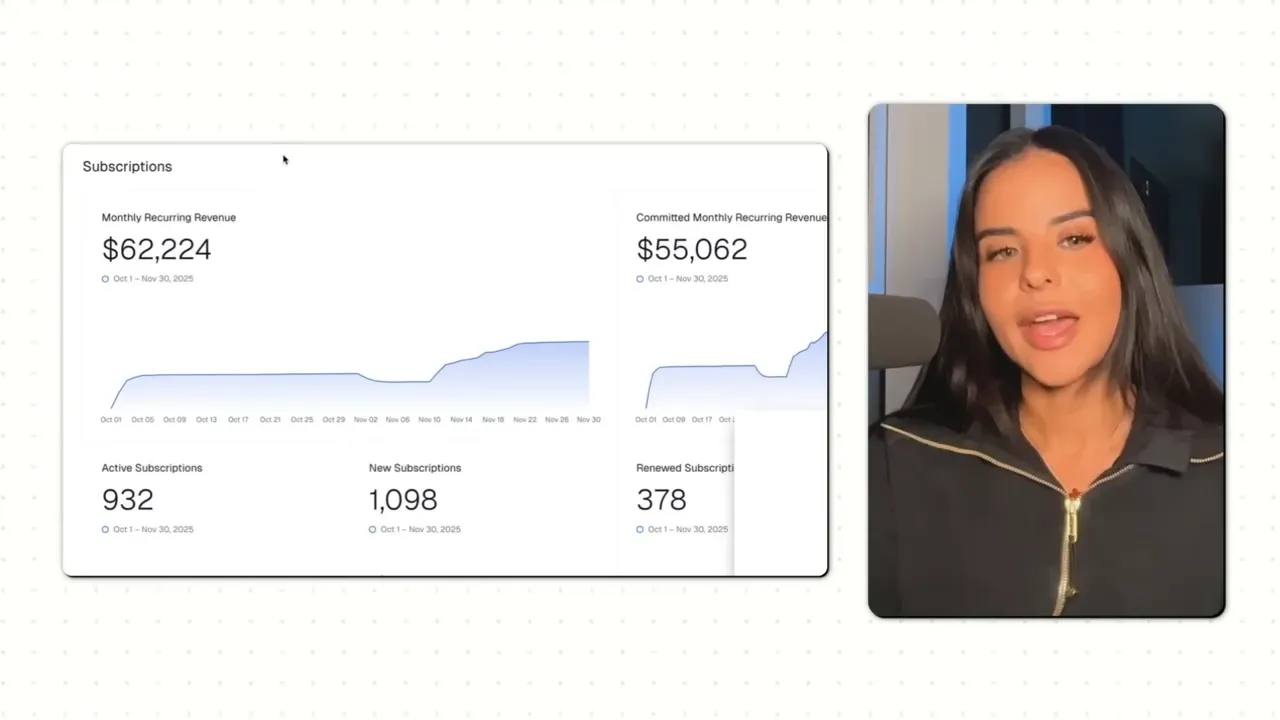
Table of Contents
- AI-powered launch system for creators 🛠️
- Why this matters 🧭
- The setup 🧰
- The Magic: step-by-step playbook 🔮
- The real talk 🧾
- Bonus: quick prompts and anti-bloat notes ⚙️
- FAQ ✅
- Final notes — reality over hype 🔍
AI-powered launch system for creators 🛠️
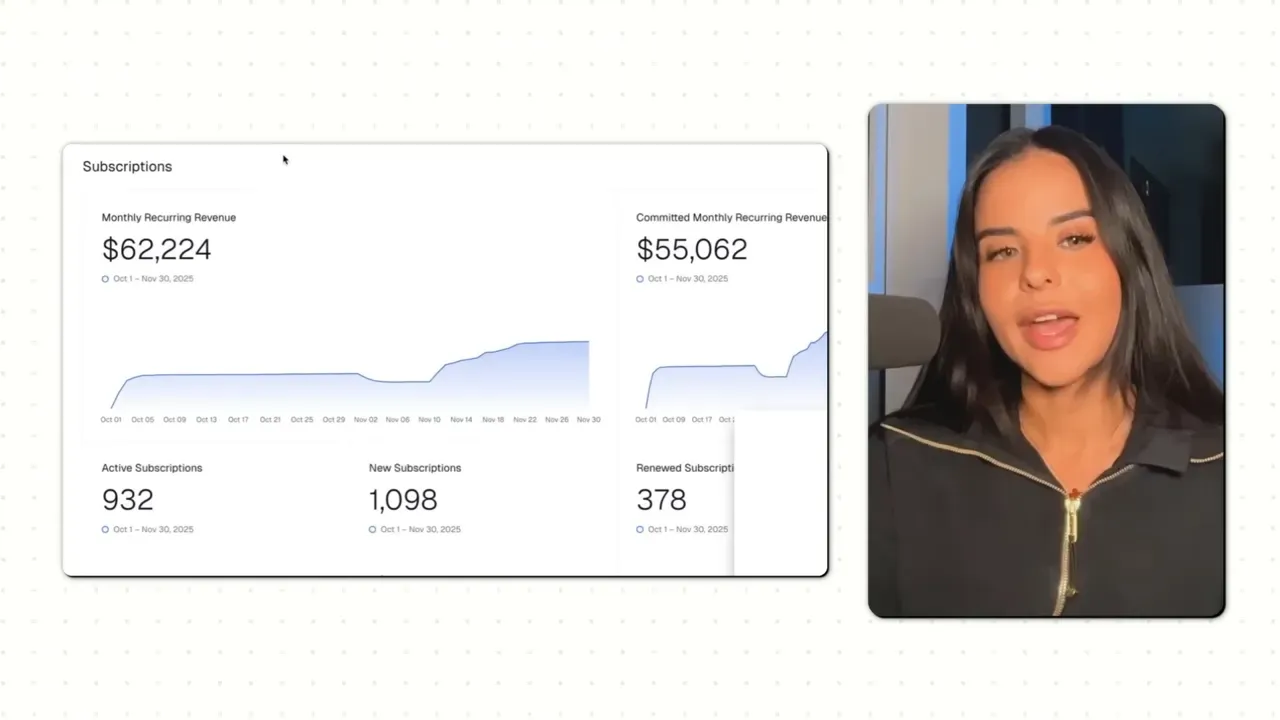
Lara Costa and her co-founders launched Clio, an AI-powered ghostwriter for founders on LinkedIn, and turned a carefully staged private launch into $30,000 in monthly recurring revenue in four days and roughly $60,000 per month within two months. The result is less about secret engineering and more about a repeatable launch architecture: content, waitlist, webinars, emails, scarcity, and white-glove onboarding. This is an AI-powered launch system for creators—practical, tactical, and designed for solo builders who want traction fast.
Why this matters 🧭
Most builders treat launch like feature delivery: build, flip the switch, pray for virality. Lara did the opposite. She built demand first and shipped to people who already wanted the product. That moves the needle faster than polishing every edge before finding product-market fit.
Who is Lara and what does Clio do?
Lara Costa is a founder who spent years building businesses off LinkedIn content. She turned that experience into Clio: an AI assistant that writes like the founder using it, tuned for LinkedIn posts and personal-brand growth. The goal is narrow and practical—help founders create content that gets attention without grinding for hours. Lara positions Clio as a "ghostwriter in your pocket," not a generically useful AI playground.
How did Clio hit $30k MRR in just a few days?
She didn’t build the app in four days. She built the demand over months and used a three-part playbook at launch: content to seed interest, a waitlist to concentrate desire, and webinars to convert the hottest prospects. The team launched privately to their waitlist in mini drops. That concentrated demand into fast, high-converting launches rather than scattering energy across a public push.
The core idea: create scarcity and curiosity before the product exists publicly. When the invite drops, people buy because the product solves a familiar pain and they fear missing out.
The setup 🧰
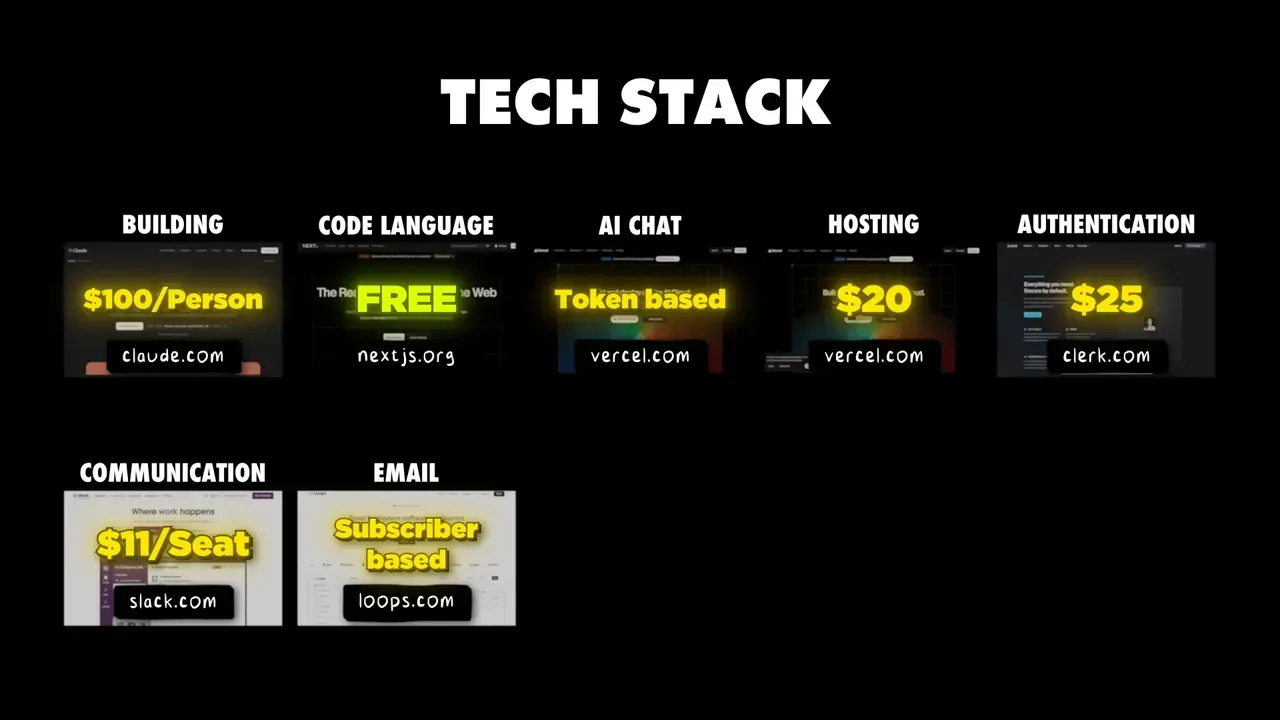
Clio’s approach is deliberate and low-glamour. The stack and ops are pragmatic—build around a great user flow and simple tools.
- Product: AI using Claude for generation and Claude Code for developer workflows.
- Frontend: Next.js with TypeScript, hosted on Vercel (referred to as Varsal in the conversation).
- Auth: Clerk for authentication.
- Monetization & Landing: Polar for subscriptions and native landing pages.
- Ops: Slack for team comms; Loom for onboarding; Front or a similar tool for support email management.
How did they use content to build momentum?
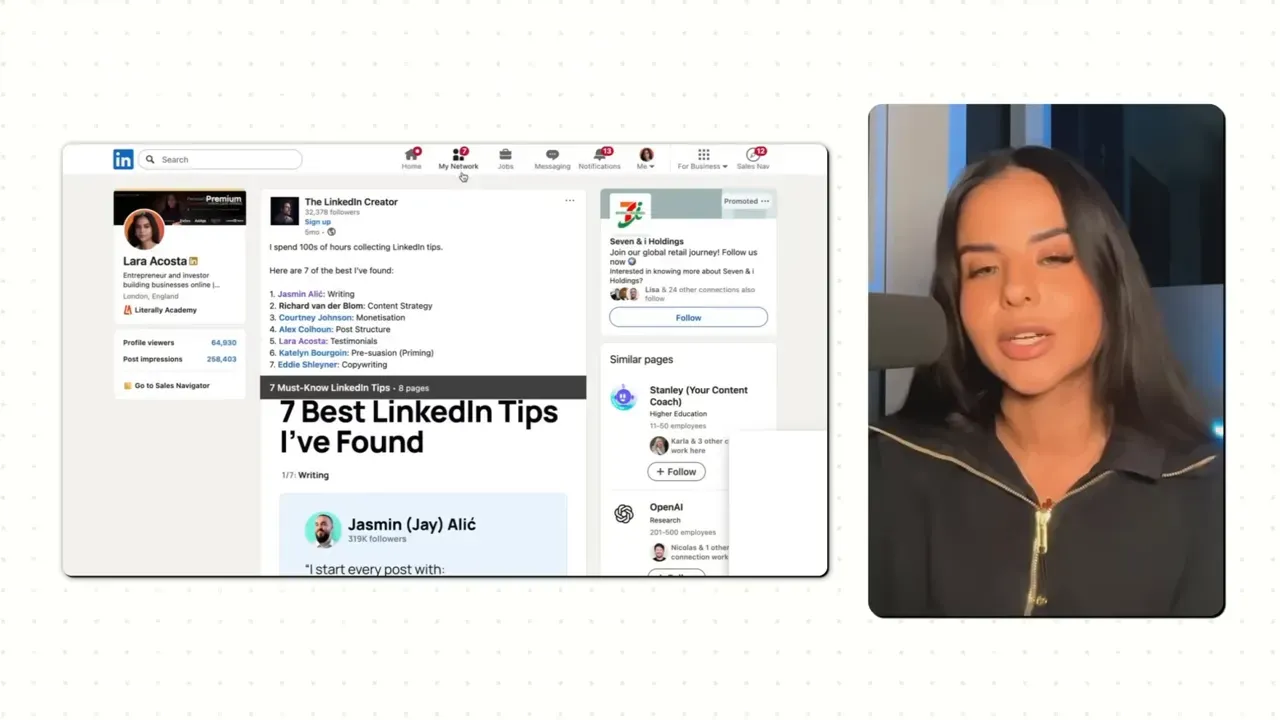
The team leaned hard into LinkedIn. The content strategy wasn't flash—called "edu selling"—and focused on high-value posts that explained common problems and taught practical tactics. Posts were intentionally low-pressure: no hard call to action in many of them, just utility that establishes credibility and takes mindshare around Clio's niche (writing on LinkedIn).
Two content tricks to copy:
- Answer concrete questions founders have about content creation—formulas, mistakes, and what actually works.
- Layer education with gentle product hints. The content makes people think, "There should be a tool for this," then points them to a waitlist for that tool.
How did they build and convert a waitlist?
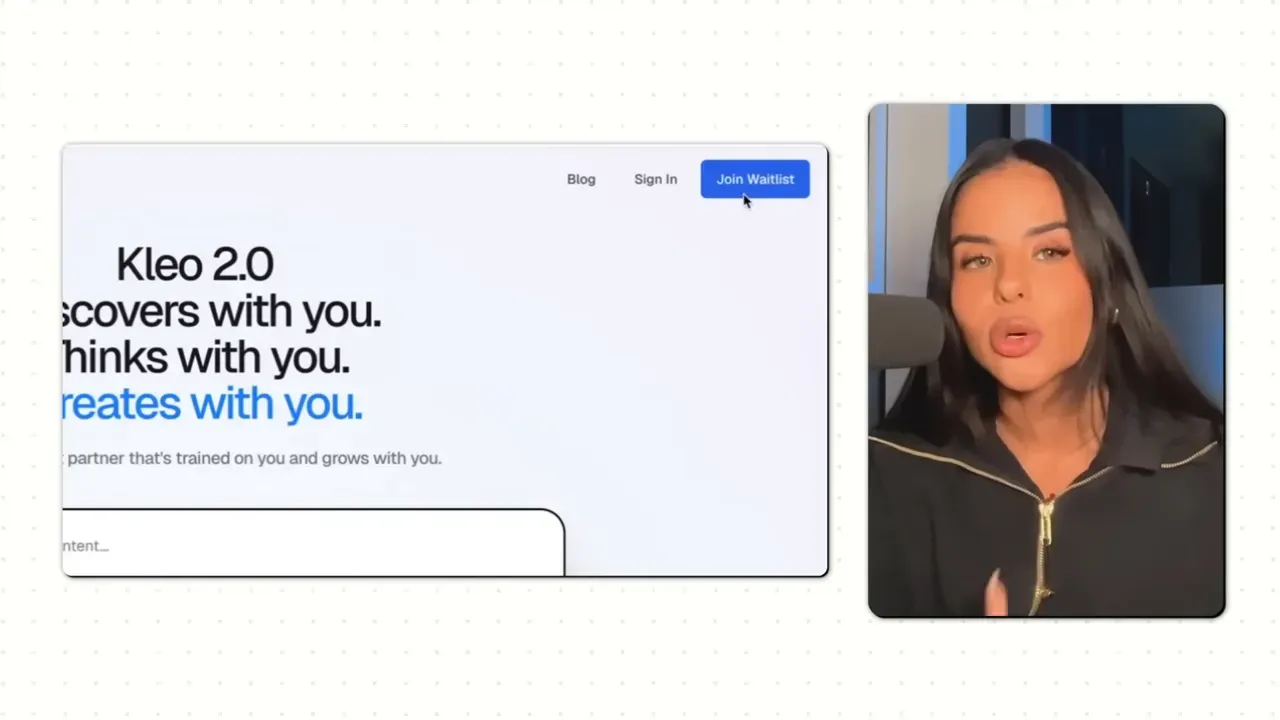
The waitlist was the launch nucleus. They created it using lead magnets and anchored it with content. Signups were collected via the landing page where the product wasn't available for direct purchase—only a waitlist entry. That deliberate friction created scarcity and helped the team control the narrative.
A few practical rules they followed:
- Start slow: Build trust with content before pushing the waitlist.
- Nurture, don't spam: Send educational emails to the waitlist weeks before launch to prime interest.
- Mini launches: Do controlled drops to the waitlist instead of one big public release.
What did the email sequence look like?
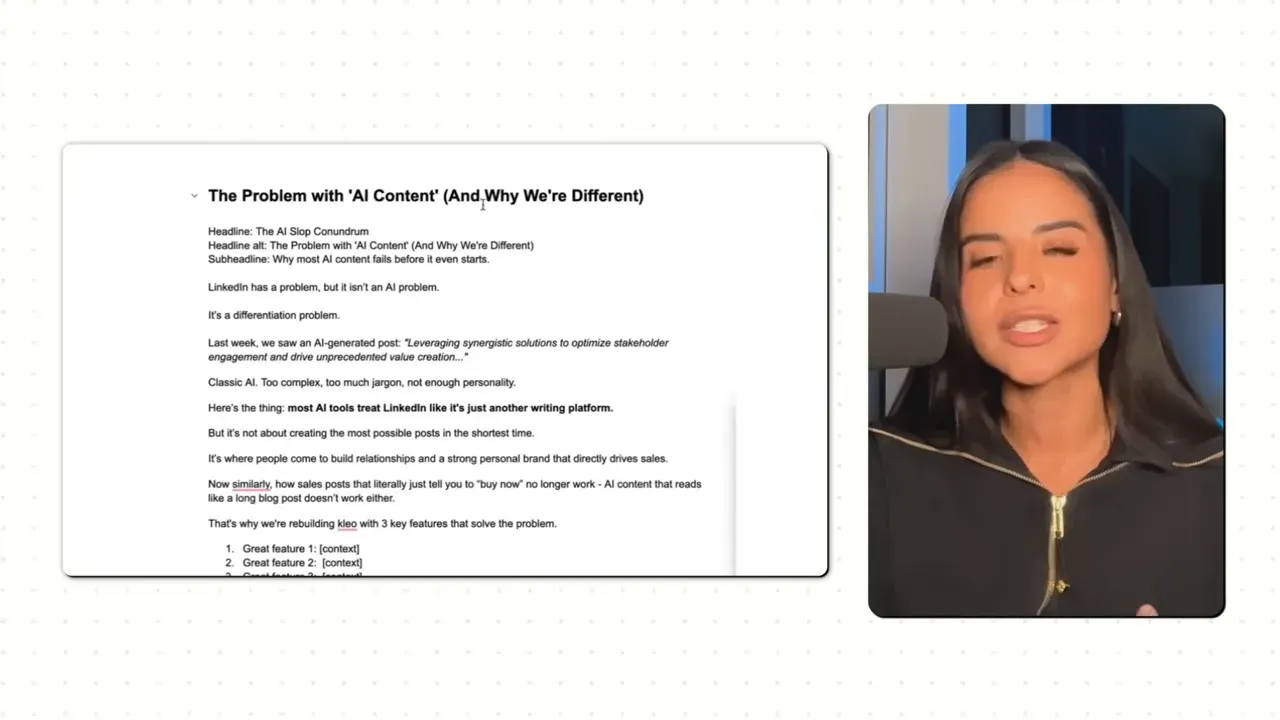
Emails were the secret weapon. Lara emphasized problem-first emails that build alignment rather than product-first emails that push features. They sent over ten emails before the public drop—education, objections, and then the live invitation.
The sequence pattern:
- Problem email: Why most AI content fails and what people misunderstand.
- Evidence & insights: Share research, stories, or a case study that shows the solution is possible.
- Product positioning: Clarify why this tool solves the specific differentiation problem.
- Launch email: The product is live for waitlisters; try it now.
Emails beat virality because they reach people directly. You are not competing with an unpredictable algorithm; you are in someone’s inbox where conversion happens.
The Magic: step-by-step playbook 🔮
Lara boiled her process into an actionable system any creator can replicate. It’s low drama and high execution.
What are the exact steps someone should follow if starting today?
Lara’s distilled playbook is a six-part sequence. Below is a practical translation for solo builders who want to test a launch in months, not years.
- Build a content engine — Use the 4-3-2-1 framework:
- Post 4 times per week.
- Create 3 content pillars: educational, storytelling, sales-generating (like lead magnets).
- Target 2 audience types: ICP (ideal client persona) and IFP (ideal follower persona).
- Have 1 lead magnet to capture emails.
- Launch lead magnets — Offer a simple Google Doc, checklist, or a Loom walkthrough. The goal is email capture, not production value.
- Warm the list — Send a sequence of educational emails for 2–4 weeks. Focus on the customer’s problem rather than features.
- Run a webinar or LinkedIn live — 20 minutes educational, 20 minutes demo, 20 minutes pitch and live Q&A. LinkedIn Live is especially powerful because signups get notified.
- Offer scarcity and a time-limited incentive — Limited spots (e.g., 500 invites) or a lifetime discount (e.g., 50% off forever) push the fence-sitters.
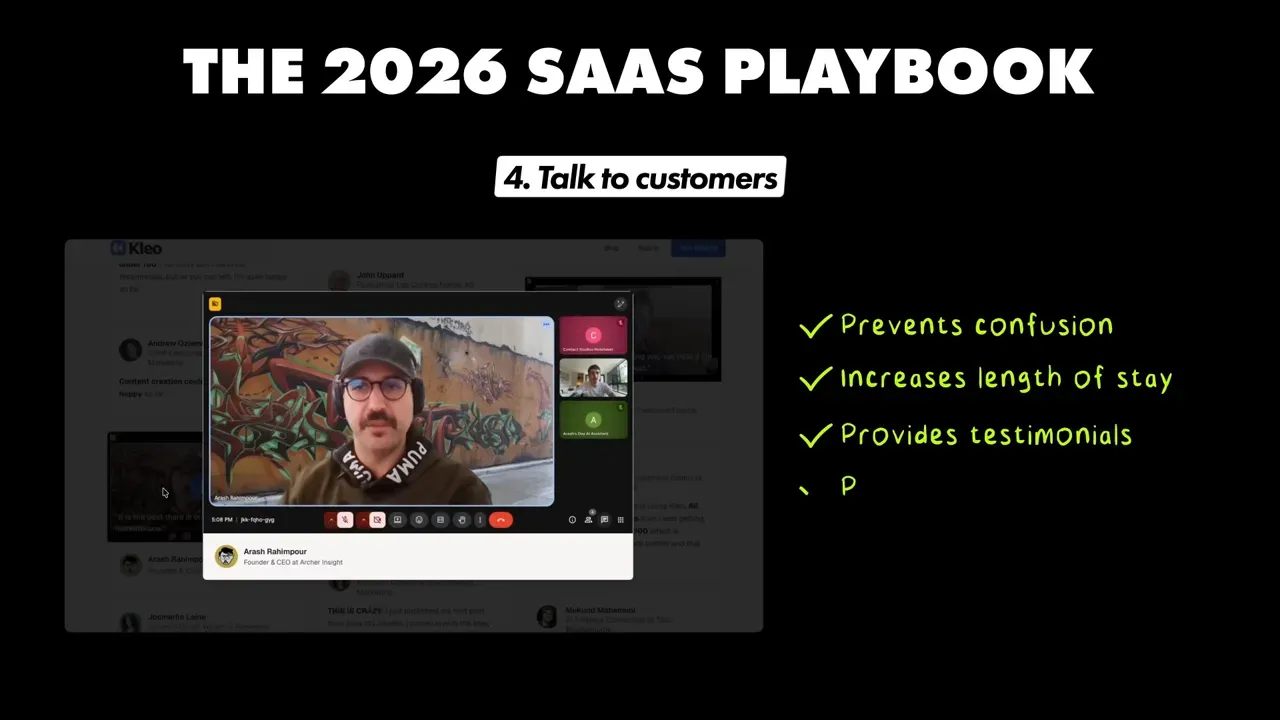
- Do the things that don't scale — VIP onboarding calls, personal phone numbers, white-glove support. Record onboarding calls to spot bugs and iterate fast.
That’s the entire funnel: content to collect emails, nurture those emails, convert via webinars, and lock in customers with scarcity and support. The fast feedback loop from onboarding calls is what converts trial users into evangelists.
How important was scarcity versus other psychological levers?
They tested curiosity, urgency, and social proof, but scarcity worked best early. People act when an offer feels exclusive. Saying "only 500 spots" plus a lifetime discount created immediate action rather than passive interest.
What about product adoption and retention?
Early retention came from removing friction. Many customers leave because they misunderstand features, not because the product fails. Lara’s team spent time onboarding every customer, walking them through the product so they could use it properly. The payoff: testimonials, referrals, and longer retention.
The real talk 🧾
This playbook works because it flips two common assumptions: that feature completeness precedes demand and that virality is the most reliable converter. Instead, Lara focused on controllable channels—email and live demos—and concentrated demand into a sequence of high-conversion moments.
The math matters. If you can convert 1% of a waitlist, a 10,000-person list yields 100 paying customers. The question becomes: how do you build a list of people who actually care? Answer: teach something useful and capture emails.
If you could start over, what's the one bit of advice Lara would give herself?
Two things: build a personal brand on LinkedIn and build an email list early. LinkedIn is underpopulated with consistent creators, and it's where decision-makers live. But social feeds change; emails don't. Nurture that list so you own a direct channel to people who already trust you.
Bonus: quick prompts and anti-bloat notes ⚙️
For builders who want one practical addition tonight:
- Launch webinar outline: 20 minutes teach / 20 minutes demo / 20 minutes pitch + Q&A.
- Simple lead magnet: A 1-page "LinkedIn Post Cheat Sheet" Google Doc. Give it for email and follow up with a 5-email nurture sequence.
- AI prompt to prototype voice cloning quickly: "Write a LinkedIn post about [topic] in the voice of a founder who [short personal detail], length 250 words, with 3 hooks." Use it to create sample posts your waitlist can try before launch.
Call out: skip expensive funnels or over-engineered automation for the first two launches. Build with simple pages, an email provider, and a webinar platform. Iterate from direct customer conversations.
FAQ ✅
How did Clio do $30K MRR so fast?
They built demand first with consistent LinkedIn content and lead magnets, collected an email waitlist, warmed it with educational emails, then launched privately to the waitlist with webinars and scarcity. The conversion happened in a concentrated window because the audience was prequalified and primed.
What is the 4-3-2-1 framework?
Post four times per week, use three content pillars (education, storytelling, sales), target two audience types (ideal client and ideal follower), and offer one lead magnet. It’s a lightweight content cadence to build a predictable funnel.
Do you need a big following to repeat this?
No. The strategy scales to small audiences. What matters is quality of engagement and consistent email capture. A smaller but highly engaged waitlist converts better than a large passive audience.
Which channel drove the most signups?
LinkedIn. They used educational posts to drive signups and LinkedIn Live to run webinars. But the conversion to paying customers happened mostly through email and live demos.
What should a solo builder prioritize first?
Start with a lead magnet and an email capture. Publish consistent content to funnel people to that magnet. Emails are the ownership channel that converts reliably; social is the traffic channel that feeds it.
Final notes — reality over hype 🔍
This is not a get-rich-quick story. It’s a playbook showing how to manufacture high-conversion launch windows with modest tools and smarter sequencing. The hard work is consistent useful content and the discipline to nurture a list before you ask for money.
For builders: decide whether you want to build features or distribution first. If the goal is traction, start with the latter. Clio's result is repeatable for creators who are willing to teach, capture emails, and convert through human connection.
This article was inspired by this amazing video The Launch Playbook: How I Built a $60K/Month SaaS. Check out more from their awesome channel.