
Interview with Maddox Schniddlecoffer, college founder who built and sold a $15K/month gaming website

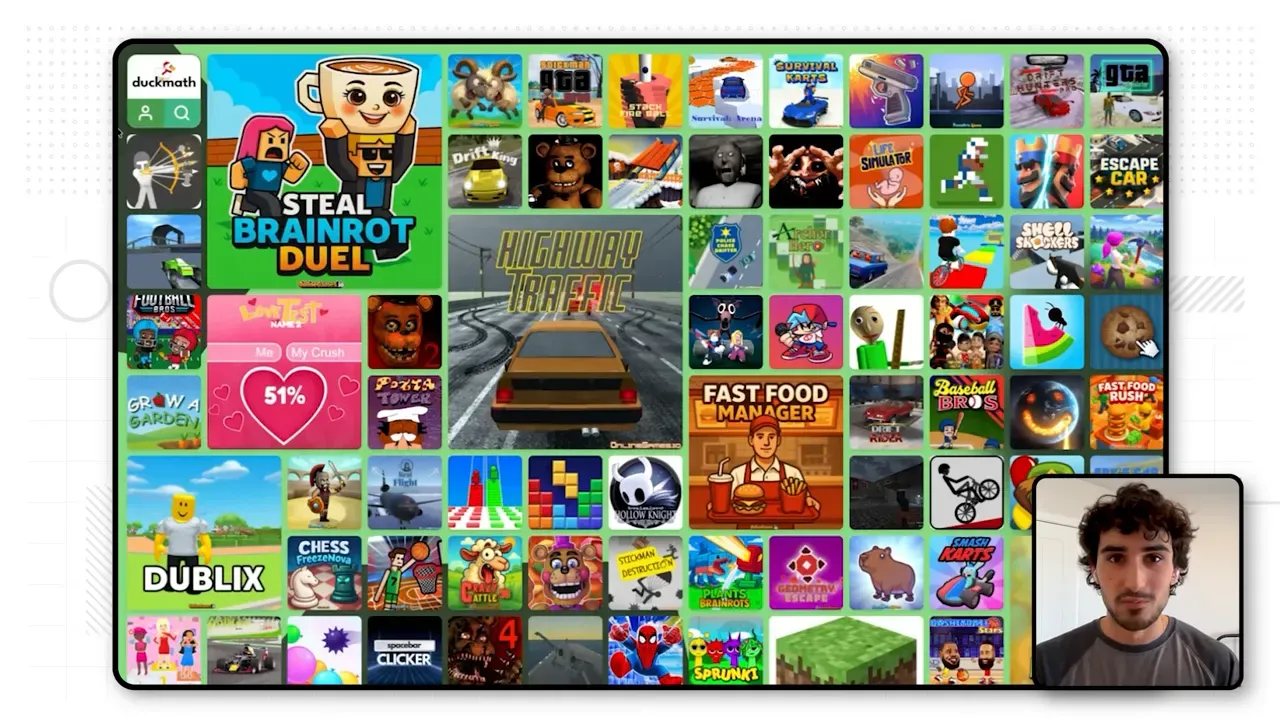
Maddox turned a small, messy hobby site into a reliable revenue stream and then sold it for a five-figure exit. The lessons here are not aspirational fluff. They are a practical, repeatable playbook for solo builders who want an AI-powered launch system for creators that actually moves the needle. This is less about engineering brilliance and more about market focus, brutal iteration, and using simple automation to scale content distribution.
Table of Contents
- Why this case matters 📈
- Growth snapshot and the $240 moment 🎯
- Playbook — AI-powered launch system for creators ⚙️
- Real talk — selling, regrets, and what he would change 🤔
- What actually worked (and what didn’t) 🧪
- FAQ 🧾
- Final thoughts — a generator for action 🔋
Why this case matters 📈
This story strips away a few myths: you do not need perfect design, expensive ad buys, or a massive team to build a business that pays rent and then some. What Maddox did is what every builder should learn to do: pick a real demand, build a minimally viable experience quickly, and then treat growth like product development—test, measure, iterate, repeat.
Pat: Who are you and what did you actually build?
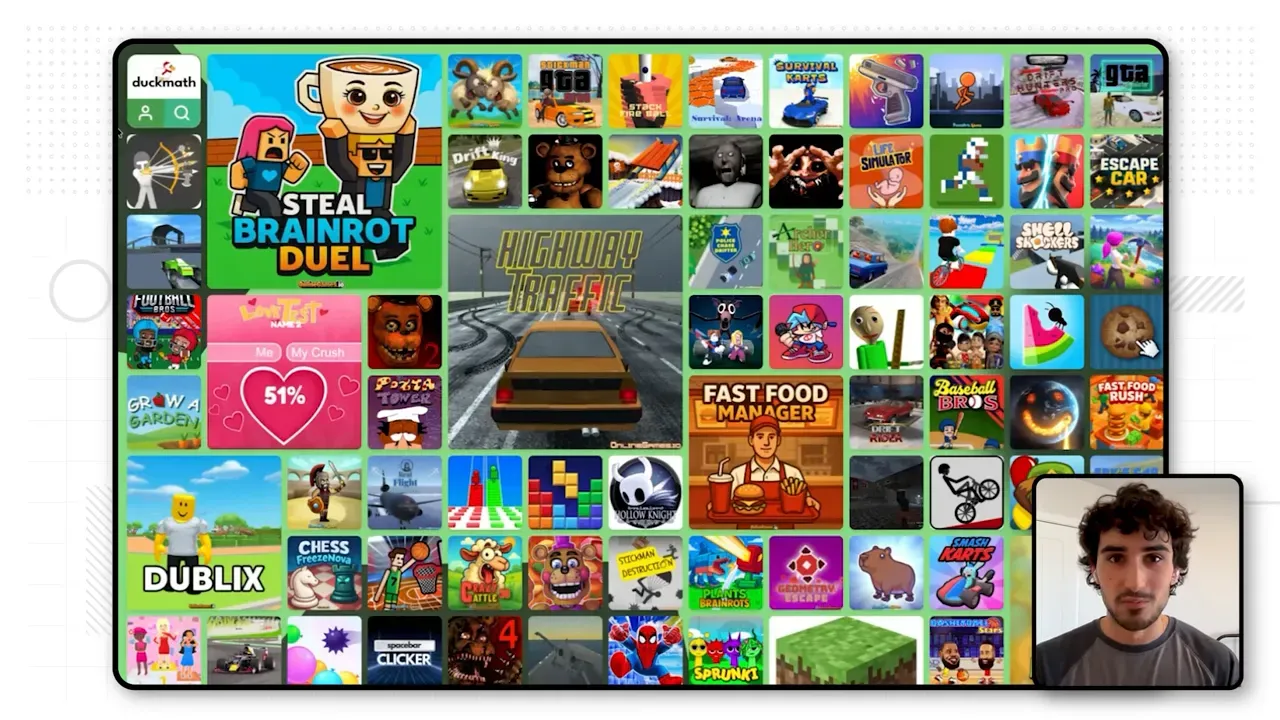
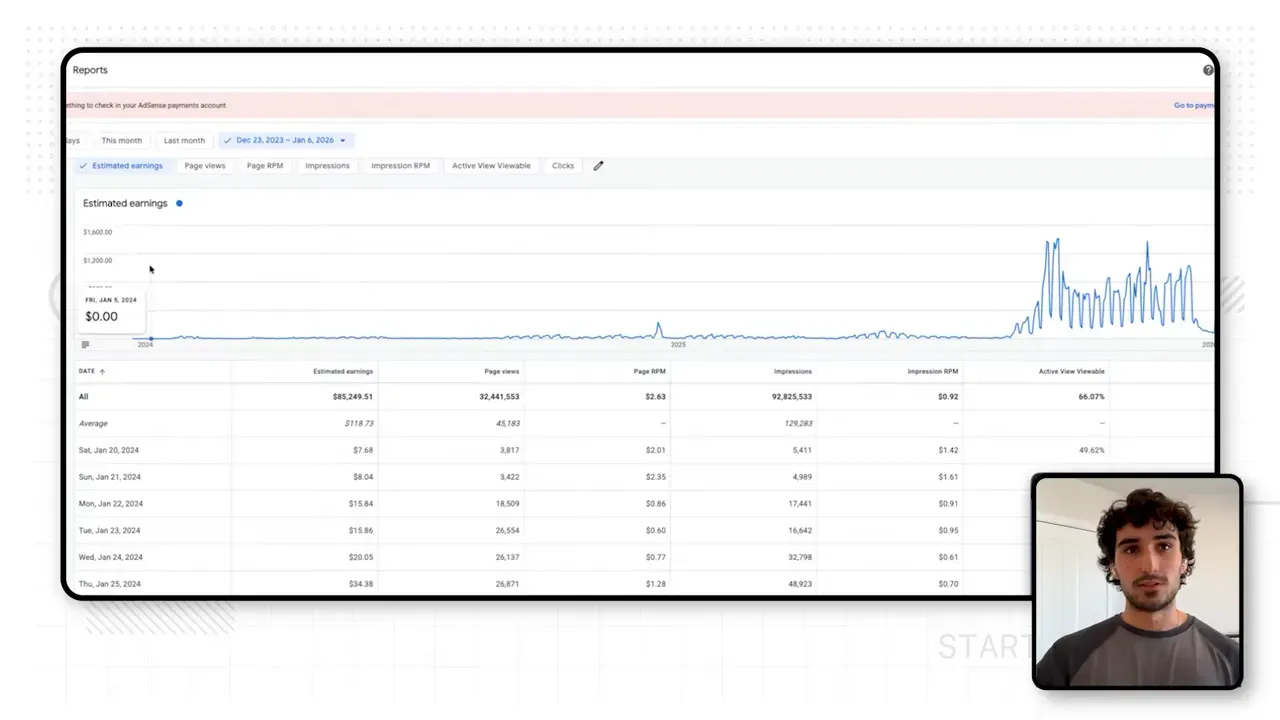
Maddox is a college student who launched DuckMath.org, an unblocked games site. At peak, the site drove roughly 1.5 million users a month and generated about $15,000 per month from ad revenue. The product is intentionally simple: users click a game and play in the browser. The unit economics are straightforward—longer sessions and more page views equal more ad impressions, which increases Google AdSense revenue.
Pat: How did this start? Was it a polished launch?
It started rough. The first version lived on Google Sites. He embedded games, framed them poorly, and called it a day. It was ugly, but functional. After an internship, he rewrote the product in React. Over time, he layered in analytics and A/B testing. The point isn’t the stack—it’s the incremental approach. Build something that works, then optimize for retention and monetization.
Growth snapshot and the $240 moment 🎯
Maddox kept the project alive for years with minimal attention. One random day he woke up to $240 in passive revenue—an outlier that served as the signal. He treated that as evidence the product could scale with attention, so he stopped treating the site like a side hobby and started treating it like a marketing problem.
Pat: What actually moved the needle for growth?
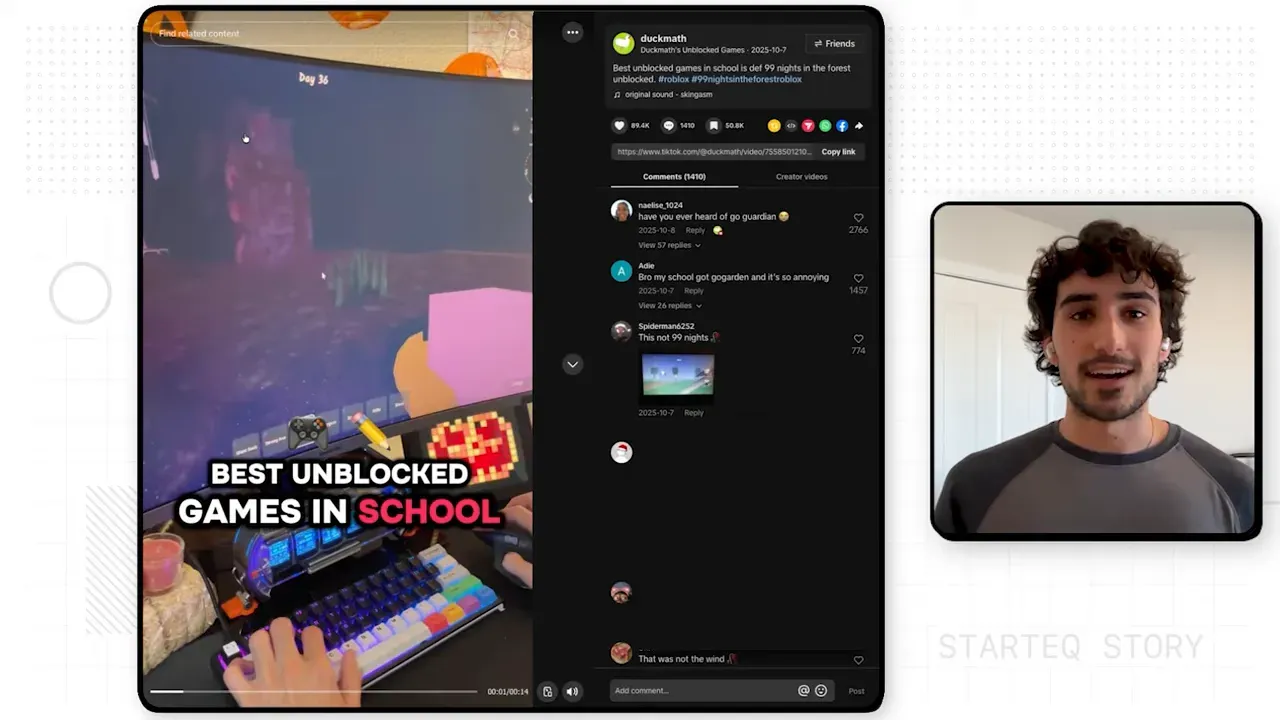
The strategy was volume and replication. Maddox created multiple short-form accounts—three TikTok accounts—and posted high-velocity content: roughly three posts per account per day, five days a week. Each piece of content was duplicated across platforms—Instagram Reels, YouTube Shorts, and Snapchat—using an automation tool. He focused on finding repeatable formats from competitors and iterating until he had a set of hooks that reliably produced clicks to the site.
Pat: What did a high-performing piece look like?
It was low-budget and quick. One of his most successful videos took 30 minutes to make—phone footage of gameplay with a strong visual hook and a clear CTA telling the viewer where to go. The same clip was repurposed across platforms and accumulated over five million total views. He estimates a single viral clip like that could have driven roughly $1,000 in ad revenue to the site.
Playbook — AI-powered launch system for creators ⚙️
This is the distilled, tactical playbook inspired by Maddox’s approach. It is designed for solo builders who want to launch fast using no-code startup tools and launch with AI tools.
- Pick a market you can reach. Choose an audience you understand how to influence. Maddox knew how to reach college students and casual gamers, so that was the niche.
- Build an MVP in 48–72 hours. Use templates, no-code pages, or minimal React—whatever gets a working product live. Focus on the core interaction: play the game, sign up, or use the tool.
- Find 10–20 viral formats from competitors. Reverse-engineer hooks, CTAs, and thumbnails. Write down the common elements: pacing, caption style, on-screen copy, and the “moment” that gets people to click.
- Post volume, then iterate. Post multiple videos per day on multiple accounts. Treat content like product experiments. Measure engagement, tweak the hook, repost the better version.
- Automate distribution. Use a republishing tool to push content to Instagram, YouTube, and Snapchat. That multiplies reach without multiplying effort.
- Use cheap labor as leverage. Train a content creator or a peer to replicate your format. Maddox mentored someone to produce videos to maintain throughput while he focused on product and strategy.
- Optimize on-site conversion. Hook viewers with CTAs that send them to specific landing pages or game URLs. Run A/B tests on how games are presented, layout tweaks that increase page views and session time.
- Monetize with simple adops. Drop Google AdSense in with a snippet and optimize for page views. Ads are boring but effective for high-traffic content sites.
Tools list based on what worked for Maddox
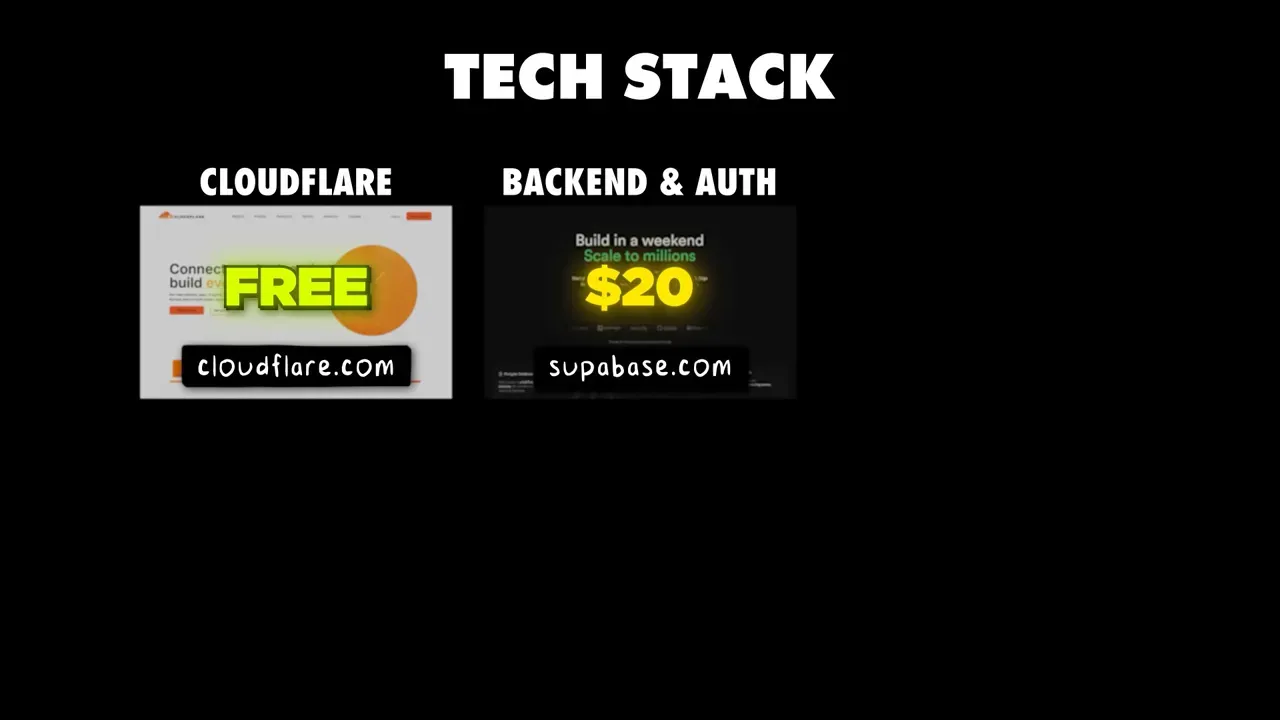
- Hosting and domains — Cloudflare for hosting and domain management.
- Backend & auth — Supabase for authentication, leaderboards, and lightweight DB needs.
- Analytics & AB testing — PostHog (joined startup program credits) for experiments and event tracking.
- Monetization — Google AdSense for ad placement and revenue collection.
- Content distribution — Repurpose.io to cross-post short-form videos across platforms.
Callouts
- *This part is free:* Cloudflare’s basic hosting and DNS are free; domains cost money but hosting can be near-zero for prototypes.
- *Skip this if you don’t care about revenue:* You can skip complex auth or leaderboards if you’re only checking engagement via ads.
- *Use AI, but don’t rely on it for creative hooks:* AI speeds up building and boilerplate, but viral hooks still come from studying human behavior and iterating repeatedly.
Real talk — selling, regrets, and what he would change 🤔
Maddox sold the site for $120,000 using escrow, after negotiating from an initial lowball offer. He admits slight regret—there’s a sense of “what if” when you exit something that still has growth potential. But he acknowledges that selling was the right move: it freed capital and mental bandwidth to start something new.
Lessons from the exit
- Sell when the buyer sees clear value and you can get a clean transfer of accounts, domains, and ad relationships.
- Escrow is non-negotiable for trust and risk reduction.
- Know when to sell. If you have a better idea and the business is stable, selling can be the fastest way to fund the next play.
Pat: If you were starting this again in 2026, what’s the playbook?
Maddox would pick a niche based on marketing leverage—an audience he can reach and convert. Build the MVP in a couple of days using AI and no-code, then simultaneously research competitors’ best-performing short-form videos. Clone the format, post like a machine, and iterate off data. If content starts to scale, go all in.
Pat: Any regrets about technology or team choices?
Not major ones. He regrets not doubling down faster when traction started, but the main failure mode was hesitation and splitting attention. The tech choices were pragmatic—Cloudflare and Supabase kept costs low and operations simple. The heavier lift was consistently producing content and running tests.
What actually worked (and what didn’t) 🧪
What worked
- Volume posting across multiple short-form platforms.
- Repurposing the same creative to multiply reach.
- Simple UX that retained users long enough to show ads.
- Using automated cross-posting tools to scale distribution without hiring a big team.
What didn’t work
- Over-engineering initial design. The first two versions were ugly and still useful.
- Underestimating the attention required for consistent content production.
- Delayed experimentation on monetization and landing flow tweaks until after traction appeared.
Pat: How much did content matter versus product?
Both were required—but content pulled product along. The product only needed to be good enough to keep users on-site. Content was the distribution engine. Treat content as part of your product roadmap; every video is a marketing experiment and a funnel test.
FAQ 🧾
How does DuckMath make money?
Primarily through Google AdSense. The site maximizes ad impressions by increasing session duration and the number of pages users visit. More page views equals more ad views equals more revenue.
How many users did the site get at peak?
Peak figures were approximately 1.5 million users per month, with up to 150,000 daily active users during the growth spike.
How much did Maddox sell the site for?
The sale price was $120,000, executed using an escrow service to manage risk and transfer of assets.
What tech stack should a solo builder use to replicate this?
A lightweight stack: Cloudflare for hosting and DNS, Supabase for auth and simple DB needs, PostHog for analytics and A/B testing, Google AdSense for monetization, and a republishing automation like Repurpose.io for distribution. Use AI or templates to build the MVP fast.
How long before a project like this shows revenue?
It varies. Maddox had years of slow growth with intermittent revenue. The key is consistency. Posting daily and iterating content formats accelerated the timeline dramatically, turning passive revenue into a growth spike within months of doubling down.
Final thoughts — a generator for action 🔋
This is not a blueprint for instant fame. It is a pragmatic, replicable system: niche selection, rapid MVP, content-format research, high-velocity posting, and automation for distribution. The heavy lifting is consistency and iteration, not a perfect tech stack.
The keyword here is AI-powered launch system for creators. Use AI to accelerate the build and no-code startup tools to keep costs low. But don’t outsource the creative judgment. The virality lives in hooks, timing, and relentless improvement. If you can run experiments on content like a product team runs tests on features, you’ll be in the minority—and you’ll see results.
Maddox’s playbook is a tidy reminder for solo builders: don’t romanticize complexity. Build something that works, figure out how to reach people, and then optimize for the metrics that pay the bills. If that sounds like a plan you can tolerate doing every day, start tonight.
This article was inspired by this amazing video I Make $15K/Month From One Website. Check out more from their awesome channel.