
Breakdown: Brian, Co-Founder of a Disposable Camera App That Hit $20K a Month in 83 Days
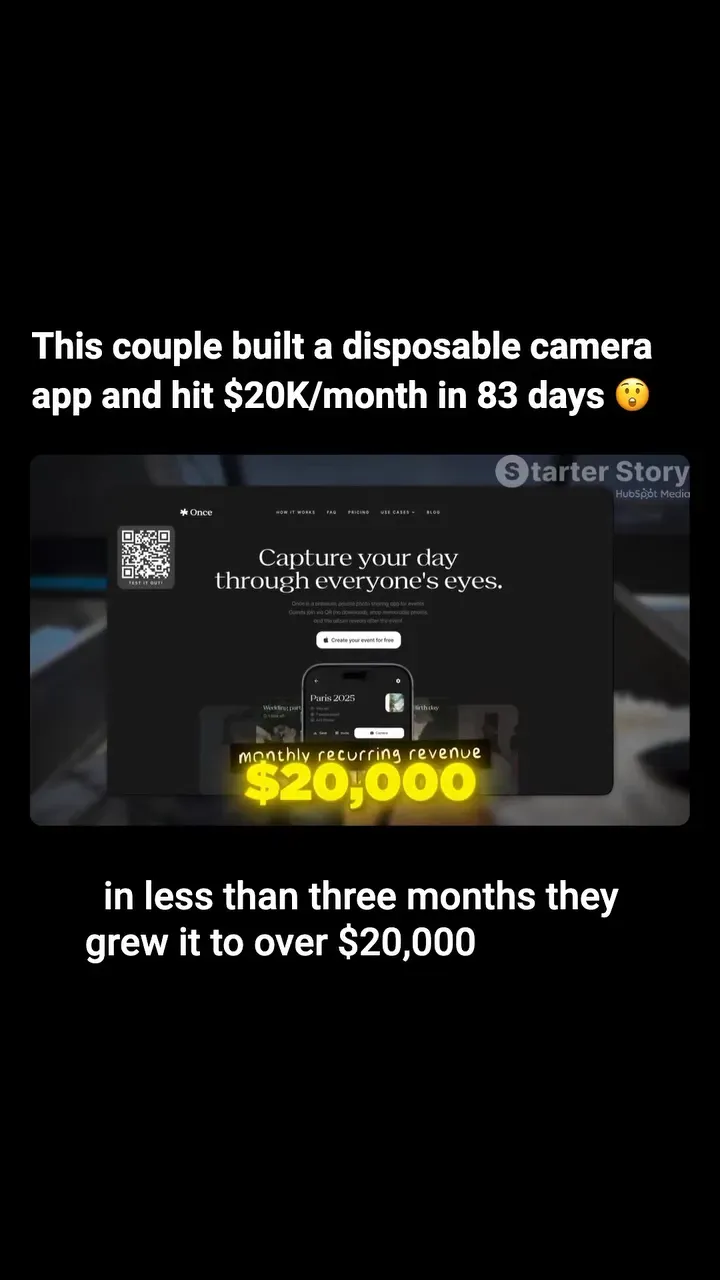
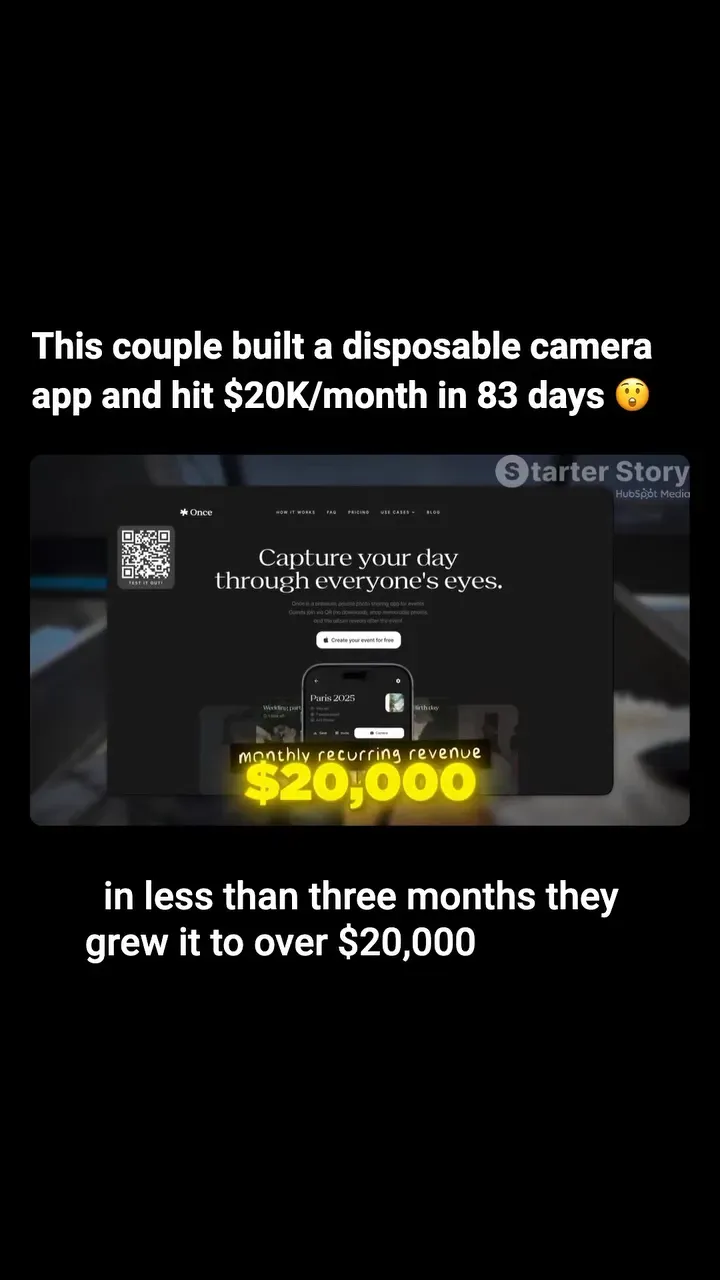
Brian and his girlfriend refused to build ONCE until enough people committed. That demand-first rule took their disposable camera app past $20K a month in 83 days.

😵 Why This Even Matters
Most people do startup math backwards.
They get excited, build the thing, polish the logo, argue about features, and then find out nobody actually wanted it. Classic. Very efficient way to waste a season of life.
What makes this story useful is not just the revenue number. Yes, Brian and his girlfriend built ONCE, a disposable camera app for weddings, birthdays, and parties, and got it past $20,000 per month in less than three months. That is impressive.
But the real point is how they did it.
They did not start with code. They started with proof. That mindset is exactly what makes this relevant for anyone trying to build an AI-powered launch system for creators, a simple app, or any lean product without setting money on fire.
This is the part a lot of founders skip because it is less glamorous than building. Validation feels slower. It is not. Building the wrong thing is slower.
🛠️ The Setup
What was the business, exactly?
Brian co-founded ONCE with his girlfriend. The product was a simple mobile app built around the disposable camera idea, but adapted for modern events.
The use case was straightforward. Instead of depending on guests to send random photos after a wedding, birthday, or party, the app gave people a simple way to capture the day through multiple perspectives. That concept has emotional pull built into it. People do not just want pictures. They want the memory, the surprise, and the feeling of collecting moments from everyone else’s point of view.
Why did this idea work so fast?
Because it solved a real event problem with a format people already understood.
Disposable cameras are familiar. Shared photo capture is useful. Weddings and parties already have urgency, built-in groups, and willingness to pay for memory-related products. That combination matters.
It was not some galaxy-brain startup idea that needed a 40-slide deck and a glossary. It was easy to explain in one sentence. Those tend to travel better.
📈 The Part Most Founders Avoid: Demand First, Build Second
What was the key decision before building?
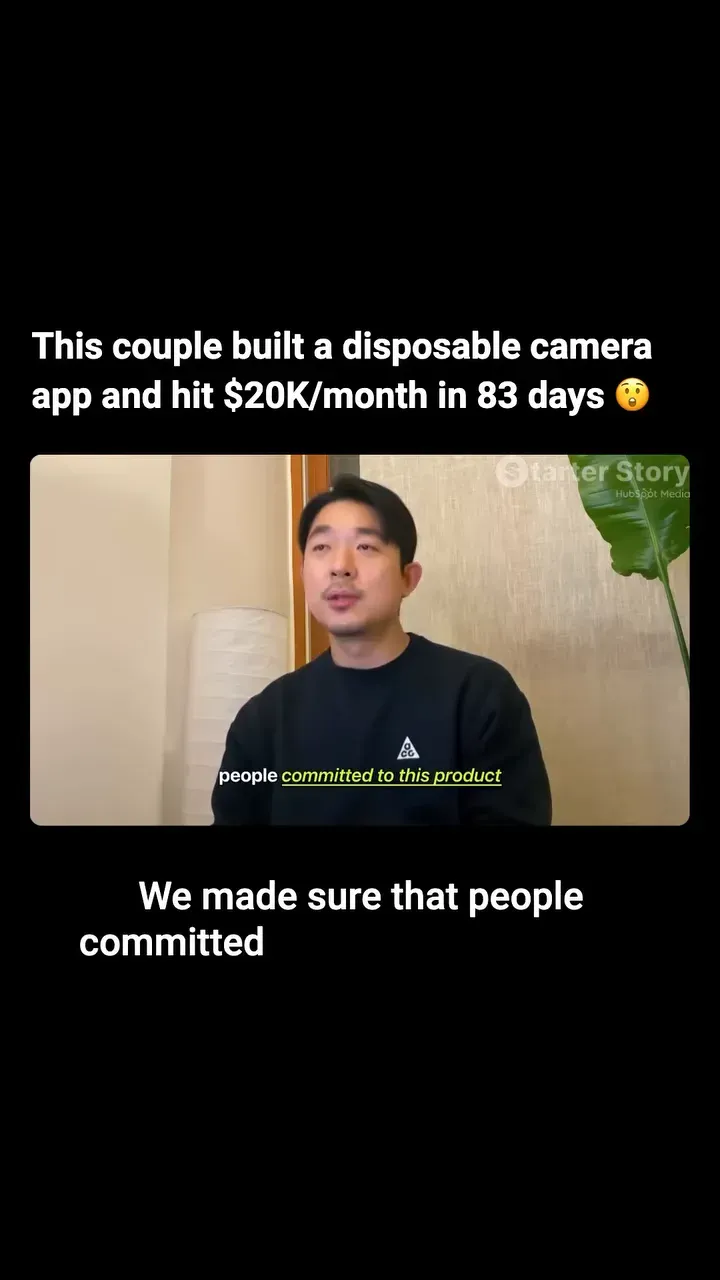
Brian’s team picked a target number and refused to build until they reached it.
That one move cuts through a ridiculous amount of founder delusion.
Instead of treating interest like a nice bonus, they treated it like a requirement. They wanted a specific level of market commitment before writing code. Not compliments. Not vague enthusiasm. Not friends saying, “That sounds cool.” Actual commitment.
Why is that such a big deal?
Because people lie accidentally.
Not maliciously. Just optimistically. They will tell a founder they would totally use something. They will say they love the concept. They will even ask to be kept posted. Then launch day arrives and those same people disappear into the fog like unpaid extras in a low-budget movie.
Commitment is different. Commitment forces reality into the room.
If someone is willing to sign up, reserve a spot, pre-order, pay a deposit, or otherwise put skin in the game, that signal matters. It is still not a guarantee, but it is far more useful than applause.
What did they actually validate?
The core question was simple: would people commit to this product before it existed in finished form?
That is the whole game.
Brian and his girlfriend made sure people were genuinely in before building. That discipline gave them leverage. It also probably saved them from months of building side quests nobody asked for.
🧪 What Solo Builders Can Steal From This
How can someone use this approach without building an app?
The logic works for almost anything:
- A mobile app
- A paid newsletter
- A digital product
- A niche service
- A creator offer or template pack
- A small no-code software tool
The structure is the same. Make the offer clear. Show the outcome. Ask for commitment before building the full machine.
What does commitment look like in practice?
It depends on the business, but usually it is one of these:
- A waitlist with a meaningful threshold
- Pre-orders
- Deposits
- Booked calls
- Beta signups with a clear use case
- Manual concierge delivery before automation
The specific format matters less than the signal. The point is to test whether the market cares enough to act.
What should the target number be?
Brian mentioned setting a number first, which is the right move. The number itself can vary, but it should be high enough that passing it means something.
Too low and the test is meaningless. Too high and it becomes an excuse to avoid moving forward. The sweet spot is a number that would make a reasonable person say, “Okay, this is not random anymore.”
For a solo builder, that might be:
- 100 qualified waitlist signups
- 20 pre-orders
- 10 paid beta users
- 5 event bookings
Pick a threshold that proves demand, not just curiosity.
🔧 The Build Philosophy Behind the Revenue
Was this success really about the app?
Partly. But mostly it was about sequencing.
A lot of founders assume the winner is the one who builds the best thing. Sometimes that is true. More often, the winner is the one who builds the right thing in the right order.
Brian’s approach shows a lean build philosophy:
- Start with a simple concept
- Make the value obvious
- Test market willingness early
- Only then move into development
That is how a side project becomes a business instead of a private hobby with branding.
Why does simplicity matter here?
Because simple products spread faster and get validated faster.
ONCE was not trying to be a massive all-in-one event operating system with seventeen dashboards and a community tab no one asked for. It did one thing people could grasp immediately.
That simplicity also makes marketing easier. If a product takes too long to explain, it usually takes too long to buy.
📱 The Product Angle: Why a Disposable Camera App Makes Sense
What made the product compelling for weddings and parties?
Events are emotional, messy, and full of moments the host never sees.
That is exactly why this concept works. A host gets one version of the day. Guests each have a different one. A disposable camera-style app turns those scattered moments into a collected memory.
It also taps into nostalgia without requiring actual disposable cameras, delayed development, or lost film. It borrows the charm and removes the friction.
Was the market built in?
Pretty much.
Weddings, birthdays, and parties are not abstract use cases. They happen constantly. People are already spending money on photography, decorations, guest experiences, and keepsakes. That means this was not a product searching for a category. The category was already there.
That is another useful lesson. Products grow faster when they attach themselves to existing behavior instead of trying to manufacture new habits from scratch.
🧠 If We Were Rebuilding This Today
How would this approach translate into a modern launch system?
The core principle would stay the same: test the desire before building the engine.
For someone trying to launch with AI tools, the stack might be different, but the logic is identical.
A practical version could look like this:
- Create a simple landing page for the offer
- Explain the outcome in one painfully clear sentence
- Collect signups or deposits
- Use lightweight tools to deliver the first version manually
- Automate only after repeated proof of demand
That is how a sane person builds an app or creator offer without getting trapped in setup hell.
What tools would fit this style of validation?
The exact tools were not the point of Brian’s story, but the pattern lends itself well to a lean stack:
- A simple landing page
- A payment link
- A simple form
- Email collection
- Manual onboarding
No giant software maze required. No overbuilt automation cathedral. Just enough system to test if the market cares.
What should not be done too early?
A few usual suspects:
- Building the full app before validation
- Designing every edge case
- Adding feature layers for hypothetical users
- Buying expensive software to solve problems that do not exist yet
- Confusing motion with progress
Founders love feeling productive. The market loves being indifferent. That is why commitment is the only useful filter.
💬 The Real Talk
What is the biggest lesson from this story?
The revenue headline gets attention, but the durable lesson is much less flashy: prove people want the thing before building it.
That is it.
It sounds obvious because it is obvious. It is also ignored constantly.
Why do so many people still skip validation?
Because building feels safer than asking for commitment.
If someone spends weeks making a product, they can pretend progress is happening. Asking the market to commit creates the risk of hearing no. Most people would rather hide inside Figma, code editors, or no-code workflows than face that clean signal.
Brian’s team did the harder thing first. That is probably why they moved faster after.
Would this work for every business?
Not in exactly the same way. But the principle is almost universal.
Some businesses validate through pre-sales. Others through booked calls. Others through early partnerships or usage intent. The method changes. The requirement does not. Real demand has to show up somewhere before it is smart to go all in.
What should a builder test tonight?
A brutally simple version:
- Write a one-sentence offer.
- Pick one target audience.
- Choose one commitment action.
- Set a number that counts as proof.
- Do not build past the minimum until that number is hit.
That one exercise will save more time than another week of pretending a feature roadmap is strategy.
🧰 Build This Stack
Brian didn't name the tools behind ONCE, so everything below is a solid alternative for running the same demand-first play — not ONCE's actual stack.
- Framer for a waitlist or pre-order page you can ship in an afternoon.
- Stripe payment links for deposits or pre-orders, so commitment means money, not compliments.
- Lovable to turn the idea into a first MVP once your commitment target is hit.
- RevenueCat for in-app purchases and subscriptions when the app goes live.
- Make.com to push signups and deposits into one sheet and trigger a follow-up email.
Some tools above may be affiliate links — we only list tools that fit the build.
❓FAQ
Who is Brian?
Brian is the co-founder of ONCE, a disposable camera app built with his girlfriend for weddings, birthdays, and parties.
How fast did ONCE grow?
The app reached more than $20,000 per month in under three months, specifically in 83 days.
What made their launch strategy different?
They did not begin development immediately. They set a target and waited until they had enough real commitment from potential customers before building.
What does customer commitment mean here?
It means getting a meaningful signal that people genuinely want the product. That could be signups, deposits, pre-orders, or another action that shows intent beyond casual interest.
Why is this relevant to creators and AI builders?
Because the same rule applies. Whether someone is building an app, a service, or an AI product, it is smarter to validate demand first and automate later.
Can this method work with no-code tools?
Yes. In fact, no-code startup tools can make this approach easier because they let builders test offers quickly without committing to a full custom build too early.
What is the main takeaway?
The main takeaway is simple: do not confuse building with proof. Get commitment first, then earn the right to build more.
What tools do you need to build a demand-first event app like ONCE?
Start with a landing page in Framer, a payment link for deposits, and a simple form — that is enough to hit a commitment target before writing code. Once the number is hit, Lovable can get a first MVP built fast, RevenueCat handles purchases inside the app, and Make.com keeps signups and follow-ups in sync. These are solid alternatives, not ONCE's confirmed stack.
🧩 Final Takeaway
This story is not really about a disposable camera app. It is about discipline.
Brian and his girlfriend started with a side project, found a simple angle people understood, and turned it into real revenue because they waited for proof before committing to the build.
That is the whole blueprint.
For founders, creators, and solo operators trying to make something real, the lesson is useful precisely because it is unglamorous. Start smaller. Test earlier. Ask for commitment. Then build what the market already leaned toward.
That is a far better system than hoping the internet rewards effort for its own sake. It does not.
And if someone is piecing together an AI-powered product, that same rule still holds. Fancy tools are optional. Evidence is not.
This article was inspired by this amazing video This couple built a disposable camera app and hit $20K/month in 83 days. Check out more from their awesome channel.