
Interview with Jay Raavi, the $140K/Month NomadTable Solo App Builder

Most solo builders do not need another ceremonial productivity stack, a $97 “AI-powered launch system for creators,” or a desk setup that looks like mission control. They need a problem they genuinely care about, enough space to do focused work, and a way to keep hearing what real customers are struggling with.
Jay Raavi built NomadTable, a meetup app for solo travelers, expats, and digital nomads, to about $140,000 in monthly recurring revenue. The app has reached 1.8 million users and helped generate an estimated 100,000 meetups. His workday is not built around squeezing every second out of a calendar. It is built around urgency first, deep work in short blocks, movement, changing environments, and staying close to the people the app serves.
Table of Contents
- 🧭 The Setup: A Solo App Built Around a Real Problem
- 📱 Product Truth Beats Builder Assumptions
- 🚲 How Jay Structures a Day Without Worshipping the Calendar
- 🌍 Building While Traveling Is a Product Strategy, Not a Desk Aesthetic
- 🏃 The Evening Routine: Protect the Builder, Not Just the Build
- 🔥 The Real Advantage Is Caring Enough to Stay in the Game
- ✨ The Real Talk: Try Things Before Regret Makes the Decision for You
🧭 The Setup: A Solo App Built Around a Real Problem
What is NomadTable, and what problem does it solve?
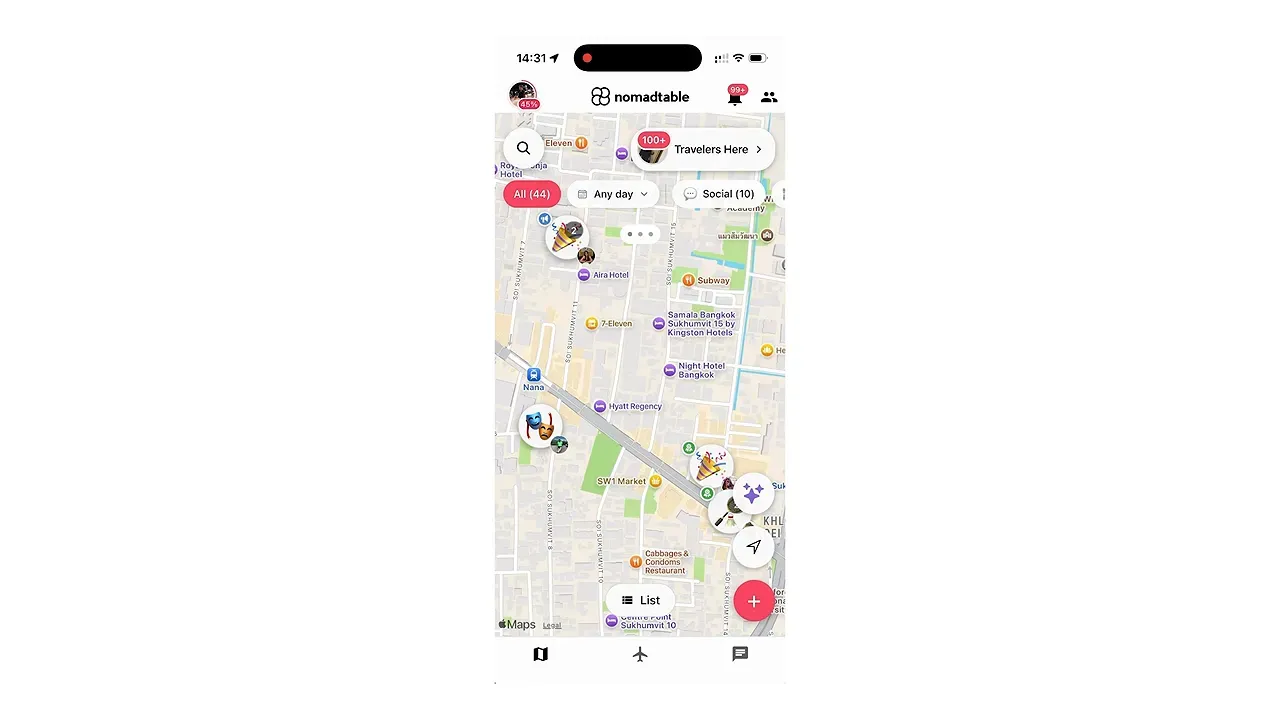
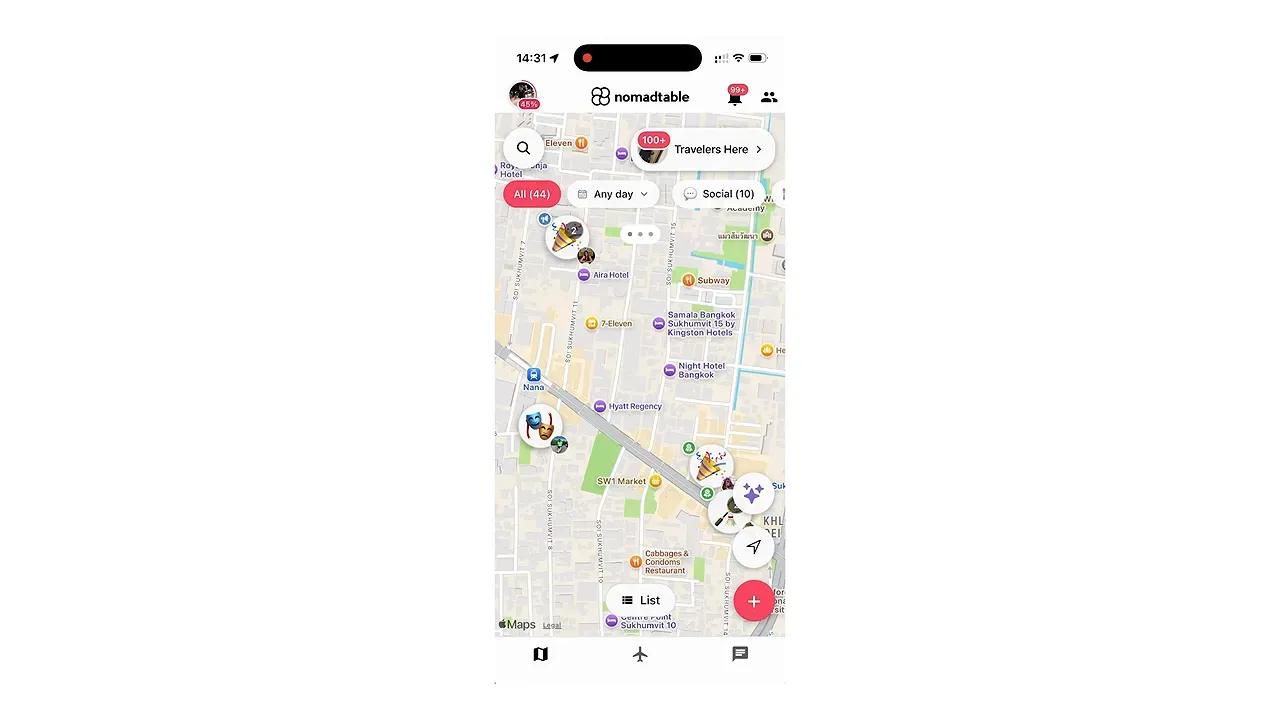
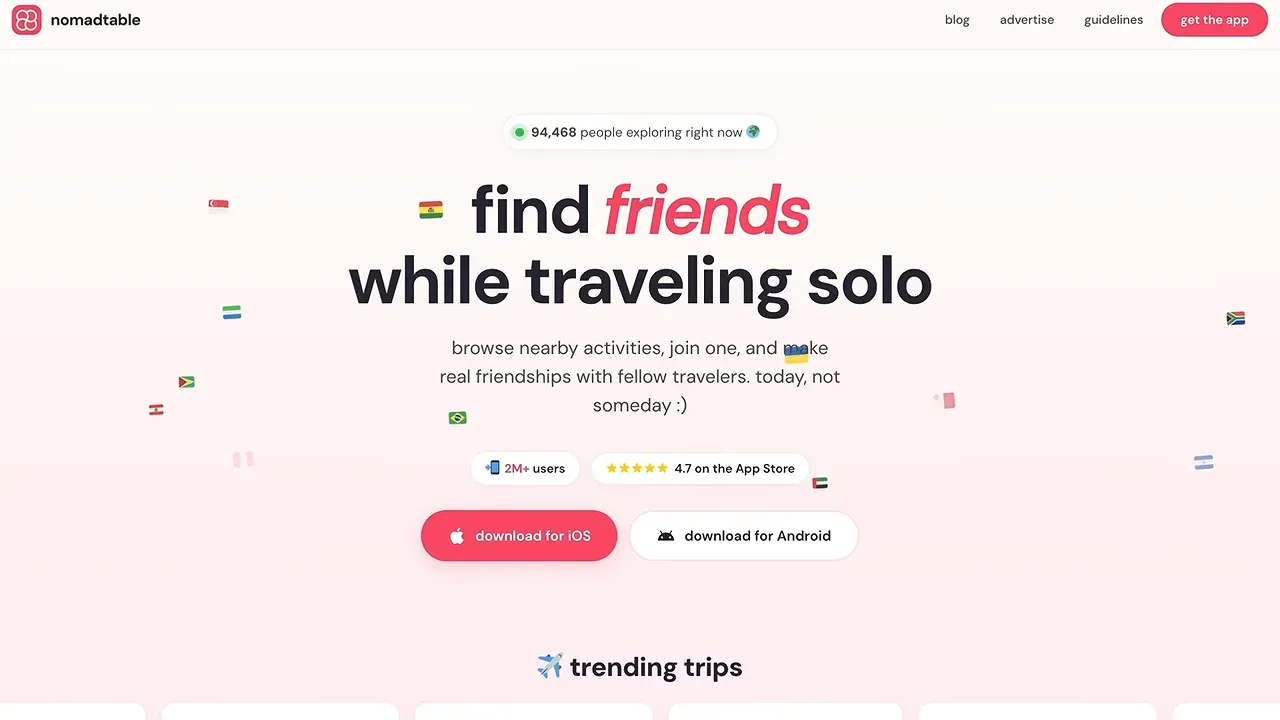
NomadTable is a meetup app designed for solo travelers, expats, and nomads. Jay built it around a simple but frustrating reality: traveling alone can make it surprisingly hard to find friendship and companionship. People arrive in a new city with a phone full of maps and booking confirmations, then realize none of that tells them who to have dinner with.
The product helps people discover nearby activities, join plans, and meet others who are also traveling. It is deliberately practical. The goal is not to create another feed people scroll through while avoiding eye contact in a café. The goal is to make real meetups happen.
That focus matters. Plenty of products begin with a clean problem statement, then slowly drift into feature accumulation. A solo founder adds dashboards, notifications, badges, integrations, and the occasional mysterious tab that nobody asked for. Eventually, the product becomes excellent at doing things other than its original job.
Jay’s operating principle is to keep returning to the core question: is the product still solving the original problem? For NomadTable, that means helping people meet in real life.
Why did Jay leave a software engineering job to build it?
Jay was working as a software engineer at Amazon when he got the idea during his travels. He did not describe himself as someone who had always been obsessed with entrepreneurship. The pull was not “I need to become a founder” so much as “this would be really fun to build, and not trying it would bother me for years.”
That distinction is useful. Entrepreneurship gets packaged as a giant cliff jump, complete with dramatic music and a LinkedIn post about courage. Jay looked at the downside more practically. He had already earned a job in big tech, so he knew he could pursue that path again. The real risk, in his mind, was ending up with a permanent case of “what if?”
He saw trying and failing as less costly than wondering whether he could have built something meaningful. That did not make the decision risk-free. It made the risk legible.
What can a builder take from that decision?
The useful lesson is not that everyone should quit tomorrow and declare war on salary. It is that big decisions get clearer when they are compared against the cost of inaction.
Jay suggests that modern software can be built quickly enough to test ideas while keeping a job. That makes the first move much smaller than the internet tends to imply. A builder can prototype, speak to potential users, and test demand before turning life into a startup montage.
A practical version of Jay’s question is this:
- Would failing at this be worse than never attempting it?
- Is there a small version that can be tested without detonating everything else?
- Would the work still feel worth doing if the numbers took longer than expected?
If the answer to the last question is no, the idea may be a spreadsheet wearing a fake mustache.
📱 Product Truth Beats Builder Assumptions
How does Jay stay connected to NomadTable users?
He puts himself in the environment his customers live in. Traveling is not merely a lifestyle accessory around the company. It is part of the research loop.
Jay spent four months in Bangkok, a major hub for NomadTable’s audience. Being surrounded by travelers, nomads, and expats gave him access to the kind of feedback that rarely appears in a tidy survey response. He attended meetups created through his own app, talked to people directly, and noticed where their needs differed across segments of the traveling community.
That produced feature ideas and revealed opportunities he would not have found from a distance.
Why is being close to users so important?
Because customer empathy decays. It happens slowly, which makes it dangerous. A product starts with firsthand knowledge of a painful situation. Then it gains traction. The founder gets busy. Decisions move from lived experience to abstractions, charts, secondhand anecdotes, and feature requests sorted by whoever wrote the loudest email.
Jay sees travel as an antidote to that drift because it keeps him in unfamiliar places and close to the behavior NomadTable exists to support. He gets to feel the awkwardness of arriving somewhere new, the energy of a good meetup, and the gaps between what a product promises and what it actually makes easy.
For builders outside the travel category, the same approach still applies. The question is not whether they should book a one-way ticket and start ordering iced lattes in Bali. The question is whether they spend enough time where the customer’s problem actually happens.
That might mean:
- Using the product as a customer would, not as its creator would.
- Joining customer calls without treating them as a feature-vending machine.
- Reading support conversations for patterns rather than isolated requests.
- Working alongside the people being served, where possible.
- Testing the workflow under the real constraints customers face.
The cleanest roadmap often begins with an uncomfortable moment that a spreadsheet cannot capture.
🚲 How Jay Structures a Day Without Worshipping the Calendar
What does Jay’s morning look like?
Jay starts by checking his phone, especially WhatsApp messages from creators and people connected to the business. This is not a meditation-app-approved opening to the day, but it is intentional. As a solo founder, he wants to know whether something broke, an urgent issue surfaced, or a time-sensitive situation needs attention.
Then come the ordinary human maintenance tasks: showering, shaving, breakfast when time allows, and getting out the door. He aims to start his day at a workspace around 9 a.m. when rested, or by 11 a.m. at the latest after a poor night of sleep.
He does not like beginning work from home. Instead, he creates a commute, whether that is walking, biking, or heading to a café or WeWork. The point is not to cosplay office life. It is to get movement in and create a clean transition into work.
How does he choose what to work on first?
Jay starts from what he noticed during his morning check-in. If something is time-sensitive, he handles it first. The opening two hours are his most focused block, devoted to whatever is most urgent or consequential.
This is a useful alternative to the usual productivity theater. A giant task manager can be comforting because it gives every task the dignity of existing. It can also turn important work into one more checkbox beneath “rename downloaded invoice.”
Jay’s approach is simpler:
- Check for genuine operational urgency.
- Resolve the issue if it cannot wait.
- Use the early, focused hours for meaningful work.
- Take a real break before concentration turns into decorative keyboard tapping.
It is not flashy. It is also how a solo operator avoids ignoring a fire because a color-coded weekly plan said it was “strategy time.”
Why does he take breaks and change locations?
Jay treats breaks as part of the work, not a reward for surviving it. He finds that his productive hours have diminishing returns without pauses. A break helps him reset so he can return with full attention rather than spend three more hours rereading the same sentence with increasing resentment.
He also changes scenery after roughly three or four hours in one place. That might mean returning home, going to the gym, or finding another café. The specific location matters less than breaking the stale loop of one chair, one screen, one slowly degrading brain.
For a solo builder tech stack, this is the part people skip because no app can charge monthly for it. But environment is a tool. If a short walk, bike ride, gym session, or room change restores focus, it belongs in the operating system.
🌍 Building While Traveling Is a Product Strategy, Not a Desk Aesthetic
Does traveling make building harder?
Yes, in obvious ways. Travel can mean imperfect Wi-Fi, no external monitor, unfamiliar desks, inconsistent lighting, and none of the tiny comforts that make a permanent setup feel efficient. Anyone who claims otherwise has either never tried to ship something from a questionable café connection or has unusually low standards for Wi-Fi.
Jay still believes the trade is worth it for him. New places put him in unfamiliar situations, generate energy, and produce ideas. The inspiration and product insight he gets from travel outweigh the inconvenience of leaving his preferred setup behind.
That is not a universal prescription. Some people need stability and a fixed workspace to do their best work. Jay’s point is more grounded: builders should pay attention to the conditions that actually create energy and ideas for them, rather than copying someone else’s ideal routine.
What does this have to do with building apps in 2026?
The barrier to testing software ideas is lower than it used to be. Builders can create and validate products faster, whether they code from scratch or use no-code startup tools to get an early version into users’ hands. That does not remove the hard part. It simply changes it.
The hard part remains identifying a problem worth solving, understanding the people who feel it, and staying committed through the unglamorous middle. An AI funnel builder can help someone produce more assets. It cannot manufacture direct knowledge of why people behave the way they do.
Jay’s story makes the distinction clear. NomadTable did not become meaningful because it fit a trend. It was rooted in an experience he cared about enough to keep exploring firsthand.
🏃 The Evening Routine: Protect the Builder, Not Just the Build
How does Jay end the workday?
Movement is non-negotiable. After spending long hours working, Jay needs to be active. Depending on the day, that means running, tennis, padel, or lifting at the gym.
Afterward, he makes a smoothie or dinner, spends time with friends when possible, and keeps room for social life. Friends are not framed as a distraction from building. They are a meaningful part of life, whether that is co-working, dinner, or simply hanging out.
Later in the evening, Jay may do light work on the couch with tea. This is not the time for a heroic, sleep-destroying sprint. It is lower-pressure work before bed, then rest.
Why is this worth calling out?
Because solo builders can accidentally turn freedom into a subscription to permanent availability. The work follows them everywhere, and every unclaimed evening begins to feel like a missed opportunity. Eventually, the business owns the builder. It is a very efficient system, if the goal is to make one person tired.
Jay’s routine suggests a better constraint: serious work should fit inside a serious life. Exercise, friendship, meals, rest, and fun are not evidence that someone lacks ambition. They are part of sustaining it.
🔥 The Real Advantage Is Caring Enough to Stay in the Game
What is Jay’s biggest lesson from building NomadTable?
Jay believes founders should work on things they genuinely care about. Building a company requires so much attention that doing it purely for money, status, or an impressive founder label is likely to become miserable.
Passion is not just a motivational poster concept here. It is an execution advantage. When someone enjoys the work and believes in the problem, they can bring more persistence, creativity, and resilience than someone running a business they secretly cannot stand.
Jay puts it plainly: even if NomadTable only helped two people meet, that outcome would still feel fulfilling. The revenue and user scale are substantial, but the underlying satisfaction comes from seeing a human problem get solved.
What should an aspiring founder test tonight?
Before assembling an AI-powered launch system for creators, a complicated automation, or a 14-tool productivity bunker, test the emotional durability of the problem.
- Pick a problem encountered personally or observed repeatedly.
- Write down who experiences it and when it becomes painful.
- Find a way to spend time in that environment this week.
- Talk to people dealing with it before deciding what to build.
- Make the smallest useful version, then learn from real use.
That is not a promise of instant revenue. It is a more honest foundation than trying to launch with AI tools simply because software has become easier to generate.
✨ The Real Talk: Try Things Before Regret Makes the Decision for You
What is Jay’s advice for people considering the solo builder path?
Jay’s philosophy is to have fun with life, spend time with loved ones, and avoid treating every decision as if civilization depends on it. Life is short, and tomorrow is not guaranteed. That is not an argument for reckless decisions. It is an argument against postponing meaningful attempts forever.
For him, this is a particularly good time to try building. Software can be created quickly, and ideas can be tested alongside a job. The best move may not be quitting. It may simply be starting, learning, and seeing whether the work earns a larger place in life.
The takeaway from Jay’s $140K-per-month app is not that every builder needs to travel constantly, check WhatsApp at sunrise, or develop a relationship with cafés and airport Wi-Fi. It is that a durable business can grow from a problem someone cares deeply enough to keep living near.
Build the smallest version. Stay close to the people it is for. Take breaks before the work gets stupid. Move your body. Make room for friends. Then remix the system until it fits real life, not an imaginary founder character built by productivity influencers and two browser tabs open.
An AI-powered launch system for creators can speed up the mechanical parts of shipping. It cannot replace curiosity, firsthand insight, or the willingness to try something because the cost of never trying feels worse.
❓ FAQ
What does NomadTable do?
NomadTable is a meetup app for solo travelers, expats, and digital nomads. It helps people find nearby activities, join plans, and create real-world connections while traveling.
How much revenue does Jay Raavi’s app make?
Jay reports that NomadTable generates about $140,000 in monthly recurring revenue.
How does Jay organize his workday as a solo founder?
He begins by checking for urgent messages and issues, works in focused early blocks, takes meaningful breaks, changes locations after several hours, exercises, and keeps evening work light.
Why does Jay travel while building NomadTable?
Travel keeps him close to the people NomadTable serves and gives him direct product insights. He finds that new environments generate ideas worth more than the convenience of a perfect permanent workspace.