
Interview with Bhanu, builder behind SiteGPT — The marketing playbook that grew an app to $13K/month

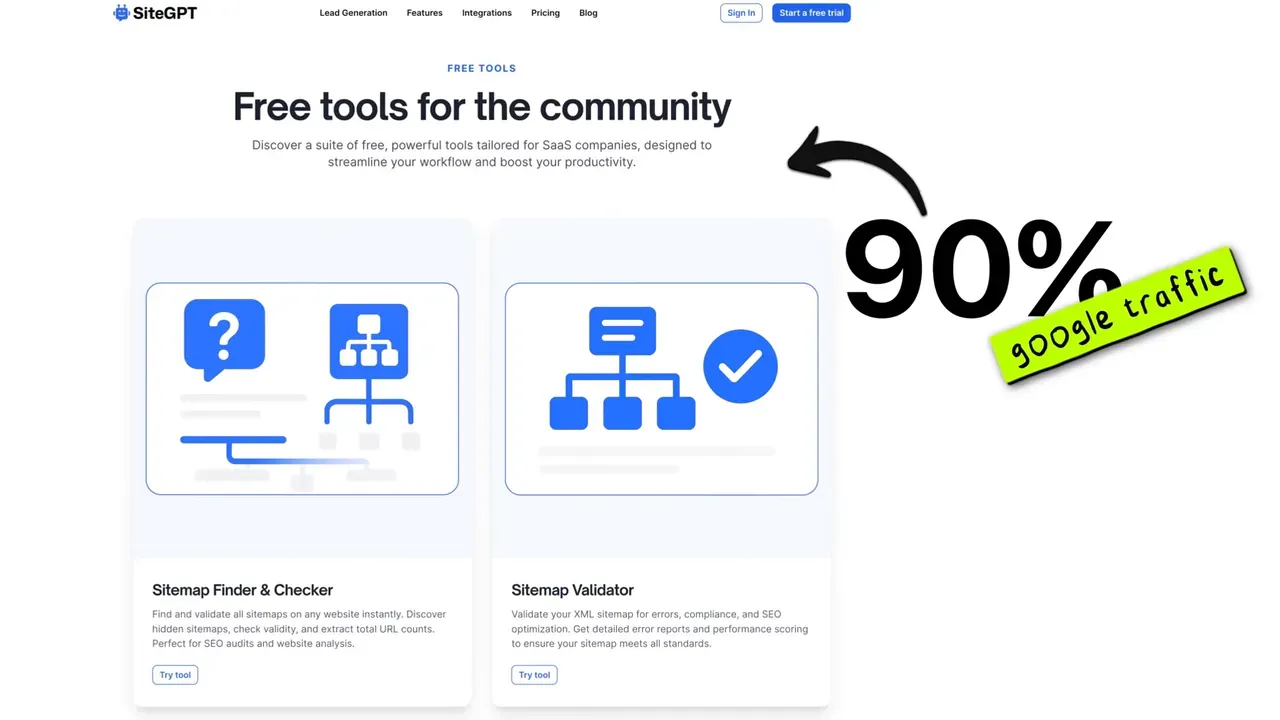
Table of Contents
- Why this matters 🔥
- Quick context 🧭
- Core idea 💡
- Playbook: Building free tools that rank 🛠️
- Tech stack and tooling ⚙️
- The real mechanics — what these tools actually look like 🔍
- Reality check — what actually works and what to skip 🧾
- How a solo builder can start tonight ⚡
- Stack note for solo builders 🧩
- Final verdict — should you try this? ✅
- Real talk — what to expect and common failure modes 🛑
- FAQ 🤖
- Closing note ✍️
Why this matters 🔥
Most builders hate marketing. They enjoy shipping features, not cold outreach, not content calendars that never end. Bhanu turned that problem into an advantage. He used building as marketing: shipping dozens of tiny, free AI tools that rank on search and funnel users into his paid product. This is an accessible, repeatable blueprint for an AI-powered launch system for creators who would rather code than craft catchy ad copy.
Quick context 🧭
Bhanu is a solo-minded builder from India who launched SiteGPT, a service that turns a website's content into an always-on AI assistant. He grew SiteGPT to $13,000 MRR with a high lifetime value and almost zero paid marketing spend. The engine behind that growth: free tools that attract search traffic, mostly from Google, and convert a fraction into trials and customers.

Core idea 💡
Free tools that solve a small, targeted search intent problem can rank easily when you aim for low-competition keywords. Each tool is a little landing page that ranks for a useful query, sends organic traffic, and nudges users toward the actual product with a contextual CTA. Over time, dozens of these pages compound into steady organic traffic and predictable lead volume.
Pat: Tell us what SiteGPT actually does and how it makes money.
Bhanu explains SiteGPT as a chatbot builder that ingests a site's content and provides a 24/7 AI assistant that answers visitors' questions. Pricing is subscription-based and depends on usage metrics like number of bots, messages, or indexed content. Rough performance metrics he shared: roughly 50,000 visitors per month, 200 leads, about 60 trials, and a 25 to 40 percent conversion from trials to paid customers. Average revenue per customer sits around $100 and lifetime value is roughly $1,700 to $1,800. The upshot: a relatively small number of conversions from a high-volume organic funnel gets you to $13K MRR.
Pat: You grew this with no paid spend. How did you actually get that traffic?
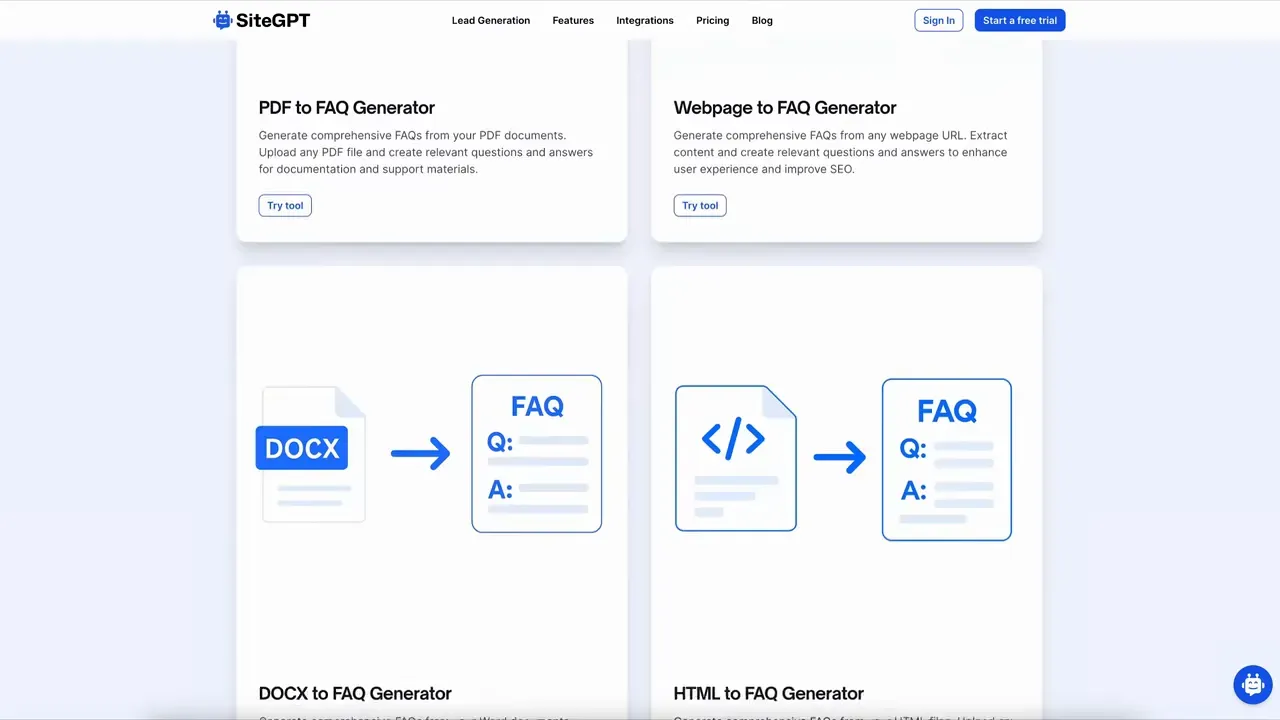
Bhanu used what he calls “free tools marketing.” He built almost 50 tiny utilities—think PDF-to-chatbot demos, name generators for chatbots, small file parsers—that directly match search queries people have. Around 60 to 70 percent of traffic comes from Google, and nearly 90 percent of Google-origin traffic is from these tools. Each tool ranks for a specific keyword, brings in visitors, and includes a natural CTA to SiteGPT. The tools are intentionally small, relevant to the product, and easy to build and maintain.
Playbook: Building free tools that rank 🛠️
Below is the distilled seven-step playbook Bhanu used. It’s tactical, gets you started tonight, and is built for solo builders who prefer keyboard time to marketing ops.
Pat: Walk us through the exact step-by-step for building these tools and ranking them.
Bhanu outlines a repeatable process that uses keyword research to pick low-competition, reasonable-volume queries and then ships a tiny tool to own that query.
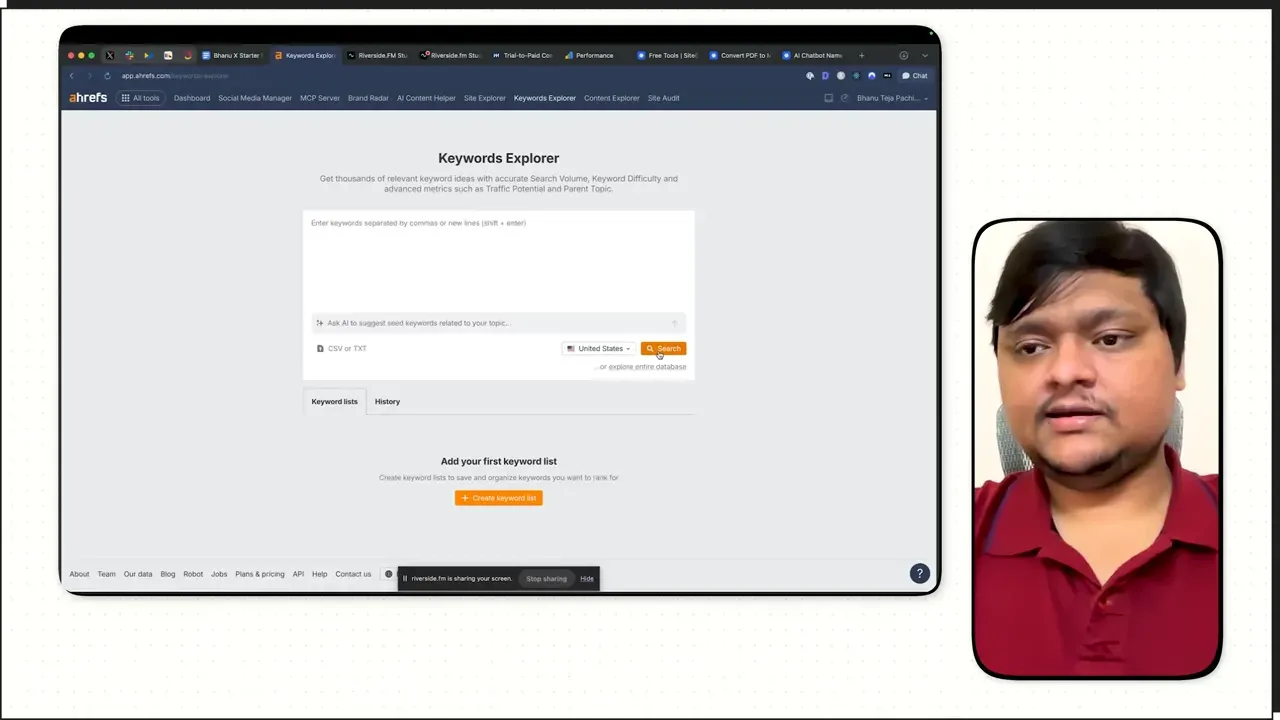
- Keyword harvest — blank search in Ahrefs: Start in Keywords Explorer and run a broad search with the input left blank. This pulls up a wide list of related queries—useful when you don't know the exact phrasing people use.
- Filter by intent: Add an include keyword like "AI" or "generator" to narrow results to relevant searches for your niche (for example, AI generator, AI chatbot name generator).
- Filter by keyword difficulty: Set KD to a low threshold — Bhanu uses less than 10. Target the low-hanging fruit any decent site can rank for quickly.
- Filter by volume: Apply a minimum search volume filter (he suggests 1,000 monthly searches as a simple cutoff). This balances effort against payoff.
- Build a keyword list: Export and list the candidate keywords in Notion with volume and KD. This becomes your product backlog for free tools.
- Plan the CTA: For each tool, write the exact CTA that links back to your product. Make the CTA contextual and relevant—example: "You tried one PDF; imagine indexing all your docs. Try SiteGPT."
- Prioritize and ship: Rank opportunities by volume, low difficulty, ease of building, and relevance to the product. Build the low-effort, high-relevance tools first and ship quickly.
Bhanu emphasizes speed: once you have a framework, a new tool can be spun up in under five minutes when you have templates and code reuse in place. With modern AI helpers and code snippets, the marginal cost to create new tools is tiny.
Tech stack and tooling ⚙️
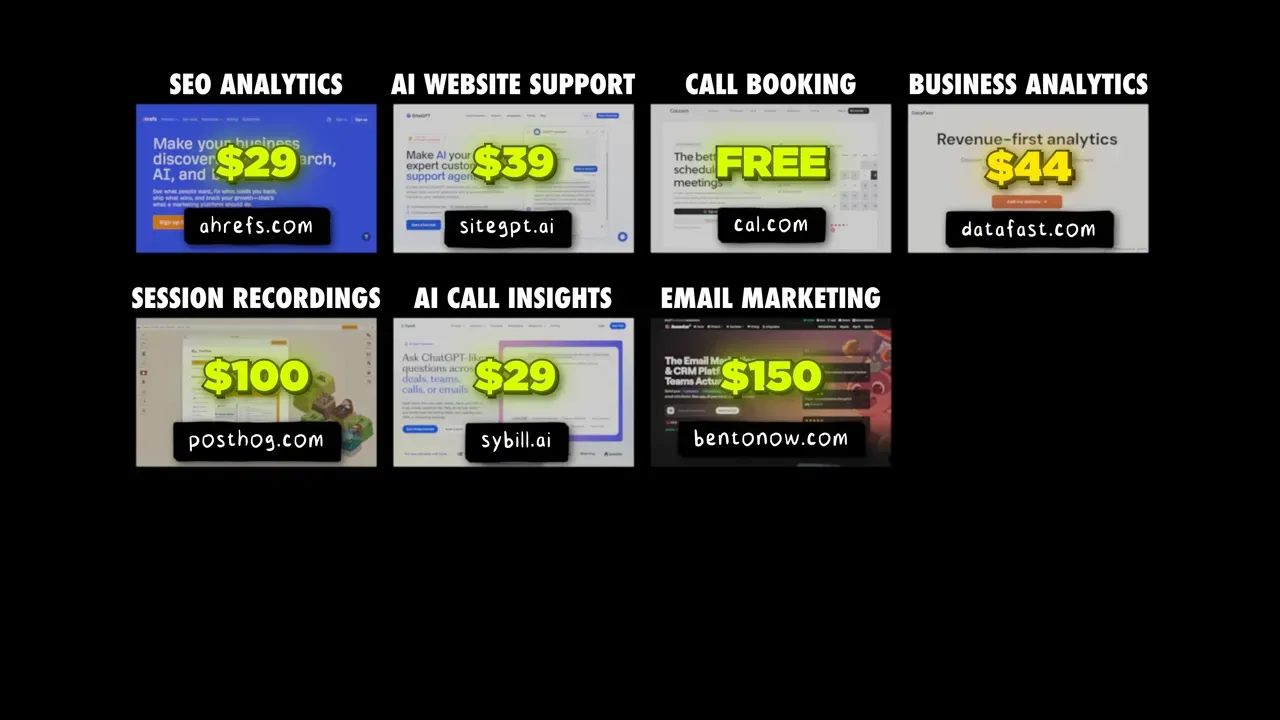
Bhanu stays lean. He uses Ahrefs for keyword research, SiteGPT to power product demos and support, and a handful of other services for analytics, documentation, and customer ops. The full list he mentioned:
- Ahrefs for SEO and keyword discovery
- SiteGPT for the product itself and demos
- cal.com for scheduling
- PostHog and DataDog-style tools for analytics
- Call recording tool (CBI) for customer calls
- Bento for transactional emails
- Feather (previous product) for content generation
- Feature request tools for feedback
- Mintlify for docs
- Cloud code tools for coding with AI
- ChartMogul for subscription analytics
Pat: How much did this cost to set up?
Bhanu’s primary recurring cost is Ahrefs. Other costs are standard SaaS tools for analytics and communication. Because the tools are small and unmonetized, they carry minimal maintenance cost. The biggest investment is developer time upfront and some tool subscriptions that support scaling the analytics and customer side.
The real mechanics — what these tools actually look like 🔍
Each tool is effectively a mini landing page plus a tiny interactive widget. Some examples: upload a PDF and get a one-paragraph summary, paste your blog URL and get a suggested chatbot name, or drop a help doc and get a quick FAQ. The critical parts are:
- Clear, search-aligned title: match the target keyword precisely in the title and H1
- Fast, useful output: give immediate value in one or two steps
- Contextual CTA: nudges the user toward the paid product without being spammy
- Indexable content: keep content static or server-rendered so search engines can crawl pages easily
Pat: Are these tools just a vanity trick for traffic or do they actually convert?
They convert. Conversion rates are small per visitor but scale with volume. Bhanu reported about 200 leads from 50,000 visitors and around 60 trials per month, with a chunk of those trials converting to paid customers. The magic is compounding: once you have dozens of ranked tools, the steady stream of organic traffic becomes a reliable source of leads.
Reality check — what actually works and what to skip 🧾
Building free tools is not a fast trick to instant wealth. It’s a low-cost, repeatable channel best suited for creators who enjoy building and shipping. The parts that matter:
- Ship small. A tool that does one thing well is better than a complex demo that never ships.
- Be relevant. Tools must solve search intent that aligns with your product. Irrelevant tools attract traffic but not customers.
- Automate the repeatable. Use templates, AI snippets, and small code frameworks so spinning up a new tool is minutes, not days.
- Measure. Track which tools bring leads and iterate. Kill the ones that don't.
Pat: If you could go back, what would you change?
Bhanu’s main regret is spending too long polishing before launch. He recommends launching with a minimal, core feature and letting user feedback drive product direction. That means trade perfection for speed and validate before iterating.
How a solo builder can start tonight ⚡
Actionable checklist:
- Create an Ahrefs project and run Keywords Explorer with a blank query to harvest ideas.
- Apply filters: include a niche modifier (AI, chatbot), KD less than 10, and volume above 1,000.
- Export a prioritized list into Notion with columns: keyword, volume, KD, effort, relevance, CTA text.
- Pick one keyword, build a one-page tool that solves that need in under an hour. Use templates or AI to accelerate.
- Add a contextual CTA that flows naturally into your product.
- Deploy statically or server-side render so search engines crawl it easily.
- Measure traffic and leads, then repeat with the next prioritized keyword.
Stack note for solo builders 🧩
If you want a low-friction pipeline, aim for the following:
- Static hosting (fast and cheap)
- Small serverless function for processing uploads or calls
- Lightweight analytics (PostHog or Plausible) and a simple lead capture
- Use AI-assisted coding (cloud code helpers) to reduce build time
Pat: Any prompt, shortcut, or tactical hack you use to speed this up?
Bhanu automates template generation. He told his internal tools to "look at these existing free tools and build this new tool for keyword X," then tweaks the output. The real shortcut is reusing code and patterns: once you have a generator template for a given category, you can spawn many variations with minimal changes.
Final verdict — should you try this? ✅
This approach suits builders who want a low-effort, compounding organic channel. It favors people who like shipping small things repeatedly over those who prefer longform content or paid campaigns. If you’re the kind of person who builds better than you market, this method lets you do what you do best while still growing a funnel.
Use "AI-powered launch system for creators" as your mental frame: small AI-enabled tools that map to search queries, lead to an AI funnel builder or product, and compound organic traffic over time. Combine that with a lean solo builder tech stack and you have a durable, inexpensive growth engine.
Real talk — what to expect and common failure modes 🛑
Expect low conversion per tool, but predictable scale if you publish consistently. Common mistakes:
- Building tools that are unrelated to the product. They bring traffic but not customers.
- Chasing high-difficulty keywords. You will lose — aim for easy KD first.
- Over-polishing. If the tool provides value, ship it and iterate from feedback.
FAQ 🤖
How long does it take to build a single free tool?
Once templates and patterns exist, Bhanu says under five minutes for new variations. The first tool in a category will take longer—plan for an hour to wire up upload handling and output. Reuse code and AI templates to scale quickly.
Do these tools require heavy maintenance?
No. Small tools with minimal dependencies generally need little upkeep. Most maintenance comes from platform updates or addressing spam/abuse. If you keep the UI simple and serverless functions small, overhead is low.
What metrics should I track?
Track organic traffic per tool, lead captures, trial starts, and conversion rate to paid. Also monitor keyword rankings and churn for customers originating from these tools to understand long-term value.
Can this work without Ahrefs?
Yes. Ahrefs is a convenience. You can use other keyword tools, free search suggestions, or even Google Autosuggest to find low-competition queries. The key is identifying specific search intent and low KD opportunities.
What kind of tools convert best?
Tools that mirror the core customer problem convert best. For SiteGPT it was PDF-to-chatbot and bot-name generators—utilities that implied a larger need for a full product. If the tool gives a taste of the product workflow, conversion will be higher.
Closing note ✍️
This is not a replacement for product-market fit or a sophisticated growth team. It is a practical, low-cost funnel tactic for builders. If you prefer building to marketing, this method lets you turn your engineering skill into traffic without becoming a marketer. Ship a bunch of tiny, useful things. Measure. Iterate. Let the compound interest of organic search do the heavy lifting.
This article was inspired by this amazing video The Marketing Playbook That Grew My App to $13K/month. Check out more from their awesome channel.