
Breakdown: Nicole, the Founder Behind Two Apps Making $150K/Month Each
Nicole built four apps in two years by designing for distribution first. Here's her channel-testing playbook and the UGC creator system behind it.

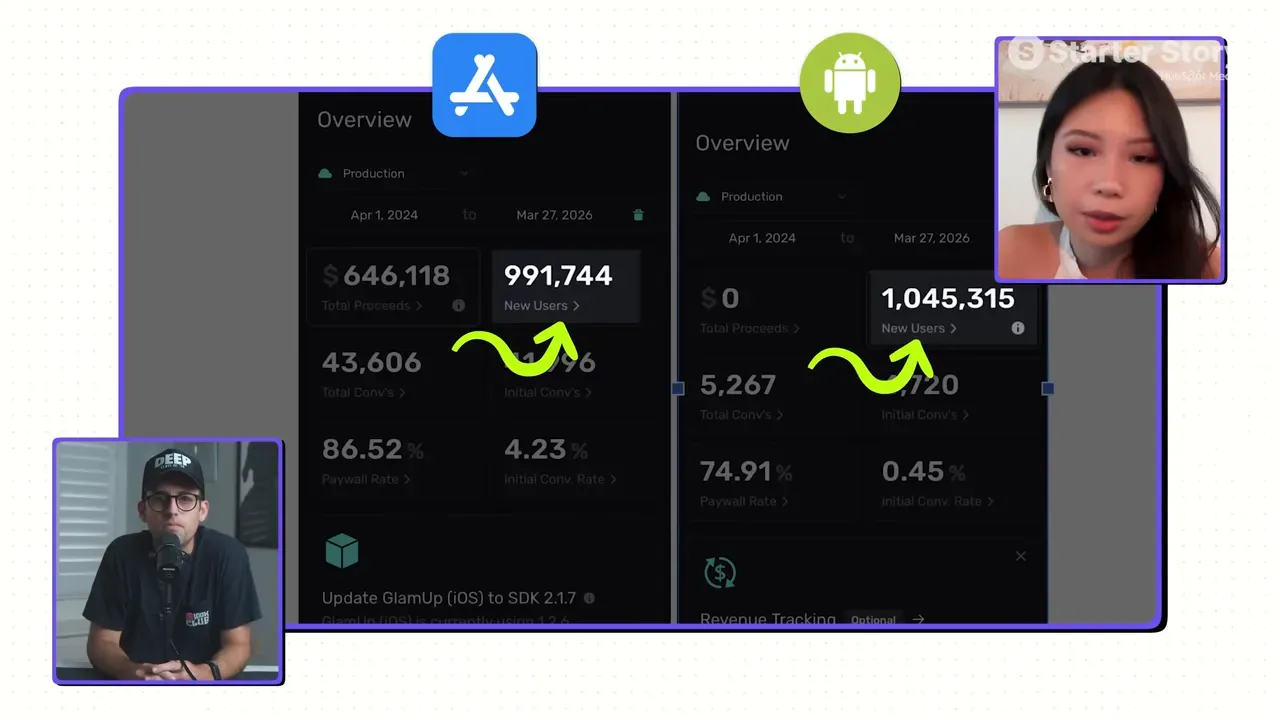
Table of Contents
- 🔥 Why This Matters More Than Another “Build Faster With AI” Story
- 🧩 The Setup: Who Nicole Is and What She Built
- 🛠️ The Origin Story: From College to Consumer App Growth Machine
- 📈 The Real Growth Strategy: Design the App for Distribution
- 🚀 The Playbook: How Nicole Finds a Viral Distribution Strategy
- 🎥 Building the UGC Machine
- 📱 The Product Side: What the Apps Look Like and Why They Convert
- ⚙️ The Tech Stack Behind the Machine
- 🧠 The Bigger Lesson: There Are Levels to This
- 🧪 The Real Talk
- 🧰 Build This Stack
- ❓FAQ
- 🏁 Final Takeaway
🔥 Why This Matters More Than Another “Build Faster With AI” Story
Most people still think the hard part of building an app is building the app.
That used to be a decent excuse. Now it is mostly a comforting lie.
Nicole’s story is useful because it cuts through that fantasy fast. She has built four apps in two years. Two of them crossed $150,000 per month, and two more are already around $200,000 MRR while still in stealth. Her edge is not some secret model or magical product insight. It is distribution, systemized hard enough that virality stops looking like luck and starts looking like operations.
That is why this conversation matters for anyone building consumer apps, creator tools, or really any product that lives or dies by attention. The lesson is not “post more.” The lesson is that growth has to be designed into the app, the content, and the team running the machine.
🧩 The Setup: Who Nicole Is and What She Built
Who is Nicole, and what has she built?
Nicole is a growth-focused app founder who handles everything that is not coding related. That includes app design, onboarding, conversion strategy, and distribution. In the past two years, she has built four apps.
- Glam Up, a beauty app focused on makeup, skincare, and “glow-up” guidance for women
- Sprout, previously called PrepAI, a jobs-focused app for college students and recent grads
- Two additional apps in stealth, both already generating serious revenue
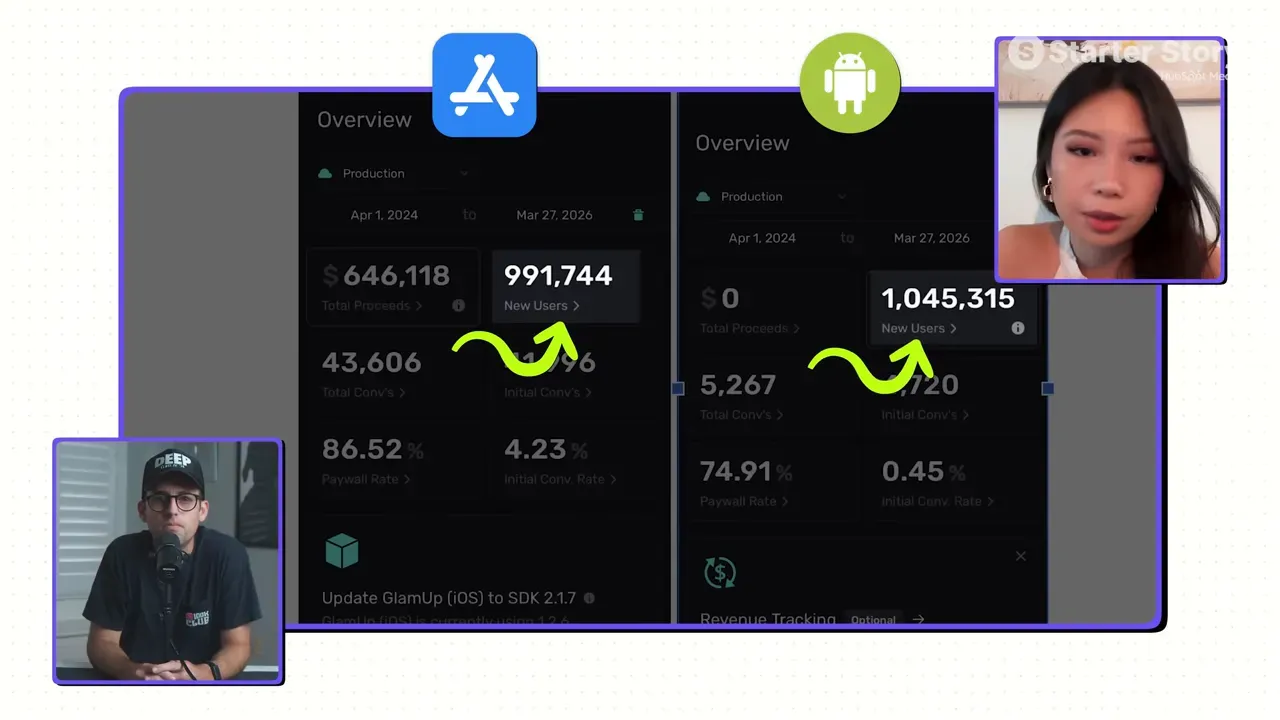
Her first app, Glam Up, reached 1 million users in six months and peaked around $150,000 MRR. Her second app, Sprout, grew to roughly $250,000 MRR in eight months and has continued to hold around the $200,000 range.
What do these apps actually do?
Glam Up is an app for women who want to improve their makeup or skincare routine. Users upload a selfie, and the app analyzes their face to provide color analysis, glow-up guidance, product recommendations, and tailored makeup looks.
Sprout targets students and early-career job seekers. After onboarding, it recommends jobs based on the user’s profile. If the user swipes right, the app auto-applies on the company’s website. It also helps tailor resumes and supports the job search workflow.
Both apps use a straightforward monetization model: hard paywalls with weekly or monthly subscriptions. Nothing fancy. Just clear value, then a paywall.
How big is the reach behind those numbers?
A lot bigger than most builders want to hear.
For Glam Up, during its peak growth period, the brand was generating roughly 40 to 50 million TikTok views per month and around 200 million Instagram views.
For Sprout, Nicole said the team was averaging around 100 million monthly views late last year. At one point, they hit 400 million views in seven days. More recently, the portfolio has been doing roughly 400 to 500 million monthly views across TikTok, Instagram, and YouTube Shorts.
That is the scale required for consumer apps at this level. Not one clever post. Not “let’s test a few ideas.” Real volume.
🛠️ The Origin Story: From College to Consumer App Growth Machine
How did Nicole get into app building?
She did not start as some lifelong mobile app operator.
While in college, Nicole went through what she described as an existential crisis, went backpacking through Europe, and started a podcast on TikTok. That content took off quickly. She gained 10,000 followers in the first 10 days.
She did not want to become an influencer, so she moved toward startups and marketing. In San Francisco, she worked at a tech startup and met her future co-founder, Erin. He was in Y Combinator and HF0 at the time. Later, when Nicole returned to Los Angeles to finish college, they had a 10-minute call and decided to start an app together.
That app became Glam Up.
How did she land on the Glam Up idea?
It started with pattern recognition, not divine inspiration.
Nicole’s co-founder was around other consumer app founders, including the team behind UMax, a looksmaxing app for men. They saw a similar opportunity for women in the beauty space and realized there were no strong equivalents on the App Store yet.
So instead of trying to invent a completely new category, they adapted an already validated behavior into a different market.
That is a useful reminder: many strong app ideas are just proven mechanics applied to an underserved audience.
What about Sprout?
Sprout came from wanting to move beyond beauty and target a segment with stronger purchasing power: college students and recent grads looking for jobs.
Again, no romance here. Just practical market selection.
📈 The Real Growth Strategy: Design the App for Distribution
What is Nicole’s high-level framework for growing consumer apps?
Her core idea is simple and very easy to underestimate:
The app’s design is part of the distribution strategy.
She is not just thinking about whether onboarding is pretty or whether the paywall converts. She is designing products that naturally create social content.
That means:
- Welcome screens that frame the value clearly
- Onboarding that primes users to convert
- Features that are visually shareable or easy to demo in short-form content
- Outputs that creators can turn into hooks, reactions, screenshots, before-and-after stories, or tutorials
Once that foundation is in place, the team runs aggressive content testing on social platforms until it finds a repeatable viral format.
If you are building a consumer app, this same logic applies. The product itself has to produce moments that can travel. If the thing cannot become content, distribution gets expensive fast.
Why does this matter so much now?
Because building product is getting easier while getting attention is getting harder.
AI can help ship features. It can help write code. It can help prototype faster than ever. Great. That means the moat shifts. Distribution, positioning, creator systems, and content velocity become more important, not less.
The people who win are usually not the ones with the most elegant stack. They are the ones who built a machine around attention.
🚀 The Playbook: How Nicole Finds a Viral Distribution Strategy
If Nicole had to start from scratch today, what would she test first?
She laid out a pretty clean framework for this.
Step 1: Test multiple acquisition channels quickly
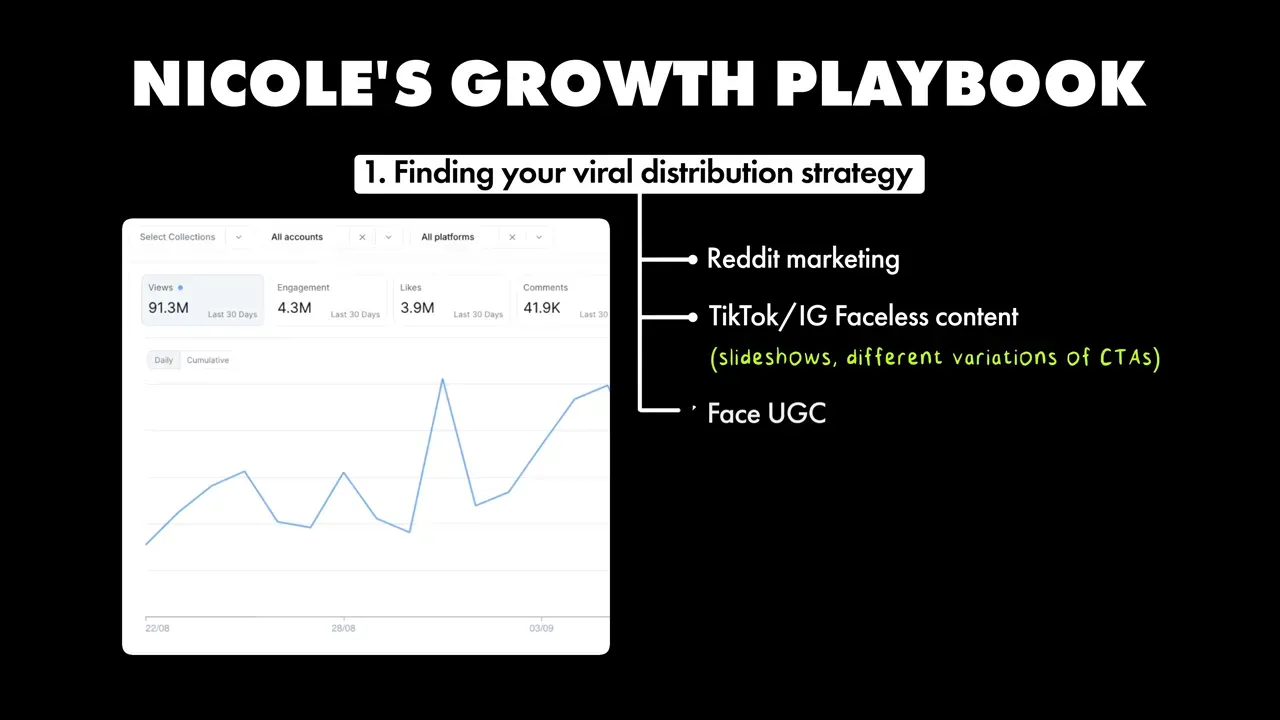
Nicole starts by trying a handful of distribution strategies, usually over two to three weeks each:
- Reddit marketing
- TikTok and Instagram faceless content, including slideshows and different CTA variations
- Face-based UGC, either with real creators or AI-generated UGC
- Paid ads and influencer marketing, if there is enough capital
The important part is not just trying a channel once and calling it a test. She goes deep inside each category.
If the category is faceless content, that means testing:
- Slideshows
- Short edited videos
- Different hooks
- Different framing angles
- Different CTAs
- Different visual structures
In her words, once a strategy is selected, the team tries to “milk the hell out of it.” Which, honestly, is a better growth philosophy than most glossy startup decks.
What counts as a “winning strategy”?
Something that repeatedly goes viral and can be scaled through process.
That is a key distinction. One viral hit means almost nothing. A format that can be taught, replicated, and produced at volume is the actual prize.
🎥 Building the UGC Machine
What happens after a content format starts working?
That is when Nicole starts building a proper UGC system.
Her point here is important: no matter how good the creators are, the founder or growth lead needs to understand the app and the content strategy more deeply than the creators do. The team cannot outsource the thinking and hope the internet figures it out.
How does she build that UGC system?
She breaks it into four stages.
1. Source the right creators
Creators need to fit the content strategy.
If the content is talking-head style, look for people who are naturally good at talking. If the format is reaction-based, find creators with strong facial expressions and screen presence.
She uses two sourcing paths:
- Inbound: application forms posted in UGC group chats, Instagram communities, Reddit, or creator platforms like Sideshift
- Outbound: virtual assistants doing direct outreach to micro-influencers
2. Onboard and train them properly
This is where most teams get lazy and then act surprised when the content is bad.
Nicole interviews creators first to do a quick “vibe check” and confirm they are taking the campaign seriously. Then she puts them through a creator course tailored to the app.
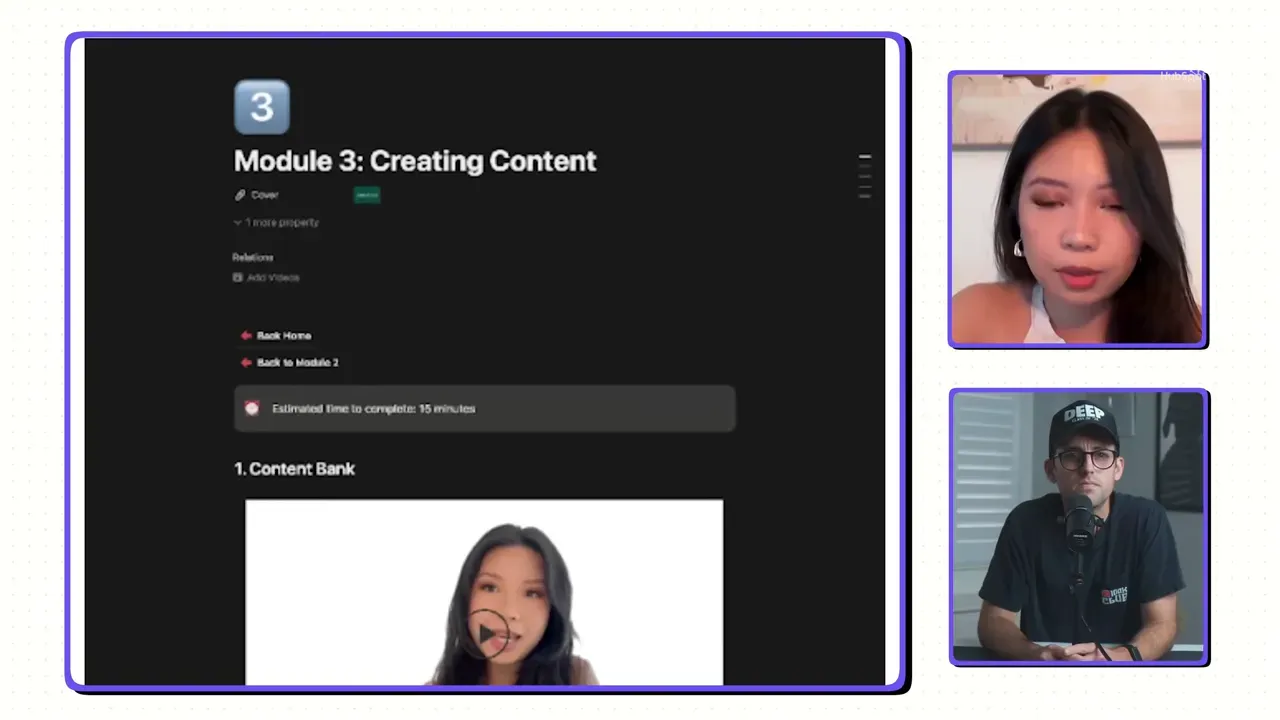
For Sprout, she built a training flow with:
- A Typeform intake
- Video modules
- A content bank
- Quizzes at the end of each module
More than 50% of creators who go through this course go viral within the first two weeks.
That number is wild, but the principle behind it is even more useful: creators perform better when “good content” is operationalized instead of vaguely described.
3. Manage creators with an actual system
As the team grows, creator management becomes its own function.
Nicole mentioned a few ways teams handle this:
- Hiring influencers to manage UGC creators
- Promoting top-performing UGC creators into manager roles
- Running communication through Discord
- Using bi-weekly or monthly feedback calls
The exact setup matters less than having one. If everyone is improvising, content quality eventually collapses under its own chaos.
4. Systemize and optimize when scale hits
Once the engine is producing results, she adds more structure:
- Referral systems for creators
- Dashboards for analytics and growth tracking
- Better internal portals
- Operational improvements based on performance data
This is where a creator program starts looking less like marketing and more like a real operating system.
What is Nicole’s philosophy on virality?
She does not deny luck. She just does not worship it.
Her view is that getting one viral video can involve luck, but maintaining repeated virality is about maximizing the surface area for luck through systems, training, and volume.
That is about as close to “real talk” as growth advice gets.
📱 The Product Side: What the Apps Look Like and Why They Convert
What does Glam Up’s user flow look like?
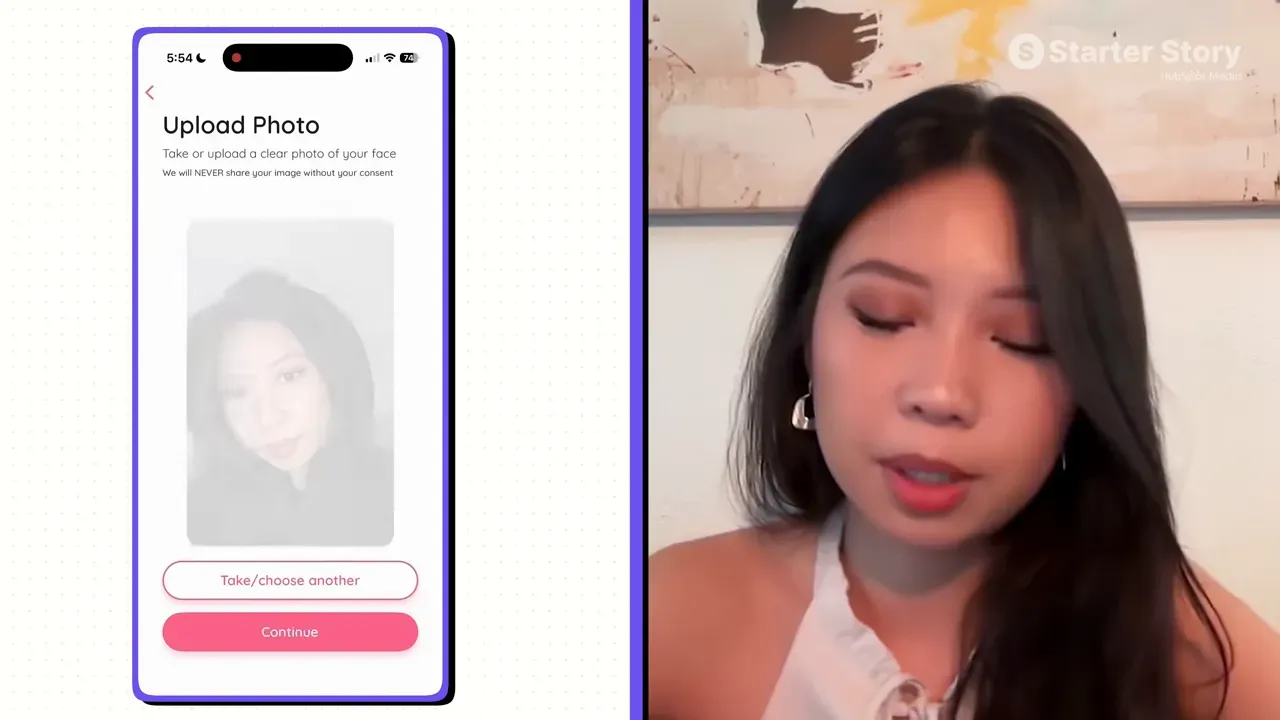
The app starts with a welcome screen and onboarding questions. Then users choose a scan, upload a photo, or take a selfie. Paying users get face scans, color analysis, glow-up guides, makeup looks, and product recommendations.
The flow is built for immediate curiosity. People want to know what the app will say about them, which makes it naturally strong for social clips and creator-led demos.
What about Sprout’s user flow?
Sprout also starts with welcome pages and onboarding. After that, users see job listings tailored to their answers. Swiping right automatically applies through the company website, while swiping left skips the role. Resume tailoring is included as well.
Again, the product itself lends itself to easy content. There is a clear before-and-after value proposition. The app takes an annoying process and compresses it into a swipe mechanic.
⚙️ The Tech Stack Behind the Machine
What tools does Nicole use to build and run these apps?
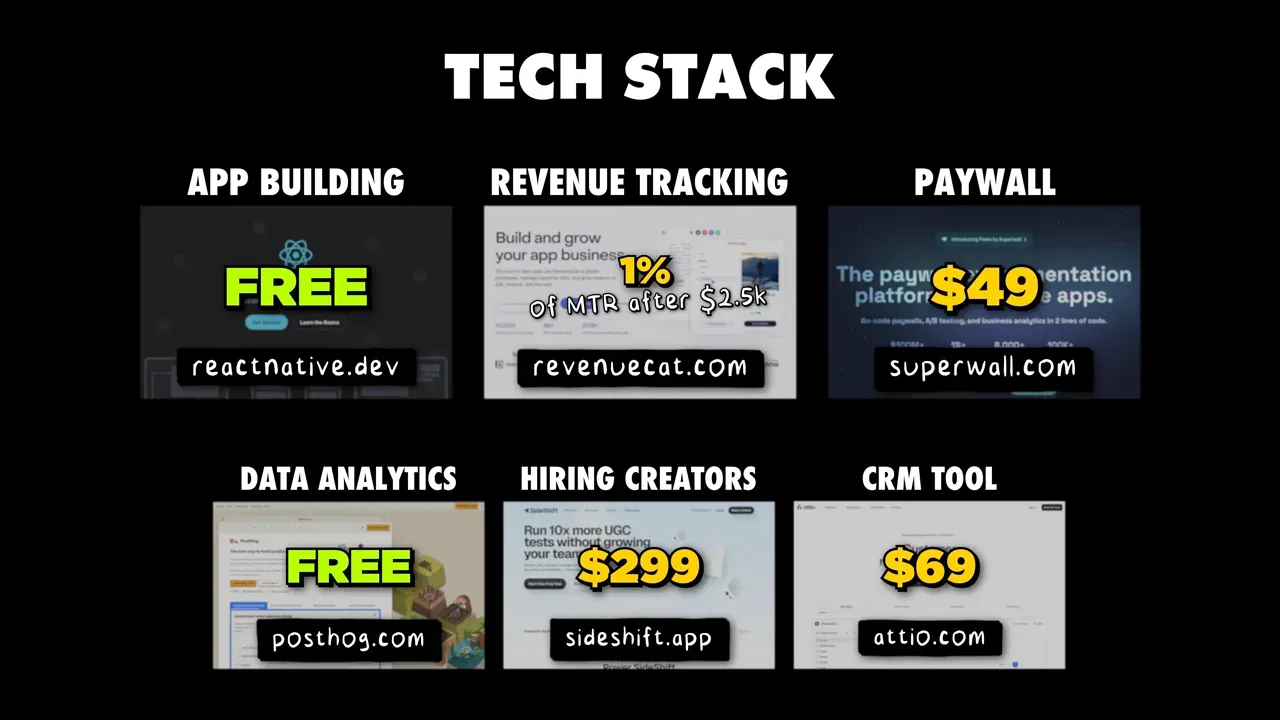
Her stack is practical and pretty lean:
- React Native for app development
- RevenueCat for revenue tracking
- Superwall for paywalls
- PostHog for analytics
- Sideshift for recruiting UGC creators
- Attio for CRM
She also mentioned building custom portals depending on operational needs.
This is not exactly a “solo builder tech stack” in the minimalist newsletter sense, but the philosophy is useful: use tools that remove friction in the business model, then build custom systems where necessary.
Any solo builder assembling a lean stack can steal that logic immediately. Fancy is optional. Operational clarity is not.
🧠 The Bigger Lesson: There Are Levels to This
What stood out most from Pat and Gus’s reaction?
They pointed out something a lot of builders need to hear: there are levels to this game.
A beginner might be trying to publish one TikTok and hoping for magic. Nicole is running systems with 200 or more active creators at once. That is not a motivational poster. That is the actual gap between casual effort and industrialized growth.
It should not be discouraging. It should be clarifying.
The takeaway is not that everyone needs hundreds of creators tomorrow. The takeaway is that serious consumer growth usually comes from repeatable systems, not random bursts of inspiration.
What can solo builders actually borrow from this?
A lot, even without a big team.
- Treat distribution as part of product design
- Test channels in structured sprints, not lazy one-off attempts
- Document what works so it can be repeated
- Train contributors instead of hoping they “get the brand”
- Double down when something works instead of endlessly chasing novelty
That is the skeleton of a repeatable launch system too. You do not need to copy Nicole’s exact stack or market. You need to copy the discipline.
🧪 The Real Talk
If Nicole could go back and give herself one piece of advice, what would it be?
She said she would remind herself to enjoy the journey instead of obsessing over results.
That sounds soft until you realize how easy it is to tie self-worth to dashboards. There are always bigger numbers to chase. More users. More revenue. More growth. If the process itself is miserable, the scoreboard never fixes that.
Her point was simple: being a builder is supposed to be the good part.
That is probably the healthiest sentence in the whole conversation.
🧰 Build This Stack
The first three picks come straight from Nicole's stack. The last two are solid alternatives for a solo version of her system — not tools she mentioned.
- RevenueCat and Superwall for subscriptions and hard paywalls — Nicole's picks.
- PostHog for product analytics — also from her stack.
- Sideshift for recruiting UGC creators — one of the ways Nicole sources her creator network.
- ElevenLabs for AI voiceovers — a solid alternative for faceless slideshows and short videos before you have creators.
- Make.com to automate the busywork — a solid alternative for creator intake forms, onboarding and reporting.
Some tools above may be affiliate links — we only list tools that fit the build.
❓FAQ
How much traffic does a consumer app need to reach $100K+ per month?
Based on Nicole’s examples, the answer can be tens or even hundreds of millions of monthly views across platforms like TikTok, Instagram, and YouTube Shorts. Consumer app growth at this level usually requires massive reach, not a handful of posts.
What is the main reason Nicole’s apps grew so fast?
The main driver was a repeatable distribution system. She designs apps with social content in mind, tests multiple content formats aggressively, and scales what works through trained creator networks and operational systems.
What business model do Glam Up and Sprout use?
Both apps use hard paywalls and monetize through weekly or monthly subscriptions.
What channels does Nicole recommend testing first for a new app?
She recommends testing Reddit marketing, faceless TikTok and Instagram content, face-based UGC using real or AI creators, and if budget allows, paid ads or influencer marketing.
How does Nicole train creators to make viral content?
She uses a structured onboarding system that includes interviews, intake forms, training modules, content banks, and quizzes. The goal is to teach creators exactly what successful content looks like for that specific app.
What tools does Nicole use to run her app business?
She uses React Native for app development, RevenueCat for revenue tracking, Superwall for paywalls, PostHog for analytics, Sideshift for creator recruitment, and Attio for CRM.
What can smaller teams learn from this without hiring hundreds of creators?
Smaller teams can still apply the same principles: build products that are easy to showcase, run structured channel tests, document winning formats, create lightweight onboarding for contributors, and scale only after something proves repeatable.
What tools do you need to build a consumer subscription app like Nicole's?
Nicole's apps are built with React Native, with RevenueCat for revenue tracking, Superwall for paywalls and PostHog for analytics. The bigger investment is distribution: a steady pipeline of short-form content and trained UGC creators, which she partly recruits through Sideshift.
🏁 Final Takeaway
Nicole’s story is not really about beauty apps or job apps. It is about what happens when someone treats growth like a system instead of a side quest.
She found markets with clear demand, built products that naturally generate content, tested aggressively, and turned creator-led distribution into an operating machine. Then she repeated it.
That is the part worth stealing.
If someone is building a consumer product or an audience-driven tool, the takeaway is pretty clean: stop thinking of distribution as “marketing later.” Build for it early, train for it properly, and when something works, do not get cute. Scale it until it stops.
Not glamorous. Very effective. Which is usually how the good stuff works.
This article was inspired by this amazing video My Two Apps Make $150K/Month Each. Check out more from their awesome channel.