
Interview with Bogdan, GetEbook Founder: The AI Wrapper Business Model Behind a Reported $130K

The GetEbook AI business model combines ebook creation software, subscriptions, credit purchases, and digital product upsells, with Meta Ads driving customer acquisition. In a Starter Story interview with host Gus, founder Bogdan reported more than $130,000 in revenue in less than four months, rather than $130,000 in monthly recurring revenue.
The useful lesson is not simply that an AI wrapper can sell. Bogdan paired a workflow he understood with marketing experience, repeated creative testing, and several ways for customers to buy. The questions and third-person answers below organize his account, with Roger’s commentary separated near the end.
Table of Contents
- TL;DR
- GetEbook business snapshot
- Where did the GetEbook idea come from?
- How did GetEbook get its first paying customers?
- How does the GetEbook AI business model work?
- How did Meta Ads drive GetEbook’s growth?
- What tools does GetEbook use?
- Does an AI ebook generator create useful products?
- Roger’s Take: what is actually replicable?
TL;DR
- The product: GetEbook turns ideas into ebooks and related digital products, reducing the need to move between writing and formatting tools.
- The reported traction: More than $130,000 in revenue, over 1,700 paying customers, and around 5,000 signups during roughly four months.
- The monetization: Subscriptions starting at $29 per month, plus credits, tutorials, smaller tools, and other digital products.
- The growth engine: Meta Ads, supported by audience-specific landing pages and continuous creative testing.
- The constraint: Fast AI-assisted development did not eliminate codebase problems, and paid acquisition required ongoing work.
GetEbook business snapshot
- Founder: Bogdan, who was 28 at the time of the interview.
- Business: GetEbook, an AI ebook creation platform.
- Reported revenue: More than $130,000 in less than four months.
- Reported customer base: Over 1,700 paying customers and approximately 5,000 signups.
- Starting subscription price: $29 per month at the time described.
- Main growth channel: Meta Ads.
- Reported advertising spend: Approximately $20,000 to $30,000 per month after scaling.
- Reported profit margin: Around 40% to 50% per month.
- Core tools: Claude Code, ChatGPT, Supabase, Vercel, Resend, OpenAI APIs, and Gemini APIs.
Where did the GetEbook idea come from?
What problem had Bogdan already experienced?
Bogdan was selling ebooks before building software for ebook sellers. His manual process involved ChatGPT for content and Canva for design, followed by the work of formatting and packaging the result.
Repeating that process suggested an opportunity: combine the disconnected steps into one product. The idea was grounded in an existing activity, not a search for somewhere to attach an AI feature.
Bogdan also promoted other people’s digital products as an affiliate. That experience gave him familiarity with both creating products and selling them.
Did his background make the business easier to launch?
His most relevant experience was in advertising, customer acquisition, and digital products. He runs a small social media marketing agency with his wife, and GetEbook developed alongside that business.
Although Bogdan graduated in computer science for business management, he described himself as someone who did not know how to code and did not enjoy coding. AI-assisted development opened a building path, but his marketing experience was already in place.
That distinction matters. A first-time builder copying the software would not automatically inherit the founder’s ability to test offers and buy traffic.
How did GetEbook get its first paying customers?
What counted as real validation?
For Bogdan, validation arrived when ads brought in strangers who paid for the software. His own ebook sales established familiarity with demand for the finished product, but software purchases tested a different question: whether people would pay to simplify production.
Those are separate signals:
- Ebook demand: People want the digital product.
- Workflow demand: People want help creating that product.
- Paid acquisition viability: Customers can be acquired at an acceptable cost.
GetEbook’s early advertising tested the second and third signals. The interview does not establish a separate organic launch channel or a detailed first-customer timeline.
How much did he initially spend on advertising?
Bogdan reported starting at approximately $200 per day, then increasing the budget when he believed the campaigns were profitable. His later reported spend reached approximately $20,000 to $30,000 per month.
That is a smaller budget relative to his later spending, not a negligible startup expense. The amount is part of his account, not a recommended minimum for another founder.
How does the GetEbook AI business model work?
Who buys GetEbook, and what are they buying?
GetEbook’s customers include digital product sellers, marketers, creators, affiliates, and business owners. Some want ebooks to sell; others want lead magnets, workbooks, or course-related material.
The common purchase is a simpler production workflow. Bogdan describes the product as combining research, structure, writing, formatting, and packaging, rather than requiring customers to coordinate several applications.
That positioning explains the practical value of the AI wrapper. Access to generated text is only one component. Customers are also paying to reduce the work between an initial idea and a usable deliverable.
Why sell credits and tutorials alongside subscriptions?
Subscriptions start at $29 per month, but GetEbook also sells additional credits and complementary digital products. Bogdan mentioned tutorials that help customers sell their ebooks, along with smaller tools and other offers.
The model has several revenue layers:
- Subscriptions provide recurring access.
- Credit purchases create additional one-time revenue.
- Tutorials and digital products address related customer needs.
- Smaller tools provide further purchase opportunities.
Bogdan’s reasoning is that a customer can become worth more than the initial subscription payment. That can support higher acquisition spending, provided the additional purchases actually happen.
Was the reported $130,000 revenue, profit, or MRR?
The headline figure refers to total revenue over a period of less than four months. It includes more than subscription receipts because customers also buy credits and digital products.
A Stripe dashboard was presented during the interview, but a revenue dashboard does not establish every business expense. Bogdan’s claimed 40% to 50% monthly profit margins should therefore remain separate from the revenue figure.
The recurring revenue figure is not clear enough to state confidently. It would be misleading to turn the cumulative revenue claim into a monthly recurring revenue claim.
How did Meta Ads drive GetEbook’s growth?
What did Bogdan test beyond individual ads?
Bogdan tested the full acquisition path, not just an advertisement leading to one homepage. His experiments included creatives, messaging angles, offers, audiences, landing pages, and funnels.
Different customers wanted different outcomes. An ebook seller and a marketer creating a lead magnet could use the same software while responding to very different promises.
His approach can be organized into a repeatable sequence:
- Choose a customer use case. Separate selling ebooks from generating leads.
- Develop a matching angle. Explain the outcome that matters to that customer.
- Connect the ad to a relevant landing page. Continue the same message after the click.
- Test offers and follow-on purchases. Evaluate more than the first transaction.
- Increase spending only after finding a profitable combination.
What role did free tools play in the funnel?
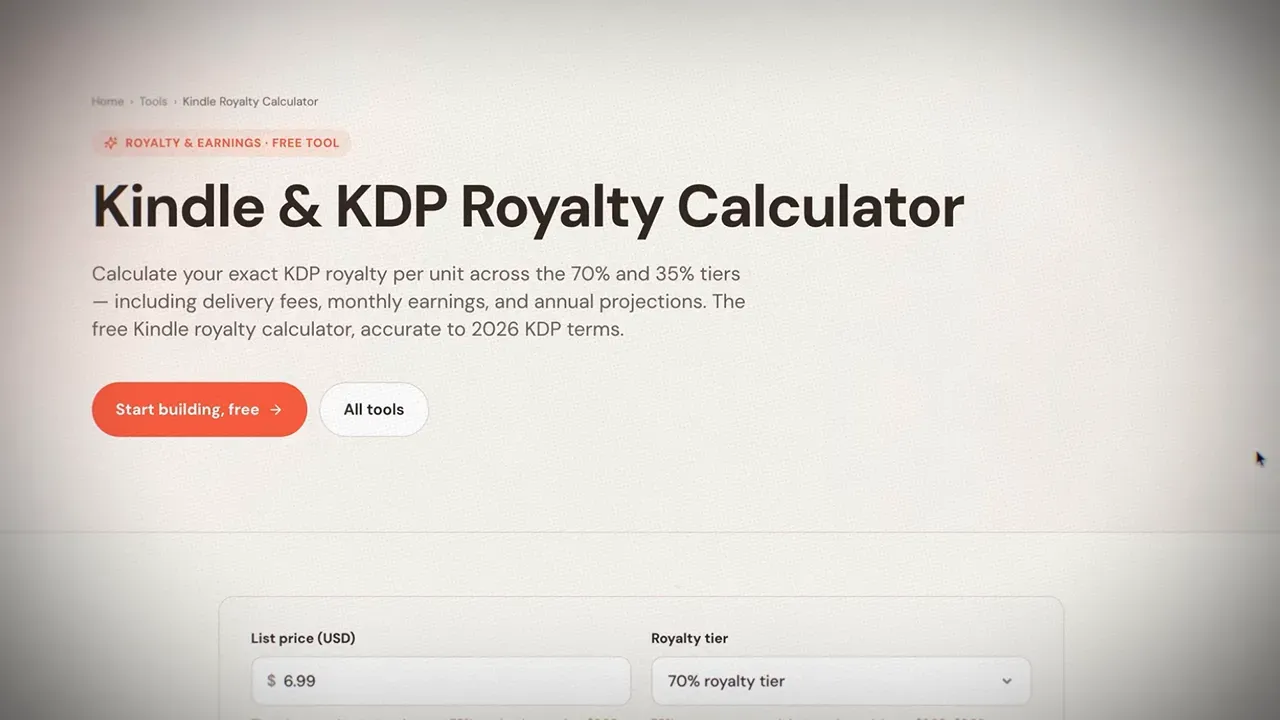
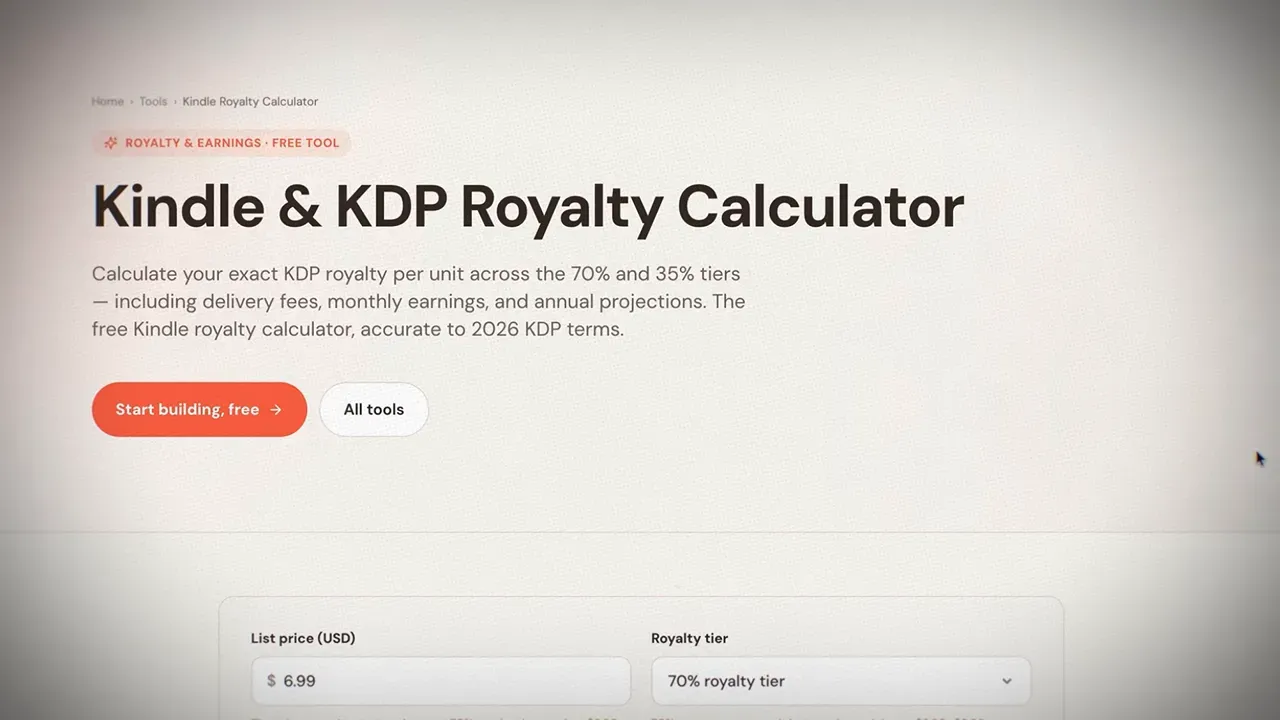
Bogdan described a landing page aimed at people interested in selling through Amazon KDP. A small, relevant tool gave those prospective customers a reason to engage before encountering the paid product.
The important connection is between the entry point and the eventual purchase. Someone researching ebook publishing is closer to GetEbook’s use case than someone clicking a generic promise about AI.
What happened when he stopped making new creatives?
Bogdan reported that campaign performance declined during a period when he stopped consistently producing new creative material. The campaigns remained active, but the results weakened.
His response was to create variations around successful ideas rather than leave a winning ad untouched indefinitely. In this business, creative production became an ongoing operating task, not launch-day decoration.
No exact creative volume, testing cadence, customer acquisition cost, or return-on-ad-spend figure was provided. The transferable lesson is continuous testing, not an invented numerical formula.
What tools does GetEbook use?
What is the current technology stack?
Bogdan identified a compact stack that separates development, infrastructure, communication, and generation:
- Claude Code: Coding and rebuilding the application.
- ChatGPT: Research.
- Supabase: Authentication and database.
- Vercel: Hosting.
- Resend API: Email marketing.
- OpenAI and Gemini APIs: Generating content inside the application.
These are the tools he used, not evidence that another product needs the identical stack. The customer-facing workflow remains the product; the infrastructure supports it.
Why did he rebuild the first Lovable version?
Lovable helped Bogdan create an initial version quickly, but the growing application became difficult for him to understand and manage. He rebuilt it using Claude Code.
He did not describe the rebuild as a permanent cure. Some parts still seemed likely to need further work.
The lesson is narrower than “Lovable is bad” or “Claude Code fixes architecture.” His problem was generating a codebase faster than he could understand it. Switching tools did not remove the need to understand the system.
Does an AI ebook generator create useful products?
What does the coloring book example demonstrate?
GetEbook also supports coloring book creation. In one demonstration, Gus requested a Los Angeles city theme, and Bogdan selected a kawaii chibi style, 16 pages, a children’s audience, and recurring characters.
The process included reviewing a cast, approving the setup, generating drawings, and inspecting previews. Characters included Luna the Pup and Milo the Cat.
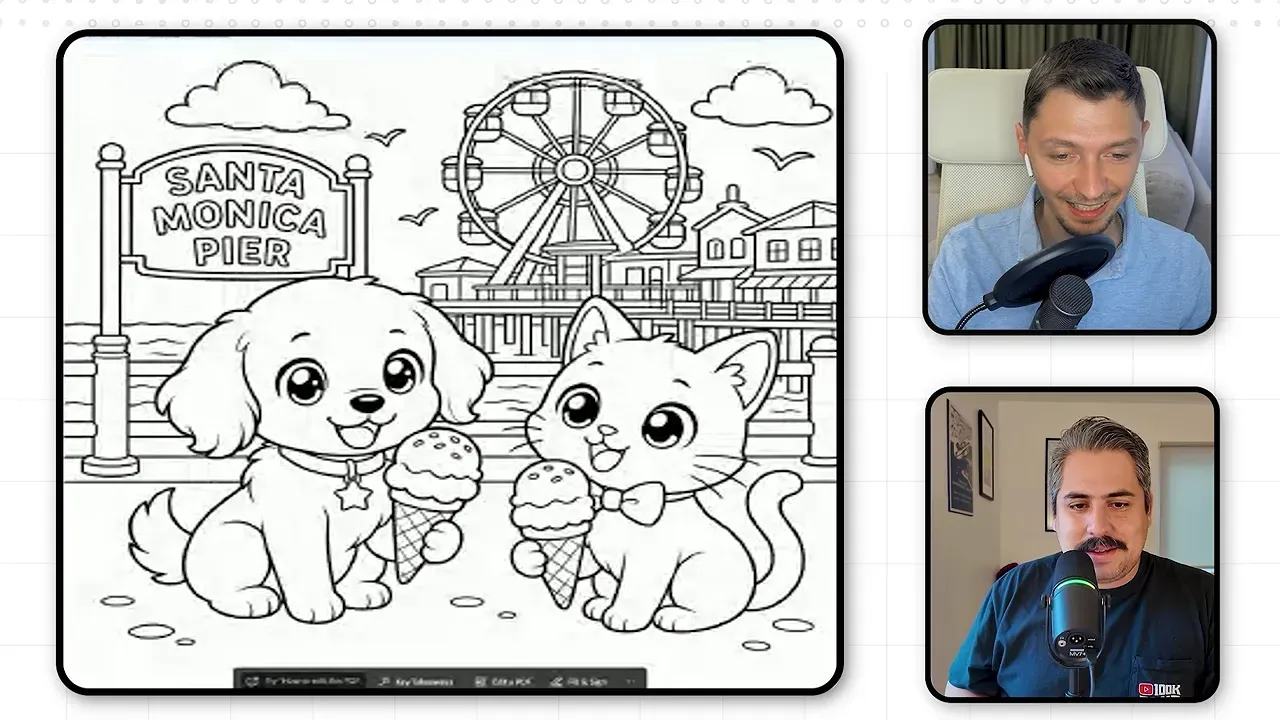
This demonstrates a workflow and a visible result. It does not demonstrate that the resulting book will sell.
Where does human judgment still matter?
Bogdan distinguished automation from indiscriminate publishing. Generating large quantities of generic ebooks without reviewing or improving them was not the use case he defended.
His position leaves three responsibilities with the customer:
- The idea: There must be a worthwhile subject or concept.
- The audience: The product needs a real intended reader.
- Quality control: Generated material still requires review and improvement.
Production speed does not answer whether the content deserves to exist. It just makes the production stage faster.
Roger’s Take: what is actually replicable?
What would Roger borrow, and where is the caution?
What I’d borrow: Bogdan started with repetitive work he already understood. I would copy that selection method before copying an ebook generator. Familiarity with the task gives a builder a better starting point for deciding what should be automated.
Where I’m skeptical: The easy version of this story is “build a wrapper, buy ads, collect revenue.” The actual account includes marketing experience, substantial advertising spend, creative fatigue, upsells, and codebase trouble. The wrapper is the visible part. The operating work has fewer screenshots.
I would also keep the missing information visible. Retention, acquisition cost, payback time, and a detailed expense breakdown were not established. Reported profitability is useful context, not a complete financial model.
What could a solo builder test this week?
I would turn the GetEbook AI business model into a small workflow test, not a revenue target:
- Document one repeated task already performed manually.
- Choose one buyer and one outcome, rather than every possible use case.
- Build the shortest useful path from input to finished output.
- Keep a review step before the output is used or published.
- Test willingness to pay before expanding features or advertising spend.
Bogdan’s closing advice emphasized continuing through failed versions. I would pair that persistence with a specific learning goal: each attempt should reveal something about the workflow, buyer, or economics.
Next action today: Write down every step in one task that currently requires multiple tools, then identify the single handoff a small application could remove.
Source: I made $100K in 3 months with this AI wrapper by Starter Story.
FAQ
What is GetEbook AI?
GetEbook is an AI platform for creating ebooks and related digital products. Bogdan describes it as combining research, structure, writing, formatting, and packaging in one workflow.
How much does GetEbook cost?
Bogdan stated that subscriptions started at $29 per month at the time of the interview. Additional credits, tutorials, and other digital products were sold separately.
How much revenue did Bogdan report?
Bogdan reported more than $130,000 in total revenue in less than four months. That figure included subscriptions and one-time purchases, not just recurring revenue.
What was GetEbook’s biggest growth channel?
Bogdan identified Meta Ads as the main growth channel. His strategy combined creative testing, audience-specific offers, landing pages, and follow-on purchases.
Can someone build an AI wrapper without traditional coding experience?
Bogdan built his initial application with Lovable and later rebuilt it using Claude Code despite describing limited coding ability. His experience also shows that AI-assisted development does not eliminate codebase complexity or maintenance work.