
Interview with Sam Parr, the $10M-a-Year Entrepreneur Who Runs on Urgency, Systems, and a Mild Hatred of Wasted Time

There is a certain kind of builder who gets physically annoyed by overthinking. Not in a poetic way. In a real, practical, borderline unhealthy way. Sam Parr is one of those people. His whole operating style is built around one idea: if something matters, it should move.
That is what makes this useful for anyone trying to build an AI-powered launch system for creators, a media business, a no-code startup, or frankly anything that needs momentum more than another notion board with twelve color-coded tabs.
Sam’s approach is not glamorous. It is structured, impatient, and weirdly simple. Protect focus. Put everything on the calendar. Make action the default. Do not confuse research with progress. And once something works, stop touching it like a raccoon with a screwdriver.
Table of Contents
- ⚙️ Why this approach matters
- ☕ The setup
- 📝 Systems over moods
- 🎙️ How he works
- 🧠 Lessons from talking to a lot of smart people
- 🏺 Quantity beats preciousness
- 🎯 Finding the right idea
- 🌫️ Dealing with uncertainty
- 🏠 Evenings, recovery, and the strange value of hobbies
- 🔥 The real talk
- 🛠️ One thing worth testing tonight
- ❓ FAQ
⚙️ Why this approach matters
What problem is Sam really trying to solve?
He is trying to solve the thing that quietly wrecks a lot of builders: drift.
Drift looks like comparing one project to someone else’s highlight reel. It looks like talking about a business idea for six months instead of testing it in six hours. It looks like filling a day with fake productivity and ending it with nothing that actually moved revenue, product quality, or customer understanding.
Sam’s answer is not motivation. It is constraints.
He assumes he will procrastinate if a task is vague. He assumes distraction will win unless it is blocked. He assumes repeated complaints mean the system is broken, not that the feeling itself is informative. That is a useful frame for solo builders because it removes the fantasy that discipline will magically appear. Usually it will not. A system has to do the heavy lifting.
☕ The setup
What does Sam’s daily setup actually look like?
It starts early and it starts the same way most days.
He gets up around six or a little after, grabs coffee, and gets moving fast. Exercise is not optional. Sometimes it is heavy lifting, sometimes it is sprint-heavy running, and if the body needs a break, stretching still happens. A lot. Breakfast with his kids is non-negotiable, which says something important: routine is not just about output. It is also about deciding what gets protected before work starts making demands.
That matters if someone is trying to launch with AI tools or build a solo builder tech stack. Fancy workflows are nice. A repeatable morning that puts the brain online is better.
How does he deal with phone addiction and distraction?
By not pretending he is above it.
Sam is blunt about being hooked on his phone, so he does not keep it in the bedroom. He avoids looking at it until right before training, when he needs it for the workout. Then he uses a blocking setup so the phone becomes useless for the apps that hijack attention.
That level of friction sounds dramatic until someone notices how much mental energy social media burns before breakfast. His point is not that the internet is evil. It is that comparison is corrosive. Everyone online looks like they are crushing it. Meanwhile, behind the curtain, nearly everybody has complaints, doubts, and random messes they are not posting about.
When he cuts off that noise, he can stay with the main thing instead of abandoning it for a shinier idea.
📝 Systems over moods
What habit keeps him honest with himself?
Journaling, but not in the scented-candle sense.
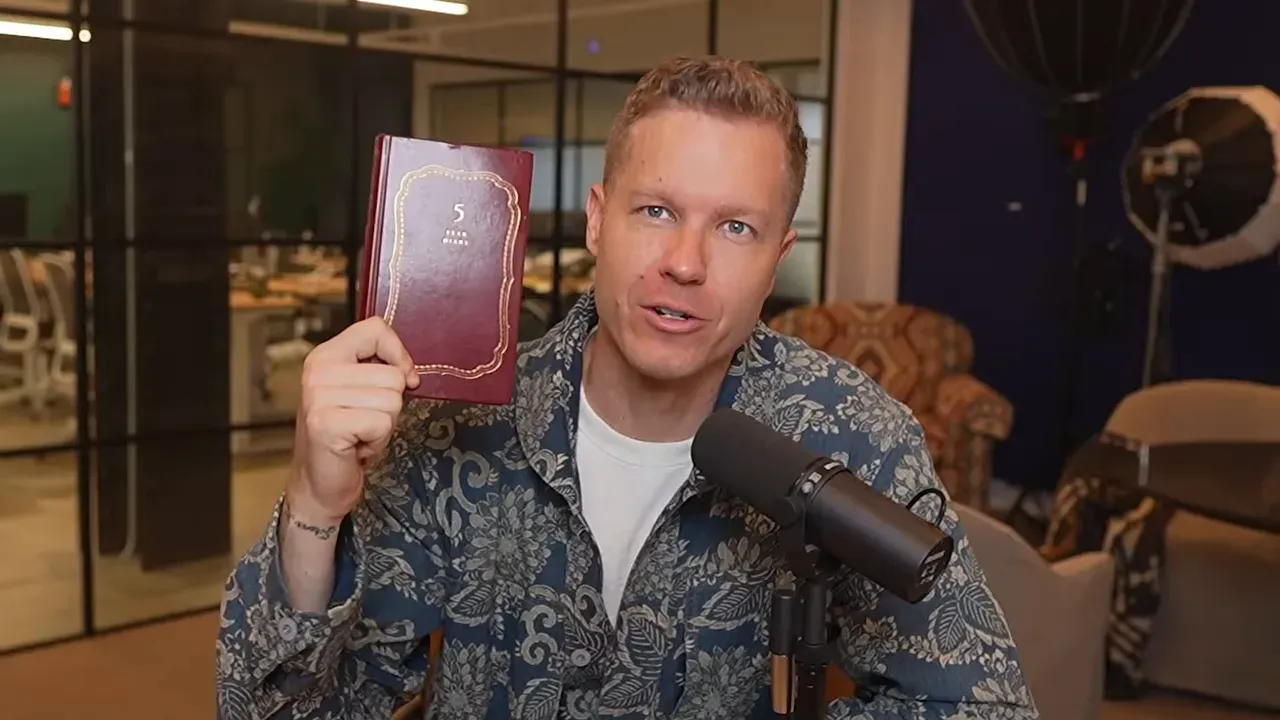
He uses a five-year journal where each date lets him see what he wrote on that same day in previous years. The useful part is not self-expression. It is pattern recognition. He can see himself complaining about the exact same thing a year apart.
That creates an uncomfortable but valuable conclusion: if the same problem keeps showing up, feelings are not enough. A structural change has to happen.
If he wants to get fitter, that might mean hiring a coach. If work feels chaotic, that might mean changing how tasks are planned. The lesson is simple and slightly annoying: without a designed system, the default state is repeat.
How does he plan work so he actually does it?
He makes it painfully specific.
In the morning, he writes down what needs to get done. Not broad categories like content or strategy. Specific outputs. For example, come up with three podcast ideas. Then he assigns time to those tasks on the calendar.
That is the part most people skip. A to-do list is often just a guilt document. A scheduled task is a real commitment.
Sam also keeps expectations weirdly low in a smart way. He believes he can only really do one or two meaningful things in a day. That sounds conservative until someone compares it to pretending ten things will happen and finishing none of them well.
For creators building an AI funnel builder or trying to automate funnel with AI, this is the better model. Pick the one or two actions that actually create leverage. The rest is decoration.
🎙️ How he works
What does Sam focus on during the workday?
The answer shifts depending on the stage of the business.
When a company is young, he operates like a blunt instrument. Customer calls, copywriting, design, product tweaks, whatever is needed. He describes the schedule almost like stripes across the calendar. Short meetings, tiny breaks, then right back in. The job at that stage is not elegance. It is traction.
From zero to roughly five or ten million in revenue, he focuses on two things:
- Getting more customers
- Making the product better
That is it. Not ten frameworks. Not a six-month brand architecture retreat. More customers. Better product.
Once the company is working and compounding, the job changes. Then he should delegate, hire, and stop inserting himself into every moving part. He even keeps a kind of sandbox for tinkering so he does not mess up the main machine just because his hands are bored.
That is a brutally useful rule. If something is compounding, protect it. Do not keep redesigning the engine because standing still makes an operator itchy.
How does podcasting fit into that system?
It is scheduled, researched, and treated like real work, not spontaneous genius.
He records on fixed days. He uses an AI workflow tied to his calendar that identifies the guest and assembles research automatically. Then he reads that material and keeps digging through books or other sources related to the guest or topic.
That is probably the most practical piece here for anyone building an AI-powered launch system for creators. AI is not replacing judgment in his workflow. It is handling prep, organization, and speed. It gets him to first draft understanding faster so his brain can do the part that matters.
In plain English, AI is useful when it clears the runway. It is less useful when someone expects it to become the pilot.
🧠 Lessons from talking to a lot of smart people
What has he learned from years of conversations with founders?
The biggest lesson is that there is no single path that wins.
Some people raise money. Some bootstrap. Some build in weird niches. Some do things that sound stupid until they work and suddenly everyone calls them inevitable.
That variety gives him confidence. Not because success is easy, but because it is less narrow than people think. If someone is stuck because they are trying to find the one correct route, they are already wasting time.
He also admits that his relationship with podcasting changes when he starts chasing numbers. When the topic choices are driven by downloads instead of curiosity, the work gets less fun. The energy comes back when conversations challenge his assumptions and expand his frame.
That is a useful warning for creators. If the machine owns the taste, the work usually gets worse.
🏺 Quantity beats preciousness
What founder trait does he think matters most early on?
Urgency.
He points to a study involving pottery students. One group was told to make as many pots as possible. Another group was told to make the perfect pot. The volume group ended up with better results and more satisfaction because repetition improved quality naturally. The perfection group made fewer, worse pieces and felt worse about them.
It is hard to find a cleaner summary of startup reality.
If the goal is a first million or first few million, relentless action tends to beat elegant hesitation. Put another way, the best version usually shows up after a pile of imperfect versions, not before.
For anyone using no-code startup tools, this should feel familiar. The advantage is speed. But speed only helps if someone ships ugly version one instead of polishing a dashboard that nobody asked for.
🎯 Finding the right idea
How does Sam think someone should choose what to build?
First, figure out what kind of person is making the choice.
If someone struggles to start, his advice is simple: act first. Pick something, get a result, then adjust. Motion creates clarity.
If someone already has a track record of execution, then a little more selectivity makes sense. In that case, he looks for the overlap between four things:
- What the world wants
- What people will pay for
- What the builder is good at
- What the builder actually enjoys
That overlap is basically his version of the ikigai filter. Not mystical. Just useful.
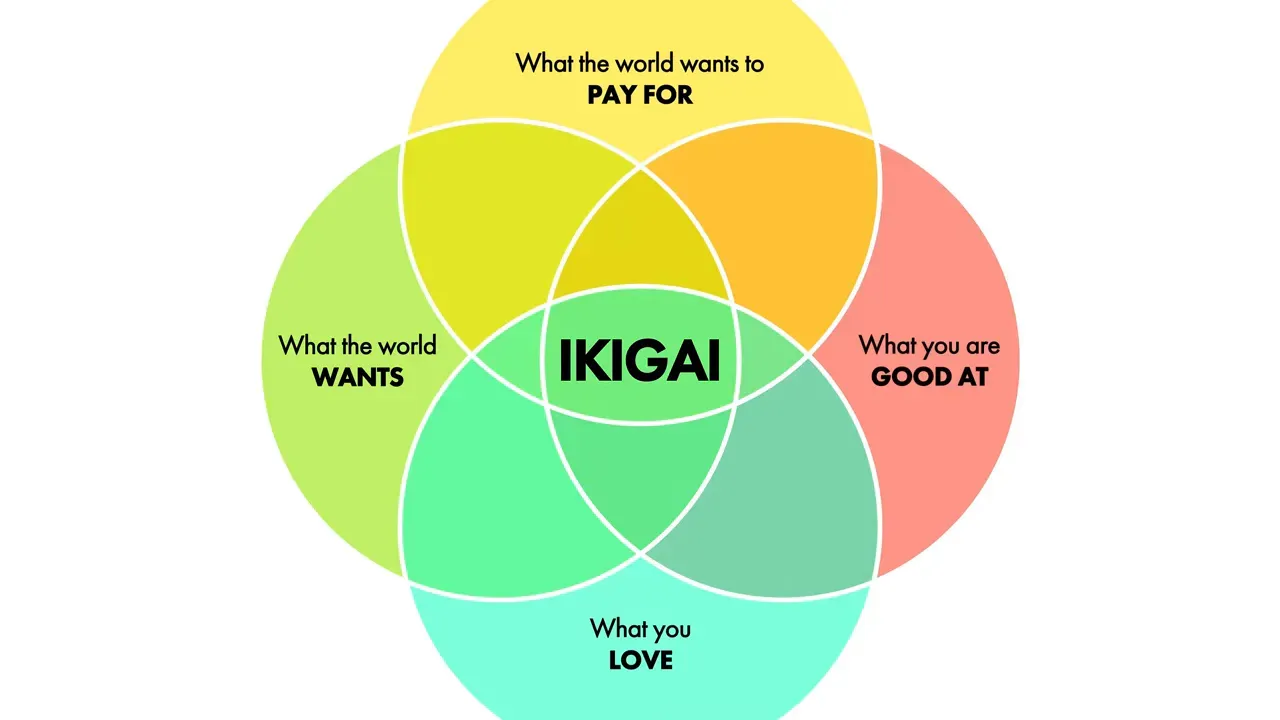
The key is that this filter is more valuable after someone has already proven they can execute. Before that, too much idea-picking can become procrastination wearing glasses.
What about ideas that seem dumb at first?
He trusts them more than most people do.
When he started The Hustle, plenty of people did not understand it. A newsletter as a serious business sounded unserious to many of them. Over time, he saw that pattern repeat enough times to build a rule: good ideas often look a little ridiculous at the beginning.
That is useful if someone is trying to launch with AI tools today. A lot of the best early ideas will sound niche, ugly, or too small. Fine. The market does not care whether the first draft sounded cool at dinner.
🌫️ Dealing with uncertainty
How does he handle the uncertainty that comes with starting?
Mostly by accepting that uncertainty is not removable.
People love certainty because it feels safe, but early-stage building rarely offers it. Sam’s bias is to move anyway. Test, learn, improve. If the thing starts working, keep pushing. If not, adjust based on evidence, not feelings alone.
There is also a mindset piece here. He believes enthusiasm matters more than many people realize. If he is convinced something can work, that energy spreads. Teams feel it. Momentum builds from it. The opposite is also true. If the operator radiates doubt all day, the room usually absorbs that too.
This is not motivational poster nonsense. It is practical. Energy affects execution. Execution affects outcomes.
🏠 Evenings, recovery, and the strange value of hobbies
What happens when work ends?
Nothing glamorous, which is honestly refreshing.
He gets home around dinner, eats with family, enjoys the bedtime routine with his daughter, and then settles into a mix of harmless obsessions. He searches eBay for unusual finds. He spends time with Claude asking questions that feel closer to therapy than productivity. Then he reads in bed.
His reading habit is organized around what he calls semesters. He picks one topic and reads several books around it. The specific subjects can get odd, but the method makes sense. Deep reading across one theme builds a stronger internal map than random consumption does.
There is a lesson buried in the weirdness. Builders need off-ramps. Not fake recovery that is secretly more work. Real curiosity. Real decompression. Something that keeps the mind alive without turning everything into content or KPI theater.
🔥 The real talk
What is the core operating philosophy behind all of this?
Action, backed by systems, sustained by urgency.
Sam does not present himself as some naturally perfect machine. He says the opposite. He is lazy. He procrastinates. He gets distracted. That is why the systems are there.
The useful takeaway is this:
- Do not trust vague intentions
- Make tasks specific
- Put them on the calendar
- Reduce distractions with real friction
- Prefer volume over perfection early
- Protect anything that is already compounding
- Choose ideas based on fit, not just excitement
If someone is building an AI-powered launch system for creators, this is the part worth stealing. AI can help with research, content prep, scheduling, and idea expansion. Great. But the stack only matters if the operator is set up to act. Otherwise it is just a shinier form of avoidance.
Would this approach work for everyone?
No, and that is the point.
Someone else may want slower mornings, fewer meetings, less brute force, more reflection. Fine. The goal is not to copy Sam’s exact day. The goal is to notice how deliberately it is built.
He knows where he is weak. He knows what throws him off. He knows the conditions under which he produces good work. Then he designs around that.
That is the real blueprint. Not the coffee brand. Not the scooter. Not the eBay habit at night. The blueprint is self-awareness turned into operating rules.
And frankly, that beats most overpriced productivity advice on the internet.
🛠️ One thing worth testing tonight
If someone wanted to borrow one tactic immediately, what should they try?
Take tomorrow’s to-do list and turn it into a time-bound plan with only two meaningful tasks on it.
Not ten. Two.
Then block the junk that usually derails focus, whether that is social media, messages, or the strange gravitational pull of pretending to reorganize tools instead of doing the work.
That tiny change will probably do more than adding another app to a solo builder tech stack.
❓ FAQ
What is Sam Parr’s main productivity principle?
His main principle is action over rumination. He reduces procrastination by making tasks specific, scheduling them on the calendar, and removing distractions before they can hijack attention.
How does Sam Parr stay focused during the day?
He limits phone access, avoids early social media, journals to spot repeated problems, and keeps daily goals narrow. He believes most days only support one or two truly meaningful tasks.
What does Sam Parr believe matters most for early-stage founders?
He believes urgency and repeated action matter most. Early on, he favors getting more customers and improving the product instead of overplanning or chasing perfection.
How does this relate to an AI-powered launch system for creators?
The connection is that AI works best as support, not as a substitute for execution. Sam uses AI for research and prep, which is similar to how creators can use AI to speed up launch planning, content workflows, and decision support without replacing judgment.
How does Sam Parr choose business ideas?
He looks at the overlap between what people want, what they will pay for, what he is good at, and what he enjoys. For people who struggle to start, he recommends acting first and refining later.
What can solo builders take from Sam’s routine?
Solo builders can copy the structure, not the exact schedule. The big lessons are to build systems around weaknesses, use time-bound planning, favor momentum over perfection, and protect anything that is already working.
This article was inspired by this amazing video How I Work: $10M/Year Serial Entrepreneur. Check out more from their awesome channel.