
Interview with Blake Anderson and Zach Yadegari, the Young Founders Behind Cal AI

Building an app has become absurdly accessible. That is good news, right up until the App Store starts feeling like a digital flea market where 400 identical habit trackers are fighting over the same exhausted customer. The real challenge is no longer getting something built. It is finding a problem worth building around, then creating enough difference that people actually care.
That is the useful part of the Cal AI story. Blake Anderson, Zach Yadegari, Jake Castilla, and Henry built a calorie tracking app that grew from roughly $30,000 in its first month to more than $1 million per month within eight months. The business was later acquired for a multi-million-dollar amount.
For solo builders, creators, and anyone assembling an AI-powered launch system for creators, the story is less about copying a revenue chart and more about understanding the operating system beneath it: focused roles, high trust, a differentiated product, and an idea rooted in a problem the founders could genuinely understand. No magic funnel dust required.
Table of Contents
- 📱 The Setup: Four Builders, Four Clear Lanes
- 🤝 Trust Is Not a Vibe, It Is Infrastructure
- 📈 Is There Still an AI-Powered Launch System for Creators in 2026?
- 🧠 Copying Can Make Money, But It Usually Caps the Story
- 🔍 Solve a Problem You Actually Understand
- 🎮 After the Exit: Keep Playing the Game
- 🛠️ The Real Talk: Build the Version That Can Teach You Something
📱 The Setup: Four Builders, Four Clear Lanes
What were the roles behind Cal AI?
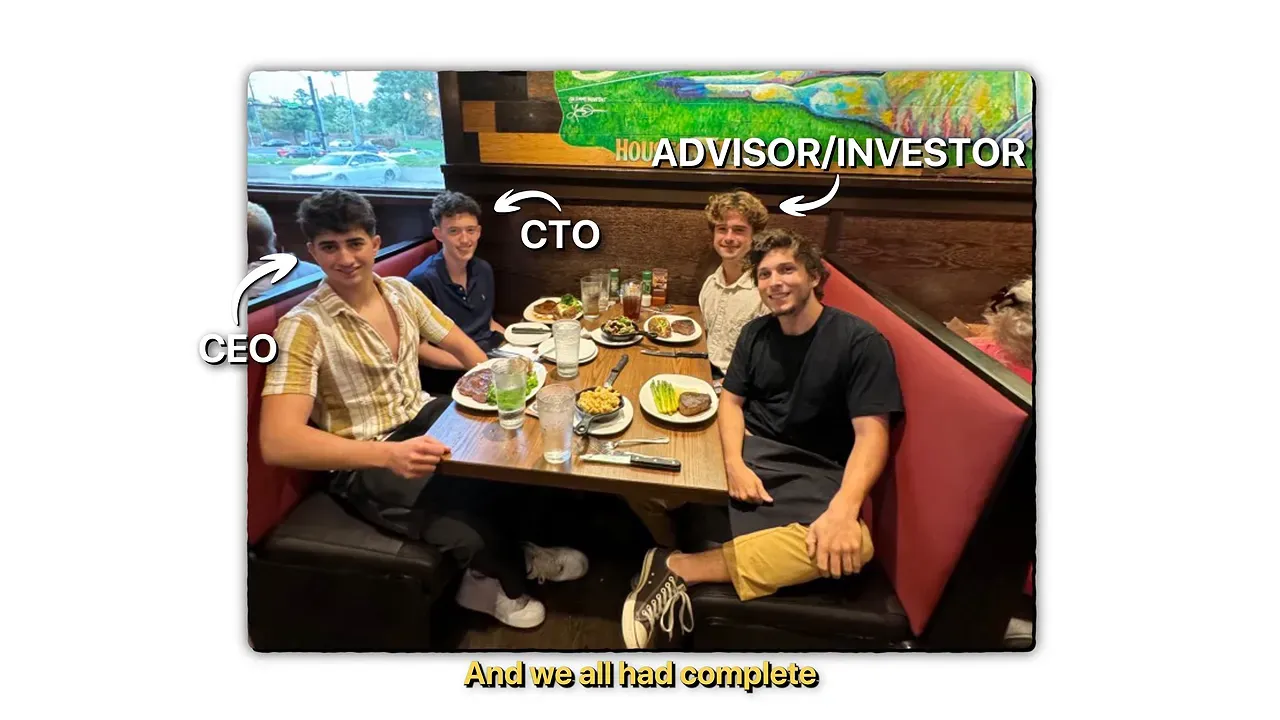
Cal AI was not one teenager with a laptop somehow doing product, paid ads, operations, engineering, support, strategy, and perhaps the office laundry. It was a team of four founders with distinct responsibilities.
- Zach Yadegari served as CEO.
- Blake Anderson was a co-founder, investor, and advisor.
- Jake Castilla led marketing operations and business operations as CMO and COO.
- Henry was CTO, responsible for the technical team and making the product seamless to use.
Blake had begun building apps at Tulane. His early attempts largely failed, then he moved into AI apps. Zach had been coding from a young age, published his first App Store app at 12, and had previously built a company that reached 5 million users before he sold it at 16.
Henry and Zach had known each other since a camp they attended at age 10. Their friendship became years of gaming and building programming projects together. Blake came in after Zach reached out directly. Jake joined later, after the team saw the need for someone to own operations as the business accelerated.
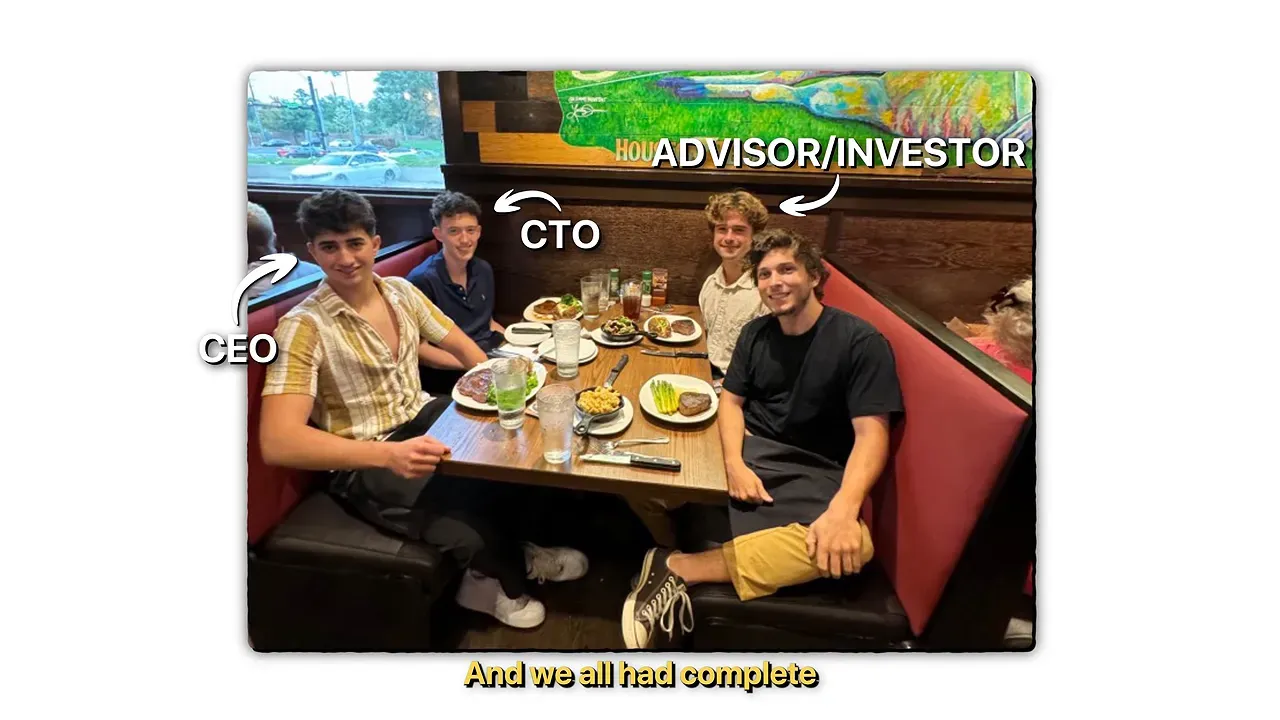
The point is not that every app needs four founders. Most do not. The point is that the work needs owners. A solo builder can still create these lanes, but they need to decide which lane gets attention first and which tasks should not be performed badly just because a person technically can perform them.
Why did the team work unusually well together?
Blake’s explanation was disarmingly practical: each person had a domain of expertise, and everyone trusted the others to run theirs. They did not spend their days trying to become a committee of four people with access to the same Notion board.
That kind of trust removes the tiny frictions that kill momentum. When the technical lead owns product reliability, the marketing operator owns distribution, and the CEO can make directional calls, decisions move. The team can spend its energy improving the product rather than scheduling another meeting about who gets to decide.
For a solo builder tech stack, the equivalent is brutally simple:
- Choose one core customer problem.
- Pick one acquisition channel to learn first.
- Define what a successful first version must do.
- Ignore the rest until real usage exposes a reason to care.
Most messy launches are not failures of ambition. They are failures of boundaries. Everyone is building the landing page, nobody is checking whether the product helps.
🤝 Trust Is Not a Vibe, It Is Infrastructure
How did the founders handle major conflict?
The biggest fork in the road came when Cal AI began receiving low eight-figure acquisition offers toward the end of 2024. That is not a theoretical founder exercise. One option changes everyone’s financial life. The other requires declining it and betting that the company can become much larger.
The team was conflicted, which is the sane response. They cared about the product and believed there was more growth ahead, but the money was meaningful to every person involved. Their answer was not a clever negotiation framework pulled from a $97 founder course. They kept talking openly and frequently until they reached a shared decision not to sell at that point.
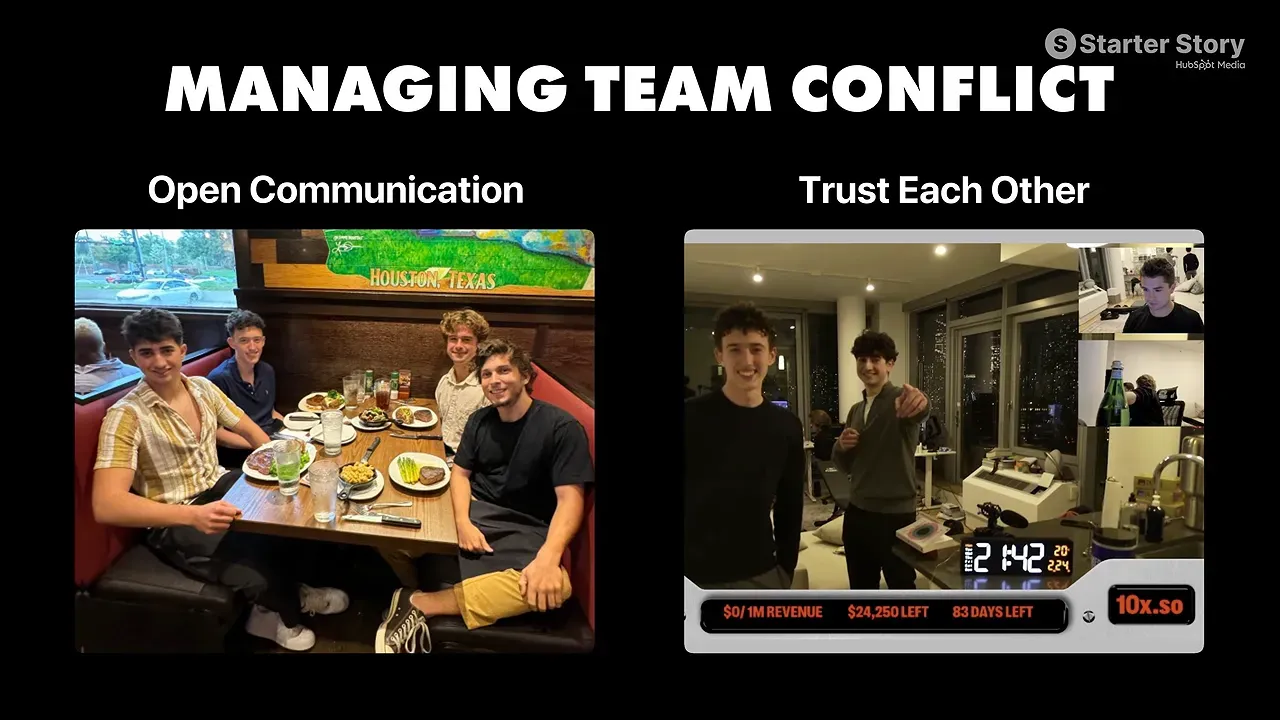
The lesson is useful even for a two-person project: open communication is not an emotional bonus feature. It is how a team gets through decisions where incentives are real, uncertainty is high, and everyone could reasonably want something different.
A lightweight version of this can work for any small team:
- State the decision clearly. Avoid vague debates that go nowhere.
- Surface incentives. Say what each option means for the people involved.
- Give everyone room to disagree. Forced optimism is just delayed resentment.
- Make the final call together, then commit. Reopening the same decision every Tuesday is not strategy.
Did they expect Cal AI to become this big?
No. At the start, the founders were still earning salaries through work on another app. Cal AI was not born as an inevitable juggernaut with a dramatic soundtrack and a spreadsheet predicting greatness. It was an experiment that started working.
That matters because founders often wait for certainty before committing. But certainty rarely visits early products. What shows up instead are signals: growth, customer behavior, retention, improving unit economics, and a team that knows how to respond to momentum.
Cal AI’s numbers became difficult to ignore. The founders reported about $30,000 in first-month revenue, more than $100,000 in month two, and around $1 million per month within eight months. Their later projection was about $50 million in annual revenue.
Those are exceptional results, not a template or a promise. But the underlying behavior is portable: build, measure, learn whether the market is pulling, then put serious focus behind the thing that is actually moving.
📈 Is There Still an AI-Powered Launch System for Creators in 2026?
Is the mobile-app opportunity already over?
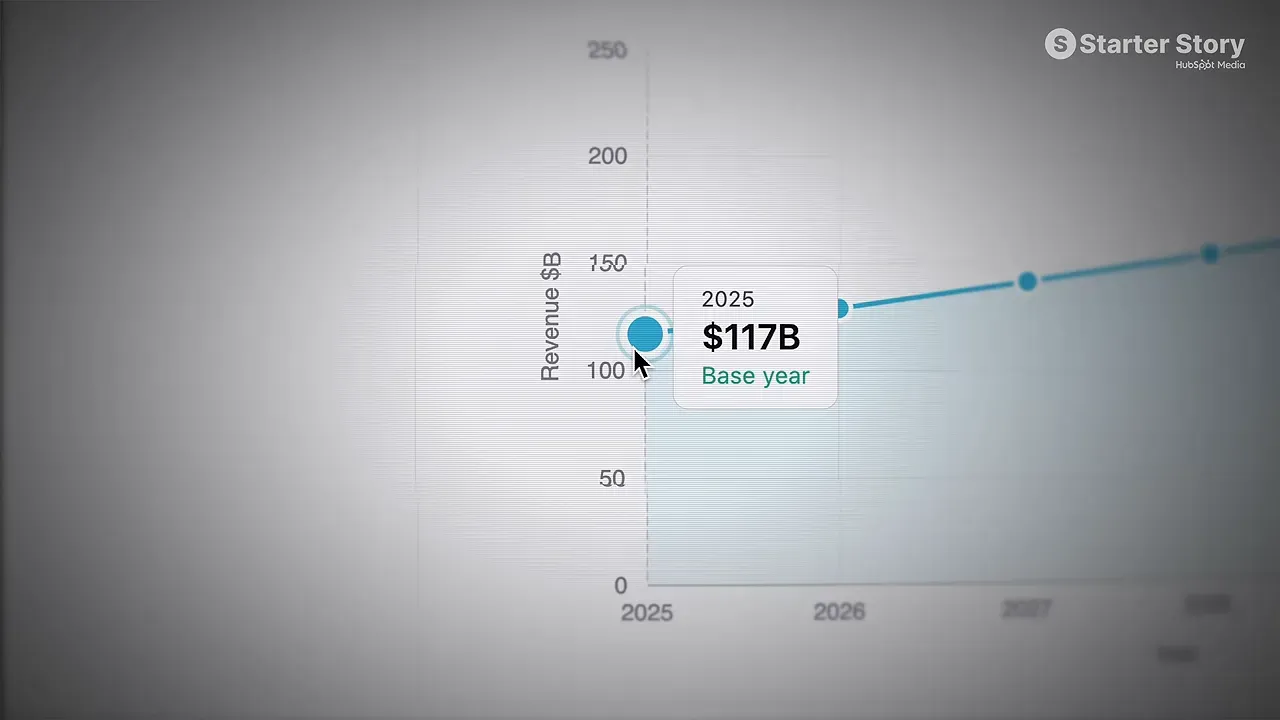
Blake does not see the App Store as a tiny pie that Cal AI somehow consumed. He frames it as a massive and growing market. Cal AI’s reported annual scale, large as it was, represented a very small fraction of the broader opportunity.
His larger point is more important than the exact market-size forecasts. New technology creates fresh openings inside old markets. AI changes what products can do, how quickly founders can build, and what kinds of workflows can become useful. That does not mean every AI wrapper deserves a logo and a subscription page. It means the category is still moving.
This is where an AI funnel builder or no-code startup tools can help, but only if they reduce the distance between an idea and customer feedback. A tool that produces a polished but unnecessary app is simply a faster way to build something unnecessary. Progress, technically. Not the fun kind.
What should a builder actually do with AI tools?
Use them to make the first test cheaper and faster. Do not use them as a substitute for having an opinion about the customer.
A practical way to launch with AI tools looks like this:
- Start with an annoying recurring problem. Preferably one the builder has experienced firsthand.
- Define one clear promise. Cal AI’s category was calorie tracking. The value had to be immediate and understandable.
- Build the smallest useful flow. The first version should complete the core task, not imitate a full company.
- Create a simple distribution angle. This can be a content format, community, audience niche, or a positioning choice.
- Track what happens after download. A launch is not an App Store submission. It is the beginning of the feedback loop.
- Improve based on actual friction. Not imaginary features brainstormed at 1:00 a.m. because shipping feels scary.
That is the foundation of an AI-powered launch system for creators. Build faster, yes. But use the saved time to understand the customer better, not to add six more tabs and call it innovation.
🧠 Copying Can Make Money, But It Usually Caps the Story
Do copycat apps still work?
Zach and Blake’s answer was nuanced. Copying an existing app, then pairing it with strong distribution, can still produce meaningful income. They suggested it can potentially reach $10,000 or even $100,000 per month.
But they see greater upside in building something genuinely differentiated. More importantly, they find that route more motivating. A copied product might teach useful mechanics, but it does not automatically create a business with a durable reason to exist.
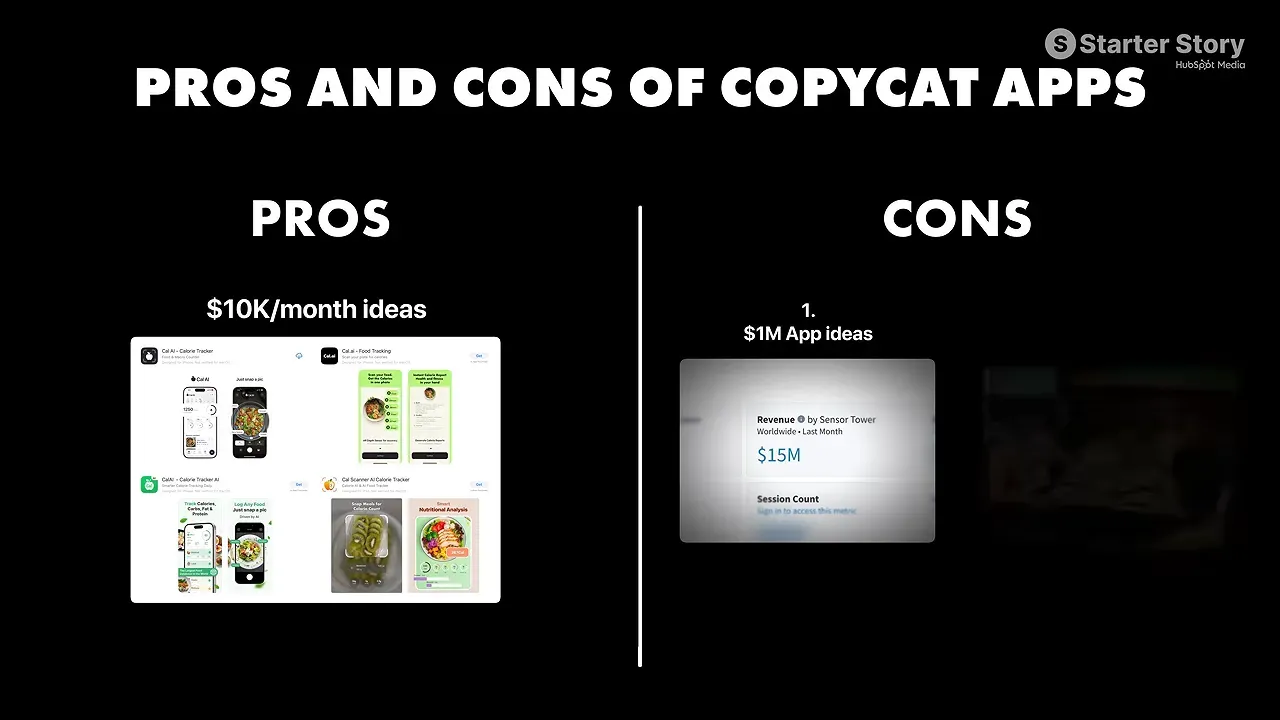
There is a difference between learning from a category and cloning it:
- Learning from a category: Notice a validated demand, then find an underserved audience, workflow, feature set, or distribution method.
- Cloning a category: Change the colors, buy some ads, and hope competitors are asleep.
The first can produce a differentiated business. The second can work, but it makes the business easy to replace. That is an uncomfortable design constraint when the build tools are getting faster for everyone.
What kind of differentiation matters?
Differentiation does not have to mean inventing a new category. It can come from:
- A different feature set for a specific user group.
- A more intuitive product experience.
- A clearer brand and positioning.
- A distribution strategy competitors cannot easily copy.
- A personal understanding of a problem that shapes better decisions.
The builder does not need to outsmart the entire App Store. They need to give a specific group of people a better reason to choose their product. That is a much smaller and more solvable job.
🔍 Solve a Problem You Actually Understand
What is Zach’s best advice for finding an app idea?
Start with a problem the builder personally has. It is common advice because it keeps being useful, not because it looks good on a motivational poster.
When someone solves their own problem, they have an immediate advantage. They know what an annoying workflow feels like. They have instincts about what the product should do first. They understand the language, objections, and daily pain points of the customer because they are close to the customer.
That proximity helps on both product and marketing. Product decisions become less abstract. Marketing becomes a conversation with a past version of the builder rather than a stack of generic demographic assumptions.
A useful prompt for tonight is:
List five things that repeatedly waste time, money, or attention in a normal week.
For each one, describe:
1. Who else has this problem?
2. What do they use today?
3. What makes the current option frustrating?
4. What is the smallest useful outcome an app could deliver?
5. Where do these people already gather online?
That will not hand over a billion-dollar idea in 10 minutes. It can, however, produce a better starting point than scrolling the charts until the brain decides a water reminder needs blockchain.
🎮 After the Exit: Keep Playing the Game
What did selling Cal AI feel like?
It did not immediately feel dramatic. The founders were in different states when the sale happened, so there was no single huge celebration to mark the moment. The feeling that came afterward was closer to relief: the knowledge that even future mistakes would not put them in a financially precarious position.
But financial security did not make the work uninteresting. Zach describes entrepreneurship as the most engaging game there is. The comparison is to playing a game like Grand Theft Auto: once there is an open world full of possible moves, simply setting the controller down feels strangely unappealing.
That mindset is not an instruction to work constantly or treat burnout as a personality trait. It is a reminder that good builders often enjoy the process itself. The score matters, but so does the act of figuring out the next move.
What are Blake and Zach building next?
Blake’s main project is 10x App Builder, described as “Shopify for apps.” The goal is to help people through more than code generation, including ideation, user backends, and even the aesthetic presentation of an Instagram presence.
Zach is building Flow, a brand with a suite of products focused on productivity and health. He is also documenting the company-building journey publicly to show what entrepreneurship actually looks like behind the tidy announcement posts.
Both projects point to the same conclusion: shipping apps is becoming easier, which means choosing the right problem and building a useful system around it are becoming more valuable.
🛠️ The Real Talk: Build the Version That Can Teach You Something
What should a solo builder take away from the Cal AI story?
Cal AI is proof that large app outcomes are still possible. It is not proof that every AI app will grow to millions, and pretending otherwise is how the internet keeps accidentally inventing disappointment as a service.
The repeatable lessons are less glamorous:
- Find a problem close enough to understand deeply.
- Differentiate through product, audience, or distribution.
- Keep responsibilities clear, especially with co-founders.
- Use AI to shorten the test cycle, not to skip customer understanding.
- Stay open when hard decisions show up.
- Build something new enough that talented people want to work on it.
The best next move is not to recreate Cal AI feature by feature. It is to remix the operating principles into a product that fits a problem worth solving. A creator can build an AI-powered launch system for creators, a tiny niche utility, or an iOS app for a pain point that has been ignored because it looked too boring for venture capital. Boring is often where the money is hiding anyway.
❓ FAQ
Did Cal AI begin as a guaranteed success?
No. The founders were still working on another app for salary when Cal AI started, and they did not initially expect it to become the business that made them fully independent.
Can copycat apps still make money?
They can, especially with effective distribution. Blake and Zach believe copycat approaches can reach meaningful revenue, but they see more potential and motivation in building something differentiated.
What is the best way to find an app idea?
Start with a problem the builder personally experiences. That provides a clearer sense of what the product needs to do and who it should serve.
Are iOS apps still worth building in 2026?
The founders believe the opportunity remains large and continues to grow. The important condition is differentiation: a new feature set, a distinct audience, a better product experience, or a stronger distribution strategy.