
Interview with Ryan Yao, the Designer Who Turned a Cat Pomodoro Timer Into an $18K-a-Month App

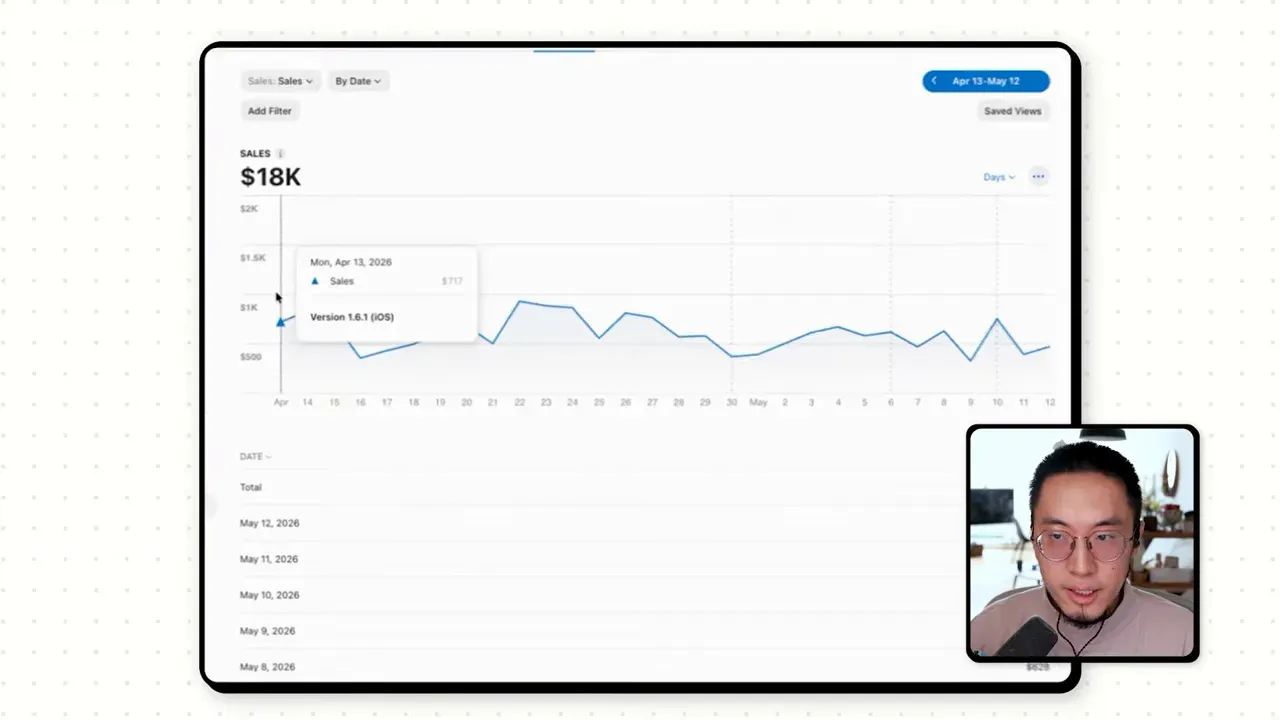
Most AI-powered launch system for creators conversations start with a pile of tools, a complicated workflow, and someone insisting that the right prompt will replace actual taste. Ryan Yao’s story is more useful than that. He and his girlfriend built Cat on Chair, a playful Pomodoro timer for cat lovers, then grew it into an app generating more than $18,000 in monthly sales.
The core idea is almost aggressively simple: focus for a while, a cat joins the chair, and completing a session earns a small gift. But the app works because it is not pretending productivity software needs to feel like a tax form. It has personality, collectible furniture, distinctive illustrations, and just enough game mechanics to make another focus session feel worth starting.
Ryan’s path is a good reminder for solo builders: AI can help produce the software, but it cannot manufacture a reason for people to care. That part still requires a point of view. Annoying, perhaps. Also useful.
Table of Contents
- 🐈 The app, the numbers, and the non-boring timer problem
- 🛠️ From product designer to indie builder
- 🤖 An AI-powered launch system for creators, minus the tool pile
- 💡 Finding an idea worth obsessing over
- 🎨 Why handcrafted software still wins
- ✅ The real talk: build the thing that deserves to exist
- ❓ FAQ
🐈 The app, the numbers, and the non-boring timer problem
Pat Walls: What is Cat on Chair, and what has it achieved?
Ryan Yao: Cat on Chair is a Pomodoro timer designed for people who love cats and want a warmer focus experience than the usual cold, generic productivity app.
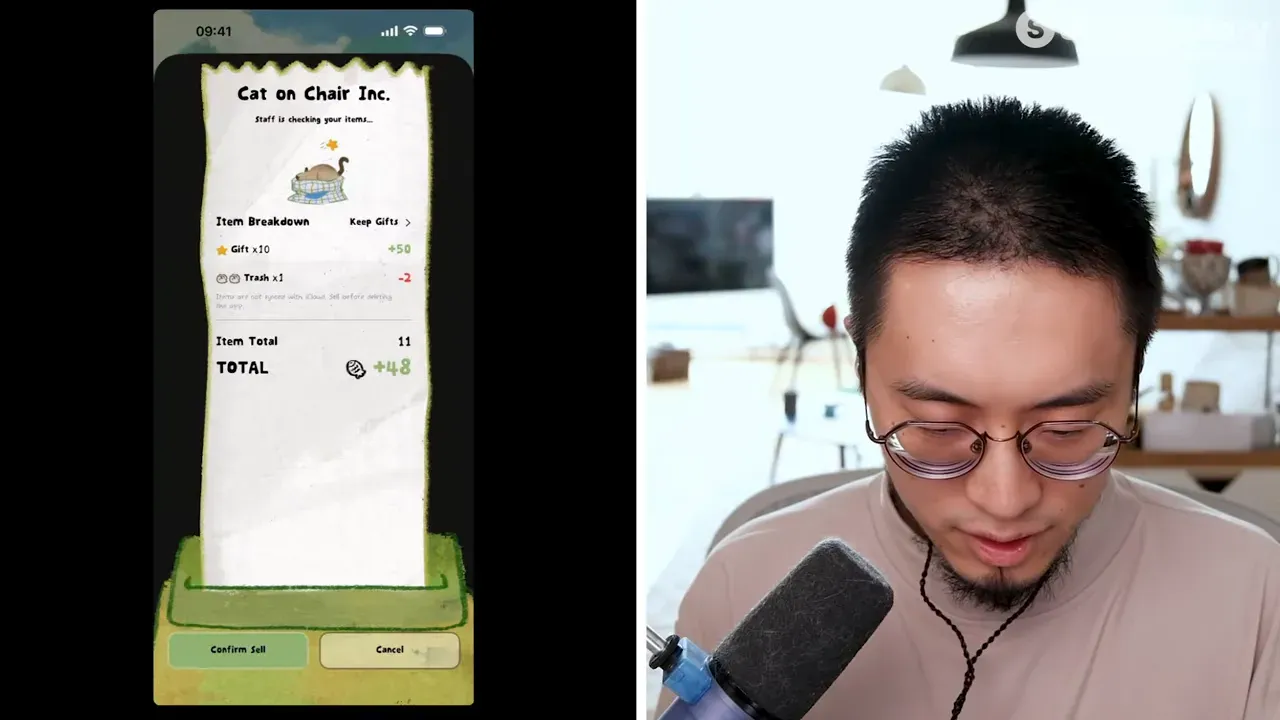
When a focus session starts, a cat jumps onto the chair and keeps the user company. When the session ends successfully, the cat leaves a gift. The core timer is free, while paid features unlock more of the experience.
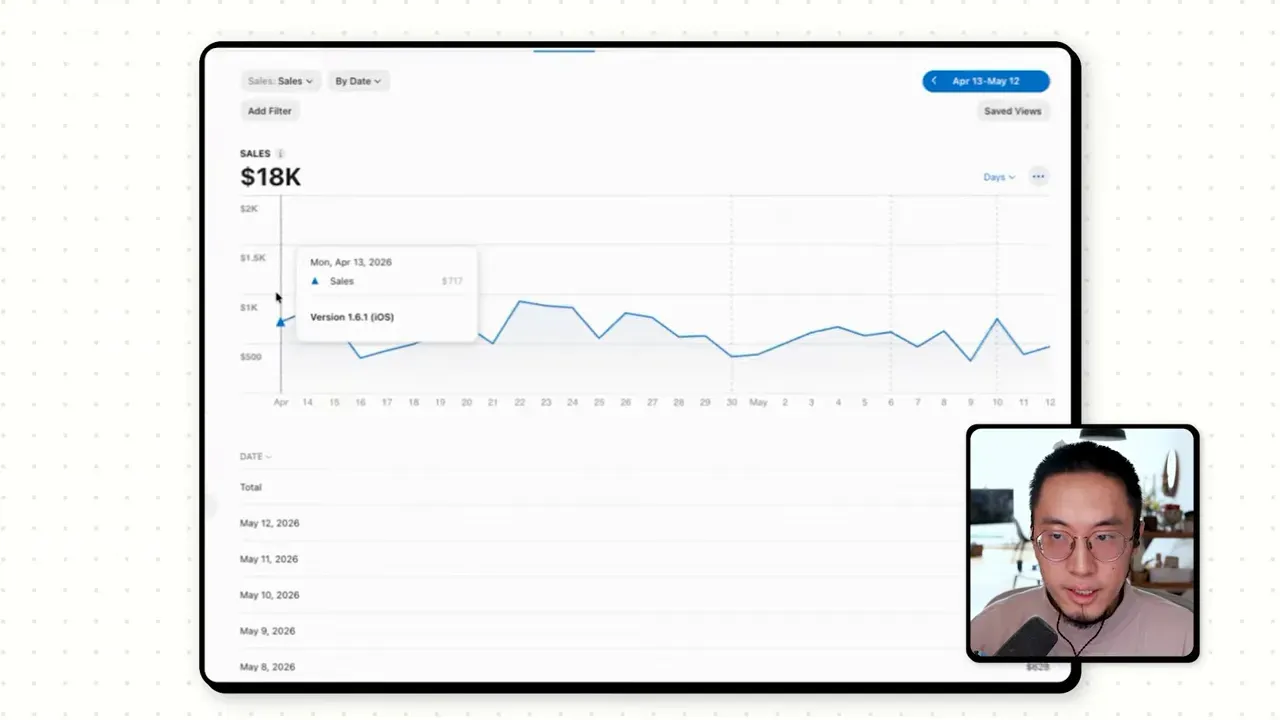
The app reached more than 127,000 downloads and generated close to $80,000 in sales across roughly eight or nine months. In the 30-day period Ryan shared, it had produced more than $18,000 in sales, alongside about 24,000 first-time downloads.
The pricing is intentionally straightforward:
- Lifetime plan: $29.99
- Annual plan: $19.99
- Family sharing: Available for up to six people
Most sales have come from the lifetime plan. That makes sense for a small utility app with a strong personal feel. People are not necessarily shopping for yet another recurring bill just to track 25-minute work blocks. Humanity has suffered enough subscriptions.
Pat Walls: Why did a basic Pomodoro timer become a business when there are already thousands of them?
Ryan Yao: The timer itself is not the innovation. Pomodoro timers are a mature category. The opportunity was in combining a familiar utility with a specific emotional theme and a set of mechanics that make returning feel natural.
Cat on Chair borrows from the real experience of having a cat nearby while working. Cats can be calming, distracting, chaotic, affectionate, and occasionally committed to lying directly on the thing that needs to be used. That became the product logic.
Successful focus sessions produce gifts, inspired by the way cats sometimes bring strange little offerings to their humans. Failed sessions can leave trash instead. Each cat has a backstory and personality. People can tap or call a cat to trigger an interaction animation. The app turns a timer into a tiny world rather than a stopwatch with better branding.
Ryan’s girlfriend’s original illustrations make that world feel handcrafted. This matters more than builders tend to admit. Plenty of apps technically work. Far fewer have a look, mood, or small detail that makes somebody want to send it to a friend.
🛠️ From product designer to indie builder
Pat Walls: What was Ryan doing before building apps?
Ryan Yao: Ryan was a product designer at several tech startups and eventually left a job paying around $200,000 per year to build something of his own. He felt limited by doing design work alone and wanted to ship a product end to end.
Cat on Chair was the first app he released. That detail is useful because it cuts through the mythology that every profitable indie app is the fifteenth failed experiment from a founder with a computer science degree and a sacred Notion dashboard.
AI coding made iOS development feel viable enough for Ryan to take the leap. His design skills were already strong. The missing piece was being able to turn concepts into a working app without waiting for a developer, a cofounder, or a small miracle.
Pat Walls: How long did the build actually take?
Ryan Yao: Ryan began around May 2025. The first few weeks were spent getting a basic Pomodoro timer working. From there, he and his girlfriend expanded the concept, particularly the cat animations, visual identity, and collectible mechanics.
By August, they had a first version ready. Thousands of people from RedNote were invited to beta test it, partly because Ryan’s girlfriend already had an audience there for her illustrations. A month went into gathering feedback, fixing bugs, and iterating. The app launched on August 27.
The first week brought about 3,000 downloads. That does not mean the app was stable. Even after a month of testing, it had serious issues, including data failing to sync across devices. A relatively stable version did not arrive until December or January.
That timeline is the actual build story: ship, get humbled by bugs, repair what breaks, repeat. AI speeds up code production. It does not make sync bugs feel less rude.
🤖 An AI-powered launch system for creators, minus the tool pile
Pat Walls: What tools powered the app?
Ryan Yao: Ryan used a lean solo builder tech stack:
- ChatGPT Pro: Used for the coding work, at about $100 per month.
- RevenueCat: Used for paywalls and subscription management. Cost varied with revenue, roughly $200 to $300 per month at the level discussed.
- AppLyzer: Used for App Store optimization, at about $10 per month.
- UserJot: Used as a feedback board, on a free plan.
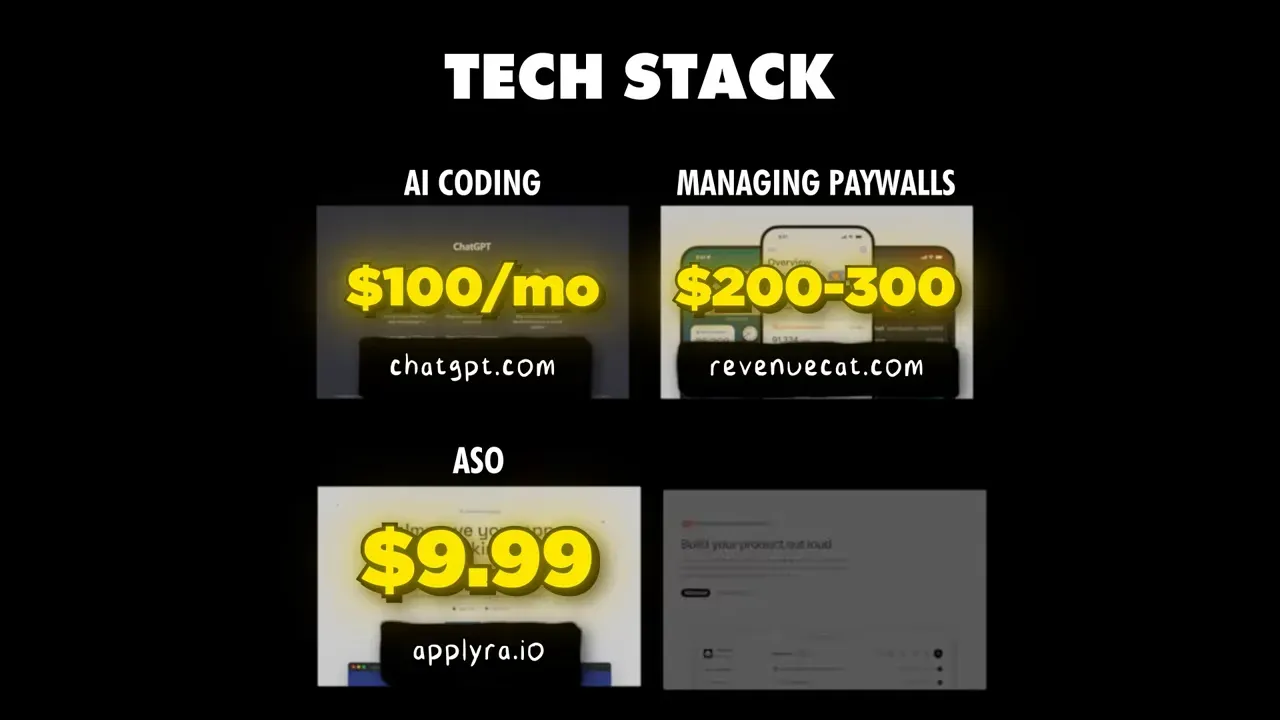
This is a useful version of an AI funnel builder setup for a mobile app, although “funnel” is doing a lot of corporate cosplay here. The system is simple:
- Use AI coding to get the product functional.
- Use a subscription platform to manage paid access.
- Use ASO tools to improve discoverability.
- Collect feedback somewhere visible and easy to manage.
- Spend most of the remaining attention on product quality and user retention.
The tool stack is not the moat. It is just the plumbing. The differentiator is the thing people see when they open the app.
💡 Finding an idea worth obsessing over
Pat Walls: Where did the Cat on Chair idea come from?
Ryan Yao: The original spark was a necklace Ryan’s girlfriend made: a small cat sitting on a chair. Ryan liked the name Cat on Chair and knew it could become the basis for a product.
From there, the concept had an obvious emotional connection. Cats often climb beside people working, and those moments can feel calm and comforting. A focus timer where a cat stays nearby made sense immediately.
Ryan’s girlfriend also loves Animal Crossing, which led to the customization layer. Different cats, furniture, and backgrounds gave the app progression and personalization. That was not feature bloat. It was a reason to return.
The practical lesson is not “put cats in every app.” The App Store has survived worse ideas, but it does not need more random mascot behavior. The lesson is to start with something personally interesting, then connect it to a useful behavior people already have.
Pat Walls: How can builders find similarly distinctive app ideas?
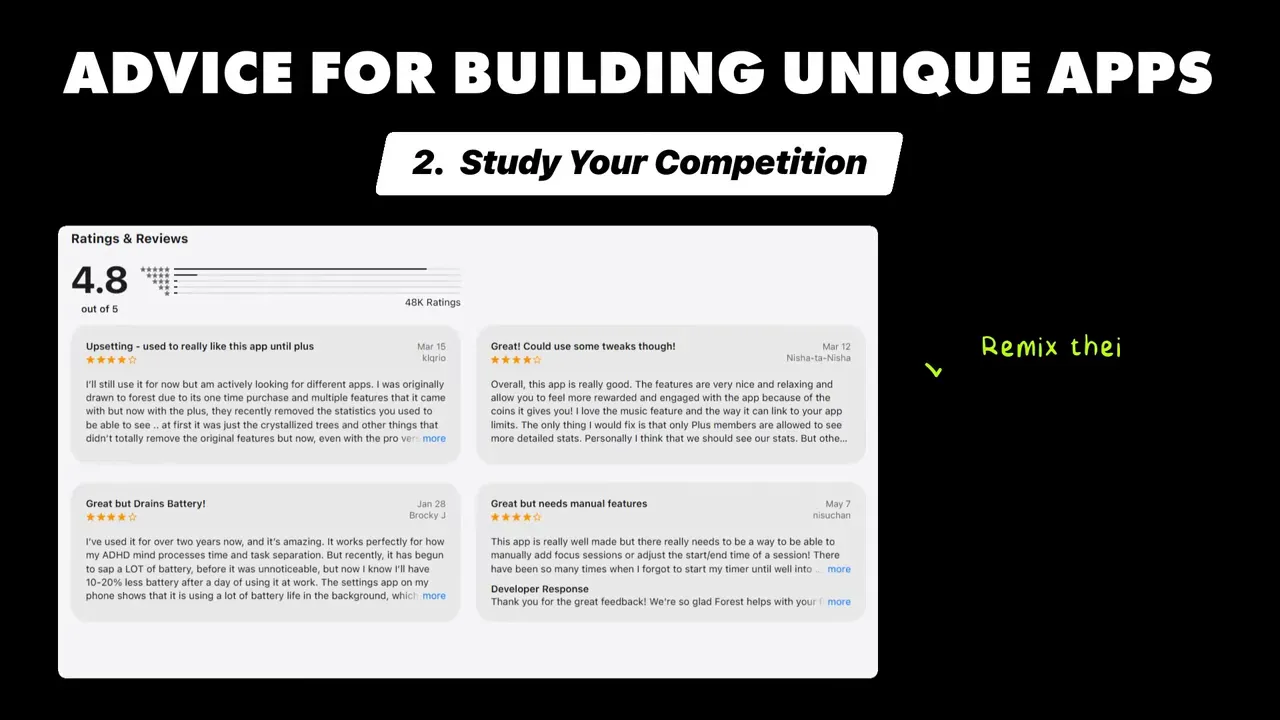
Ryan Yao: Start with an app already used or a category genuinely interesting enough to study for longer than an afternoon. Then examine the competition closely: App Store reviews, social media comments, feature complaints, praise, and community behavior.
Ryan recommends looking outside the category for mechanics to remix. Games are especially useful because they are full of systems built around motivation, progression, collection, and retention.
A simple framework looks like this:
- Find an existing utility: Something people already understand, such as timers, lists, tracking, or planning.
- Study the market’s complaints: Look for what feels boring, frustrating, missing, or emotionally flat.
- Borrow a mechanic from elsewhere: Collection systems, rewards, characters, customization, progression, or social rituals.
- Add a visual point of view: Original illustration or a distinctive visual style that does not look like it escaped from a default component library.
🎨 Why handcrafted software still wins
Pat Walls: What made Cat on Chair feel different enough to spread organically?
Ryan Yao: The app grew through small viral moments on RedNote, then more dramatically through Instagram app-collection posts. One influencer post passed 2 million views. Someone in Taiwan then shared the app on Threads, creating another viral wave that roughly doubled downloads and revenue overnight.
That kind of growth can look random from far away. Up close, the product had earned the chance to be shared. It looked visually distinct, had an easily understood premise, and gave people something charming to show rather than merely describe.
The early audience was primarily Chinese and Taiwanese, partly because of Ryan’s girlfriend’s existing RedNote following. The team is now aiming more broadly at English-speaking and global markets. That is another reminder that a product does not need to begin in the largest possible market. It needs an initial group that actually cares.
There is also a more human reason this design mattered. One user shared that after her cat died, she found a similar-looking cat inside the app and felt like she could see her cat again. That is not a metric, but it is a better signal than most dashboards provide.
Pat Walls: What is the difference between using AI well and shipping generic AI-built software?
Ryan Yao: AI makes basic utility features much easier to produce. A functional timer can be built quickly. But a product that feels specific, considered, and worth keeping is still a design problem.
The best use of AI is not to eliminate judgment. It is to let builders apply their judgment to more of the build. Ryan could pair his product design background with AI-assisted coding, while his girlfriend brought a distinct illustration style and a strong sense of play.
That combination created something competitors could not copy by typing “make a cute productivity app” into a prompt and waiting politely.
✅ The real talk: build the thing that deserves to exist
Pat Walls: What advice would Ryan give to a designer or first-time app builder?
Ryan Yao: Keep trying and stay consistent. Ryan took years to discover what he enjoyed and what he was good at. Building Cat on Chair with AI was not smooth or effortless, even with a strong product design background.
The useful takeaway is not that every simple app will hit $18,000 per month. It will not. The more durable takeaway is that a small app can work when it combines:
- A clear, familiar job to be done
- A niche with real emotional resonance
- A mechanic that encourages return use
- A visual identity people recognize immediately
- Enough persistence to survive the unglamorous bug-fixing period
For solo builders trying to launch with AI tools, the move is to lean into an existing advantage. Designers can build a better experience. Analysts can find better data signals. Writers can create sharper onboarding and positioning. Community builders can start with distribution. The goal is not to become a generic founder with an expensive tool stack. The goal is to make something that carries a fingerprint.
Cat on Chair is a strong case for an AI-powered launch system for creators that does not confuse speed with sameness. Build the simple utility. Give it a weirdly specific reason to exist. Test it with real people. Fix the broken parts. Then make it interesting enough that someone wants to share it without being asked.
❓ FAQ
How much money does Cat on Chair make?
Ryan shared that Cat on Chair generated more than $18,000 in sales during the most recent 30-day period discussed. Across roughly eight or nine months, the app had generated close to $80,000 in sales.
What is Cat on Chair?
Cat on Chair is a cat-themed Pomodoro focus timer. Users complete focus sessions while a cat appears in the app, then collect gifts, cats, furniture, and backgrounds through continued use.
What tools did Ryan use to build and run the app?
Ryan used ChatGPT Pro for coding, RevenueCat for paywalls and subscriptions, AppLyzer for App Store optimization, and UserJot for collecting feedback.
How did Cat on Chair get its first users?
The team invited thousands of people from RedNote to beta test before launch. Later growth came through organic sharing on RedNote, Instagram app-collection posts, and a viral Threads post in Taiwan.
What makes a simple app idea stand out?
Ryan’s approach is to start with an app category already understood, study competitor feedback deeply, remix successful mechanics from other industries such as games, and create a distinctive visual style. The feature set can stay simple while the experience becomes memorable.
This article was inspired by this amazing video $18K/Month From This Ridiculously Simple App Idea. Check out more from their awesome channel.