
Interview with Timo Köhler, Builder of a $50K Per Month AI App

Interview with Timo Köhler, Builder of a $50K Per Month AI App
Most solo builders do not need another $97 playbook explaining why they should “build in public” until their thumbs stop working. They need a repeatable way to find customers, know what those customers are worth, and scale without turning the business into a full-time spreadsheet emergency. Timo Köhler built an AI-powered launch system for creators and app builders that does exactly that: a simple product, measurable paid distribution, and a deliberately boring operating rhythm.
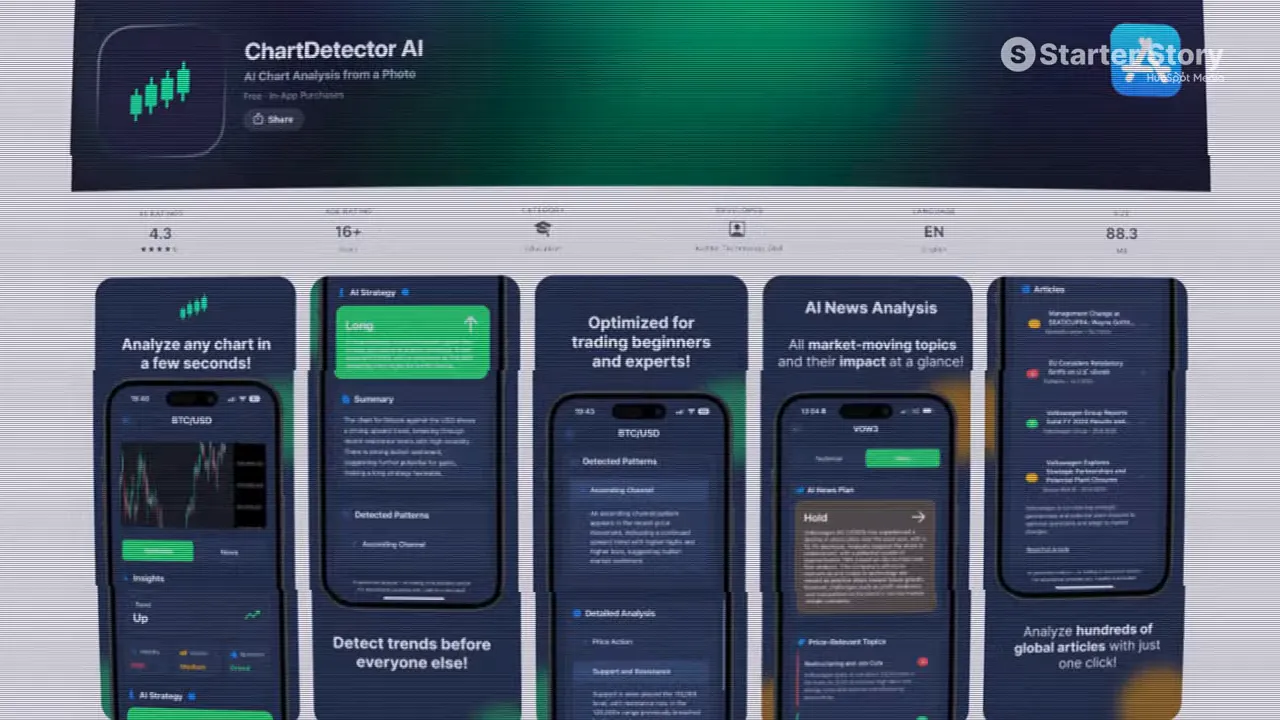
His app, ChartDetector AI, analyzes stock and crypto chart screenshots using AI. Launched with his brother just over a year ago, it reached more than 90,000 downloads and over $260,000 in total revenue in its first 13 months. At the time of this interview, the app was bringing in about $56,000 per month while Timo estimated he was spending roughly 20 hours per month operating it.
That is not a promise that paid ads print money. It is a case study in building a system where every important action can be measured. Which is a much better use of time than guessing whether a nice logo will somehow solve distribution.
Table of Contents
- 🚀 The Setup: A Small App With a Clear Outcome
- 💸 The Distribution Engine: Paid Ads as an Economic System
- 🧭 The Playbook: How to Launch With AI Tools and Paid TikTok Ads
- 🛠️ The Ad Setup Checklist That Actually Matters
- 📈 Monitor, Scale, and Keep Feeding the Creative Machine
- 🧱 The Lean Tech Stack Behind ChartDetector AI
- ⚠️ The Real Talk: Momentum Beats Productive Procrastination
- ❓ FAQ
🚀 The Setup: A Small App With a Clear Outcome
What did Timo build, and what makes the offer easy to understand?
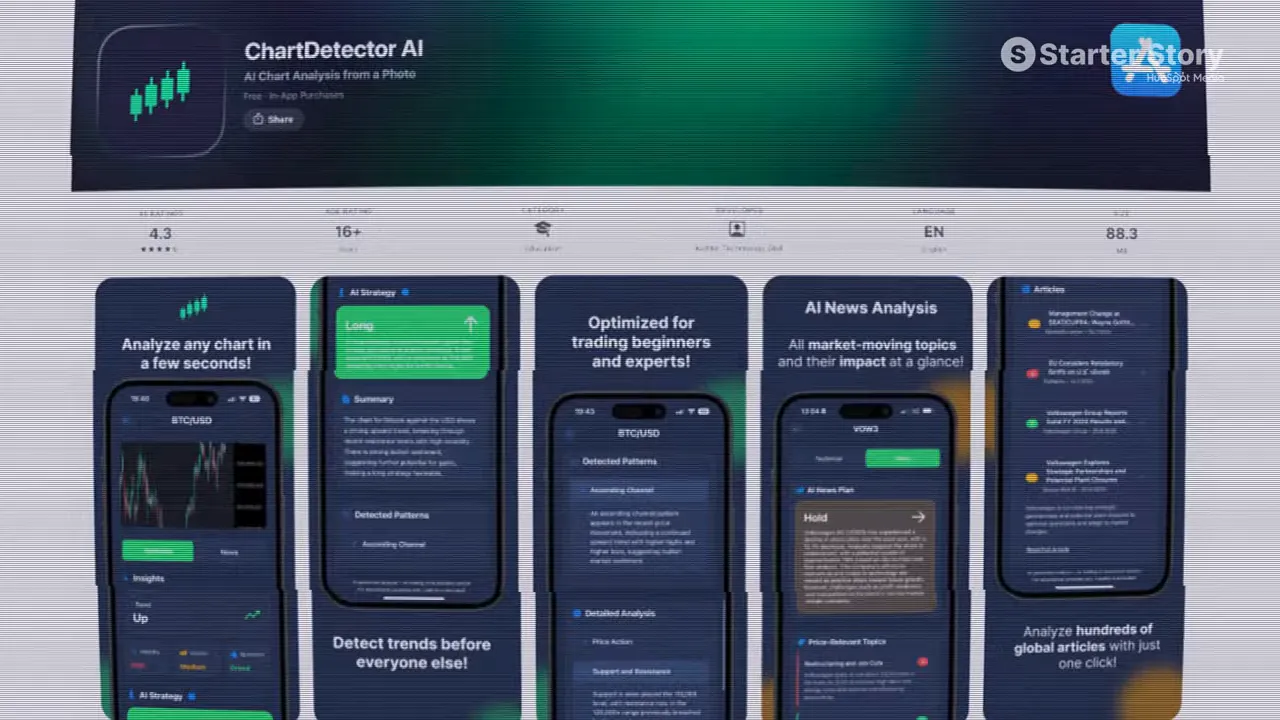
Timo built ChartDetector AI, a mobile app that lets someone upload or photograph a stock or crypto chart and receive an AI-generated analysis. The product premise is very simple: take a chart image, submit it, and get guidance on the chart’s potential direction.
The app started because image uploads had become newly available in ChatGPT. Timo and his brother initially explored the idea as a Telegram bot that could analyze charts. The mobile app came afterward.
That sequence matters. They did not begin by inventing a complicated company narrative and then look for a product. A newly available capability created a straightforward use case. They turned that capability into a focused tool for a specific audience.
At the point discussed here, ChartDetector AI was receiving roughly 13,000 to 14,000 downloads a month. It had accumulated close to 40 million impressions, with 7.8 million views in the prior 30 days. The app offered two primary plans:
- $12.99 per week
- $59.99 every six months
There was no free trial. The app uses a hard paywall, meaning payment is required before getting access. That can sound aggressive until the acquisition model is considered. When a business pays for installs, it needs a timely signal about whether users convert into revenue. Free trials can add a delay and make that signal messier.
Why did a hard paywall make sense for this app?
Timo’s argument is practical, not ideological. A hard paywall works well alongside paid ads because it produces revenue information quickly. The team can see whether users arriving through a campaign are paying, then compare that revenue against the cost to acquire them.
For an app with a clear, immediate job to do, this model can reduce ambiguity. Someone either wants chart analysis enough to pay or they do not. The point is not that every app should remove its free tier. The point is to make pricing match the economics and user behavior of the product.
💸 The Distribution Engine: Paid Ads as an Economic System
What is the core growth model behind the app?
The engine is paid TikTok advertising. Not vague “brand awareness,” not a heroic daily content calendar, and not hoping an algorithm decides to be charitable. The math is simple: acquire a user for less than the average revenue that user produces.
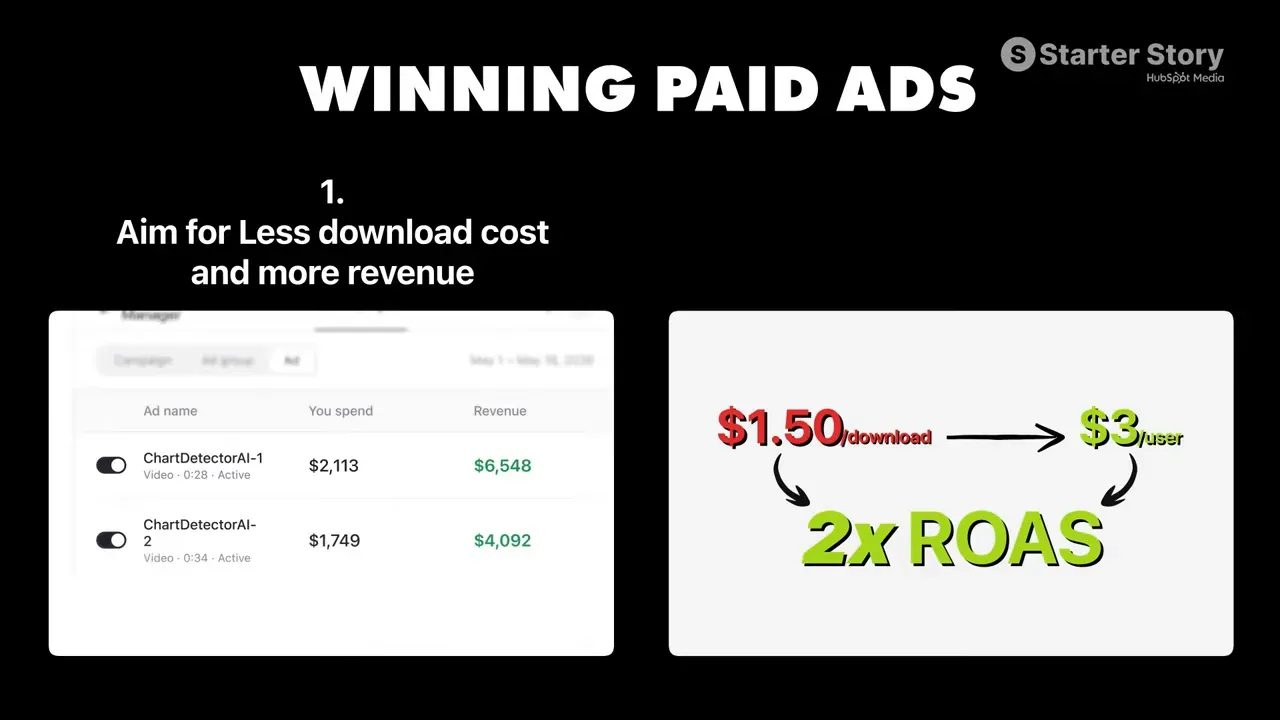
Timo uses a basic example. If an app spends $1.50 to generate a download and earns an average of $3 per acquired user, the campaign produces a 2x return on ad spend, or ROAS. Once that relationship remains stable after costs, increasing spend can increase profit.
That is the entire operating thesis: find profitable acquisition, then spend more carefully. It is less glamorous than “go viral,” which is probably why it is useful.
Was the app actually profitable after advertising costs?
Yes, based on the numbers Timo shared. In April, the business generated approximately $43,700 in revenue. The team spent around $20,000 on ads, paid Apple’s roughly 15% platform fee, and reported total profit of about $11,500. That worked out to a profit margin near 25% after all costs.
Paid acquisition is not free growth. It is capital-intensive growth. The tradeoff is that a founder can replace a large amount of manual distribution work with a measurement and creative-production system. In Timo’s case, that system supported a low monthly time commitment after the product and campaigns were established.
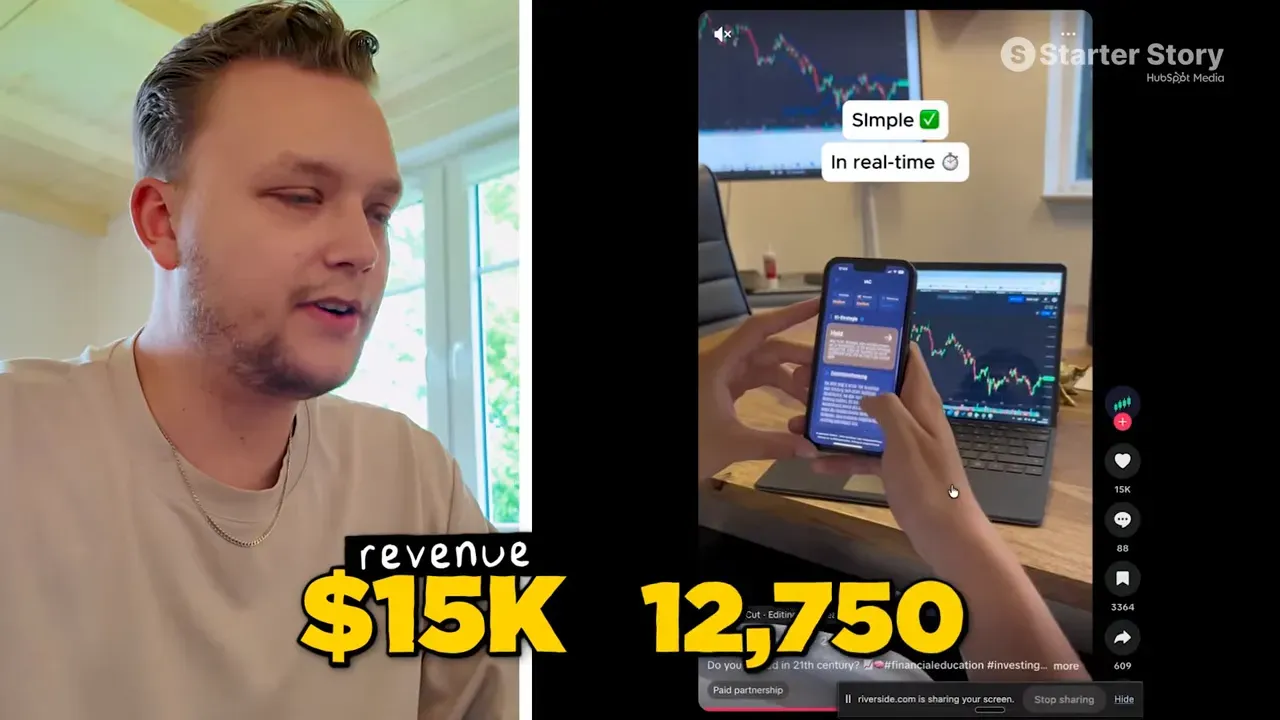
A strong TikTok creative was remarkably direct. It simply showed the app being used in context. That one ad generated more than $15,000 in revenue and nearly 5 million views. No cinematic manifesto. No founder standing in front of a rented car. Just the product doing its job.
🧭 The Playbook: How to Launch With AI Tools and Paid TikTok Ads
What needs to be fixed before spending a dollar on advertising?
Timo starts with onboarding. Paid traffic magnifies whatever already exists. If onboarding is confusing, ads will simply help more people discover the confusion faster.
His recommendation is to lead with the actual outcome, not a list of features. “AI-powered chart recognition” is a feature. “Understand what this chart may be signaling” is closer to an outcome. A customer is not buying the plumbing. They are buying the thing they hope happens after the plumbing works.
He also recommends adding social proof to onboarding. Reviews, ratings, user counts, or other credible trust signals can reduce anxiety before a user reaches the paywall. Since a hard paywall asks for a decision early, the onboarding flow must earn trust early too.
For research, Timo recommends studying successful app onboarding flows with a tool such as Screens Design. The goal is not to clone another product screen for screen. It is to understand the sequence: what promise appears first, when proof appears, how pricing is framed, and where friction is removed.
What does the onboarding checklist look like?
- State the transformation or desired outcome immediately.
- Show the product in use rather than describing it abstractly.
- Add social proof that supports the promise.
- Use pricing that fits the acquisition model.
- Consider a hard paywall when fast revenue feedback matters.
How should tracking be set up?
Tracking is the part most builders want to skip because it is fiddly, unsexy, and capable of consuming an entire afternoon. Naturally, it is also where the money leaks when it is wrong.
Timo recommends creating a TikTok Business Manager account and connecting a mobile measurement partner, or MMP, such as AppsFlyer. The point is to send TikTok reliable data about which people install the app and, more importantly, which people actually subscribe.
His advice is blunt: hire a capable freelancer to handle the AppsFlyer integration if the team does not know mobile attribution well. A broken event configuration can cause the ad platform to optimize for the wrong people, which is an expensive way to learn what “misconfigured” means.
The tracking chain should look like this:
- Create the TikTok ad account.
- Install and configure AppsFlyer.
- Connect AppsFlyer to TikTok Ads.
- Verify that subscription events are being sent correctly.
- Only then begin testing spend.
How should the first campaign be structured?
Timo recommends starting with at least six video creatives. The reason is not that six is a magical number blessed by the marketing gods. TikTok needs enough options to test different messages and visual treatments across different audiences.
For campaign setup, his team uses TikTok Smart Plus campaigns. This lets TikTok’s automated system handle much of the audience discovery and budget allocation. In a small team, that matters. The best solo builder tech stack is not necessarily the one with the most knobs. It is the one that leaves enough time to improve the product and produce new creative.
The key optimization decision is to optimize for subscription events, not app installs. Optimizing for installs teaches the platform to find people likely to download. Optimizing for subscriptions teaches it to find people likely to pay. Those are very different groups, and confusing them creates the familiar situation where a dashboard looks busy while the bank account looks unimpressed.
🛠️ The Ad Setup Checklist That Actually Matters
What settings did Timo recommend for early campaigns?
His early campaign recommendations are straightforward:
- Start with at least six creatives. Give the algorithm options.
- Use a Smart Plus campaign. Let TikTok automate audience discovery and budget allocation.
- Optimize for subscriptions. Do not optimize only for installs.
- Start around $50 per day. That was the budget level where his team saw the best results.
- Keep targeting broad. Select the country, then avoid over-engineering interests and micro-audiences.
- Test countries beyond the United States. The team found stronger returns in other markets during testing.
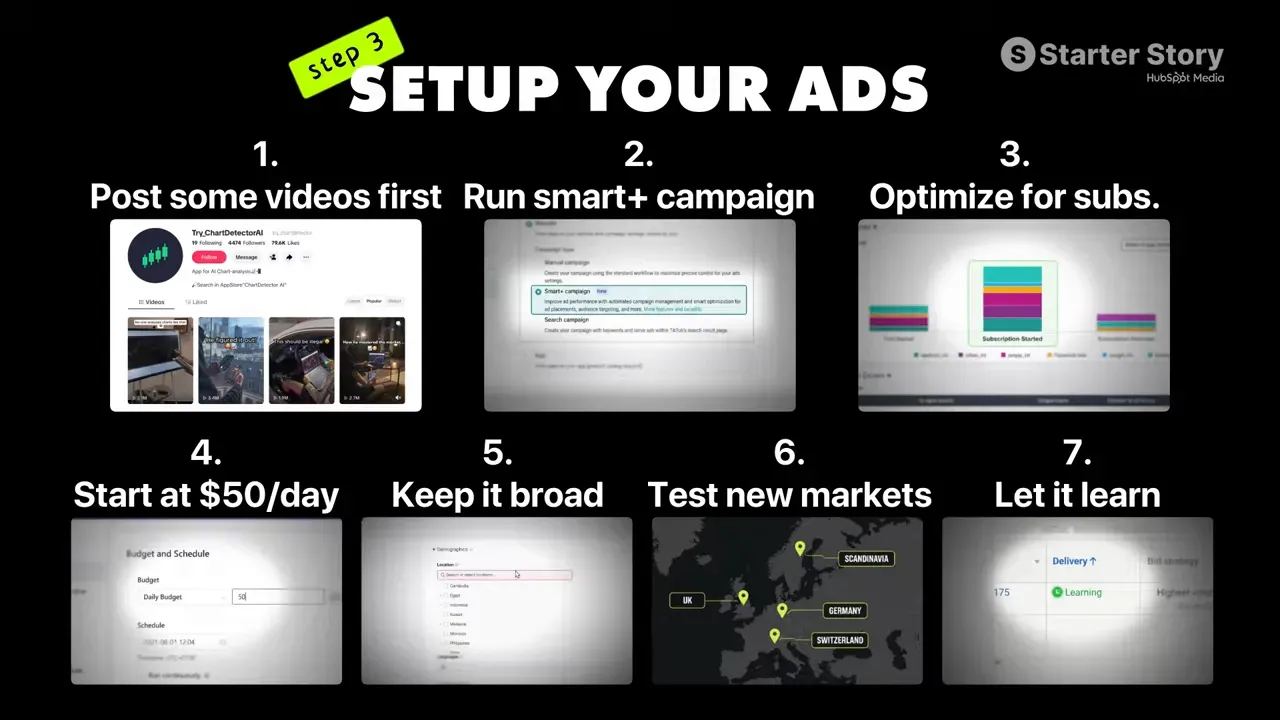
The broad-targeting recommendation is worth underlining. Founders often try to outsmart the platform by stacking dozens of assumptions about who will buy. Timo’s approach is to provide a clear conversion signal and let the algorithm find similar people. It is not always right for every business, but it is far more testable than targeting based on vibes and a few suspiciously specific interests.
What should happen during the learning phase?
Once a campaign starts, TikTok enters a learning phase that Timo describes as roughly seven days. During that period, the platform tests creative and audience combinations to identify stronger patterns.
The discipline here is to avoid changing settings during learning. Constantly editing campaigns interrupts the system’s ability to learn. A lot of operators panic after a day or two, change five variables, and then have no clue what caused the next result. The dashboard becomes a crime scene with no witnesses.
📈 Monitor, Scale, and Keep Feeding the Creative Machine
How does Timo decide when to scale spending?
The team checks ROAS weekly. If the result remains stable and profitable, they increase the budget. If it is not profitable, they create and add new video creatives instead of endlessly poking at targeting.
Budget changes should be gradual. Timo follows a rule of not increasing spend by more than 20% every three days. A large sudden budget jump can push the campaign back into learning and cause profitability to drop.
That creates a calm operating loop:
- Check whether ROAS is profitable and stable.
- Increase budget slowly when the numbers hold.
- Produce fresh creative when performance weakens.
- Do not rush changes that reset learning.
- Repeat until the economics stop working.
What is creative fatigue, and why is it unavoidable?
Creative fatigue happens when too many people have already seen the same ad. Performance declines because the audience is saturated. It is not a personal insult from TikTok. It is just what happens when the same message reaches the same people repeatedly.
The answer is a constant pipeline of new videos. The team’s best-performing concepts are product-centered demonstrations, so creative production does not need to become an elaborate production company. New angles, new openings, new demonstrations, and fresh contexts can all create additional testable ads.
This is where an AI funnel builder mindset is useful: the creative is not merely content. It is an input to a measurable funnel. Build it, test it, measure subscriptions, keep what works, and replace what stops working.
🧱 The Lean Tech Stack Behind ChartDetector AI
What tools run the app and growth system?
The stack is a practical example of no-code startup tools and developer tools working together without pretending every business needs a custom data center in a bunker.
- React Native and Expo: mobile app development.
- Supabase: backend infrastructure.
- Cursor AI: AI-assisted coding.
- OpenAI: the AI capability behind chart analysis.
- RevenueCat: paywalls and subscription management.
- AppsFlyer: mobile attribution and TikTok conversion tracking.
- CapCut: video editing for ad creative.
- TikTok Ads: paid acquisition.
At the time discussed, TikTok ad spend was around $18,000 per month. That is the big cost center, which is exactly why attribution, conversion events, and controlled scaling cannot be treated like optional admin work.
⚠️ The Real Talk: Momentum Beats Productive Procrastination
What would Timo tell someone trying to build a simple AI app today?
His advice is to start executing. Timo described spending too much time consuming videos and mistaking that activity for progress. It is an easy trap because researching feels responsible. Sometimes it is responsible. After the twentieth tab, it is usually just procrastination wearing glasses.
The useful version of this case study is not “build a chart app and work five hours a week.” The useful version is:
- Spot a new capability that makes a concrete job easier.
- Turn it into a narrow product with a clear outcome.
- Build onboarding that explains the outcome and earns trust.
- Instrument the conversion events before paying for traffic.
- Test simple product-focused creative.
- Optimize for revenue events, not vanity metrics.
- Scale only when the economics remain profitable.
An AI-powered launch system for creators is not an app plus a few automations. It is a loop: product value, clear payment signal, accurate attribution, fresh creative, disciplined spending. Remix that loop for a different niche, a different platform, or a different product. The tools can change. The economics do not.
❓ FAQ
How much revenue did ChartDetector AI generate?
Timo reported that ChartDetector AI was generating about $56,000 per month at the time discussed. He also shared more than $260,000 in cumulative revenue over approximately 13 months.
How many hours does Timo spend operating the app?
Timo estimated that he was working about 20 hours per month on the app after building the product and establishing the paid acquisition system.
What TikTok optimization event should an app use?
Timo recommends optimizing TikTok campaigns for subscription events rather than app installs. That gives the platform a stronger signal about which acquired users actually generate revenue.
What daily budget did Timo recommend for initial TikTok ad testing?
He recommended starting at a minimum of around $50 per day, which was the level where his team saw the best results.
Why use a hard paywall for a paid acquisition app?
A hard paywall can provide faster feedback on whether paid installs become paying customers. That makes it easier to compare acquisition costs with revenue, although the right pricing model depends on the individual product and audience.
Is this approach guaranteed to work for every app?
No. This is one founder’s operating model and results. Product demand, pricing, creative, audience, platform conditions, and costs differ across businesses. The reusable lesson is to validate the unit economics before trying to scale them.
This article was inspired by this amazing video I Make $50K Per Month Working 5 Hours A Week. Check out more from their awesome channel.