
Interview with Jonathan Fishner, co-founder of ChartDB — built a niche app to $9K MRR

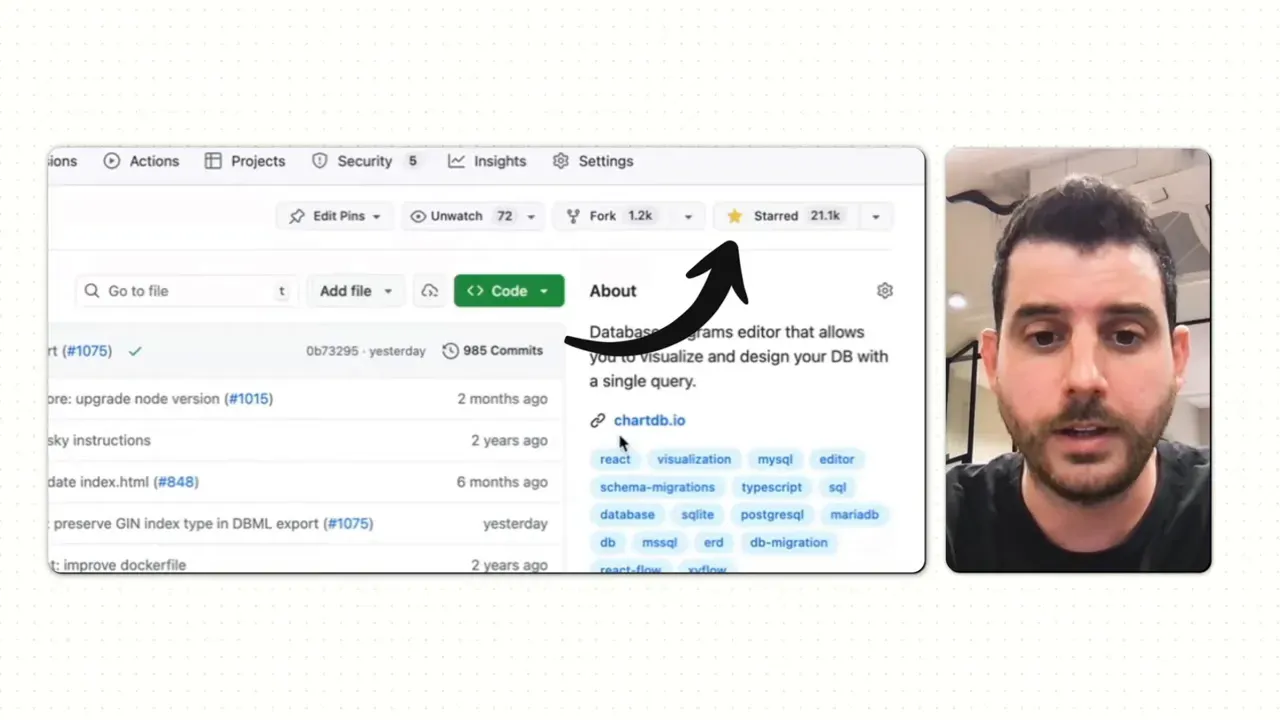
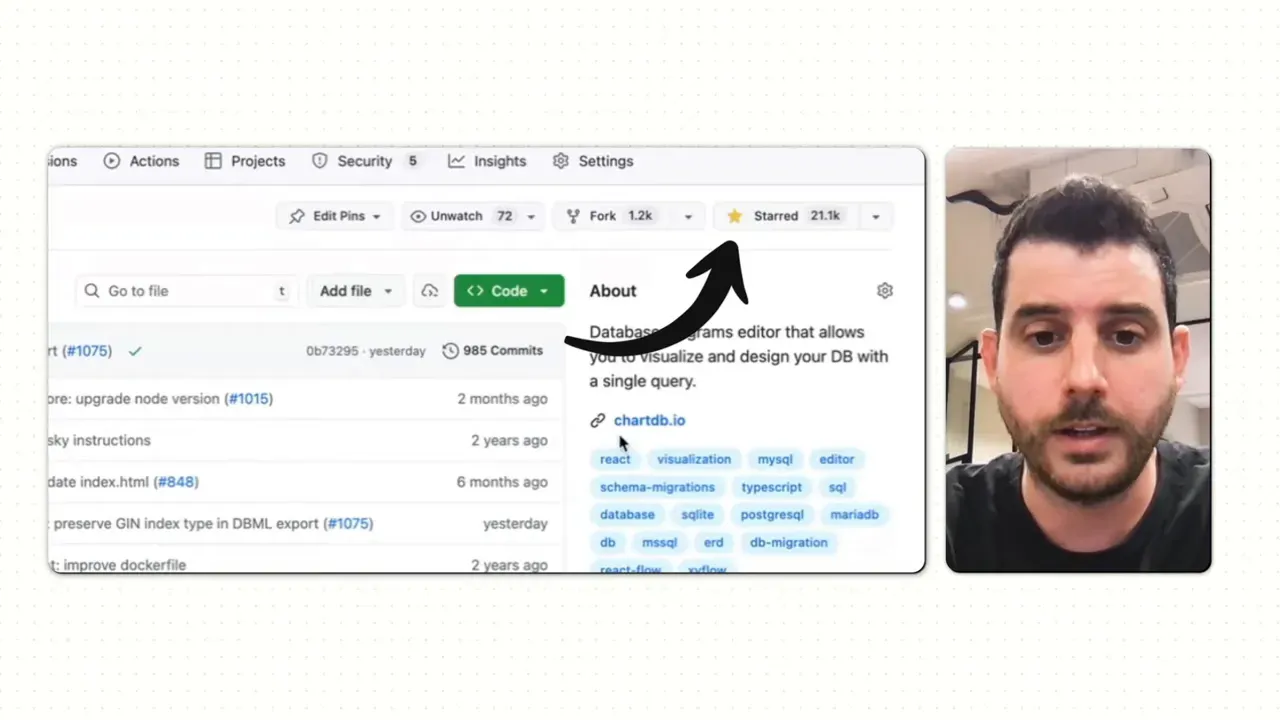
Developers are taught to hunt for moonshot ideas. Jonathan Fishner did something quieter and smarter: he picked one tiny, painful corner of the developer workflow, made that corner delightful, and let the audience adopt it on their own terms. The result is ChartDB — an open source, self-hosted database visualization tool that grew to 21k GitHub stars and roughly $9,000 in monthly recurring revenue.
This conversation reads like a toolkit disguised as an interview. It covers how to find an idea that actually matters to a narrow audience, how to launch where your ideal customer already hangs out, and how to design product and pricing decisions from real usage rather than guesses. The piece is written from a pragmatic builder’s perspective: clear, skeptical of hype, and tuned for people who want to ship without wasting time or money.
Table of Contents
- 🚀 AI-powered launch system for creators — what dev builders can steal
- 🧭 The developer tools playbook
- 🛠️ How ChartDB actually works
- 🔧 A tactical checklist for builders
- 📈 Real talk: did it work and would the team do it again?
- 🔥 Final takeaways for the solo builder
- ❓FAQ
🚀 AI-powered launch system for creators — what dev builders can steal
Start here: the phrase AI-powered launch system for creators is on the nose if the reader is trying to assemble a modern distribution funnel. But Jonathan’s approach flips the script. He didn’t build a complicated funnel. He built something so immediately useful that adoption and word-of-mouth handled the “launch” for him.
That still leaves useful tactical takeaways for someone building an AI-powered launch system for creators or any lean product aimed at a technical audience:
- Be the user. If the tool scratches your own itch, it’s easier to iterate toward something that feels obvious to other users in the same role.
- Design for constraint, not for ideal. Developers prefer low-friction, self-hosted options. Don’t force a signup wall when your audience values quick, local testing.
- Start with a wedge. Make one tiny thing exceptional. Expand only after usage teaches you what to charge for.
Who are you and what is ChartDB?
Jonathan Fishner is a developer and co-founder of ChartDB. ChartDB is an open source database visualization tool aimed at developers who want to quickly understand the shape of their schema and iterate on it visually. It ships as a self-hosted package that developers can install locally, plus a paid hosted cloud version that the team uses to monetize.
Jonathan’s team launched the open source project about 16 months after a pivot from a more ambitious idea. Today ChartDB crosses tens of thousands of users annually and pulls in roughly $9,000 in monthly recurring revenue from the hosted tier.
How did the idea for ChartDB come about?
Jonathan’s original plan was more ambitious: a database client with AI features built in. The problem was trust and friction. To run those AI features, users had to connect credentials, install software, and trust a new vendor with access to sensitive data. That combination made adoption slow.
So the team pulled a pivot. They narrowed the scope to a single, visual problem: turn a database schema into an interactive chart. That pivot had two immediate benefits:
- Immediate wow effect. A visual ERD makes structure obvious to people who live inside databases all day. That’s an easy value moment.
- Low friction. No credentials, no signup required for the self-hosted version. Developers could test locally and decide if the tool fit their flow.
That combination made ChartDB something developers would try in minutes, and developers trying a tool are exactly the kind of users who can turn into evangelists.
How did ChartDB get traction so quickly?
The big growth moment was a single launch post on Hacker News — a Show HN submission that hit the front page. Within a day Jonathan’s project got thousands of engineers landing on it. That kind of visibility is often the difference between a repository that never leaves the dirt and one that grows into a tool people actually use.
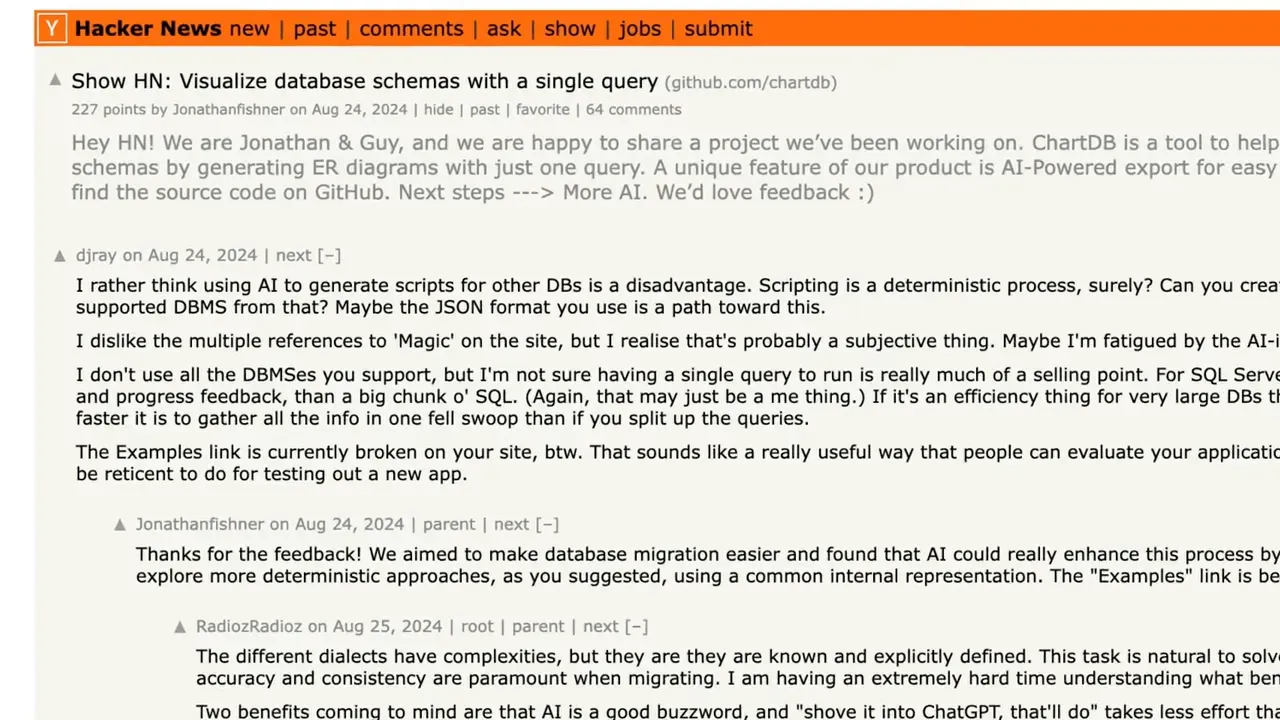
Key ingredients that made the Hacker News launch work:
- Open source status. Developers prefer to poke under the hood. Open source removes a lot of the skepticism and signup friction.
- A unique wedge. ChartDB showed something developers rarely saw before: an easy-to-import, beautiful ERD from a single exported query.
- Tweak the timing and presentation. A prepared, well-written Show HN post with screenshots and a clear one-sentence value proposition goes a long way.
If someone were launching on Hacker News today, what would you recommend?
Jonathan’s advice is crisp: give people something they can try immediately and that feels unique in the feed. For developer audiences that means no signup walls and a demo they can run locally or an easy copy-paste example that leads to a “wow” moment within minutes.
🧭 The developer tools playbook
Jonathan boiled his process down to a short playbook that’s useful for any solo builder or small team building developer tools. Roger’s translation of that playbook into operational steps:
- Be the user. If you’re solving a problem you face daily, you will recognize the smallest acceptable solution faster than anyone else.
- Design for constraint. Match the product to the persona’s constraints. For developers that often means self-hosted, local-first, minimal permissions.
- Start with a wedge. Don’t design the whole platform at launch. Build one feature that people will actually use and love.
- Let usage steer monetization. Watch how teams use the free tool and only charge for the collaboration or scaling features that actually emerge as needs.
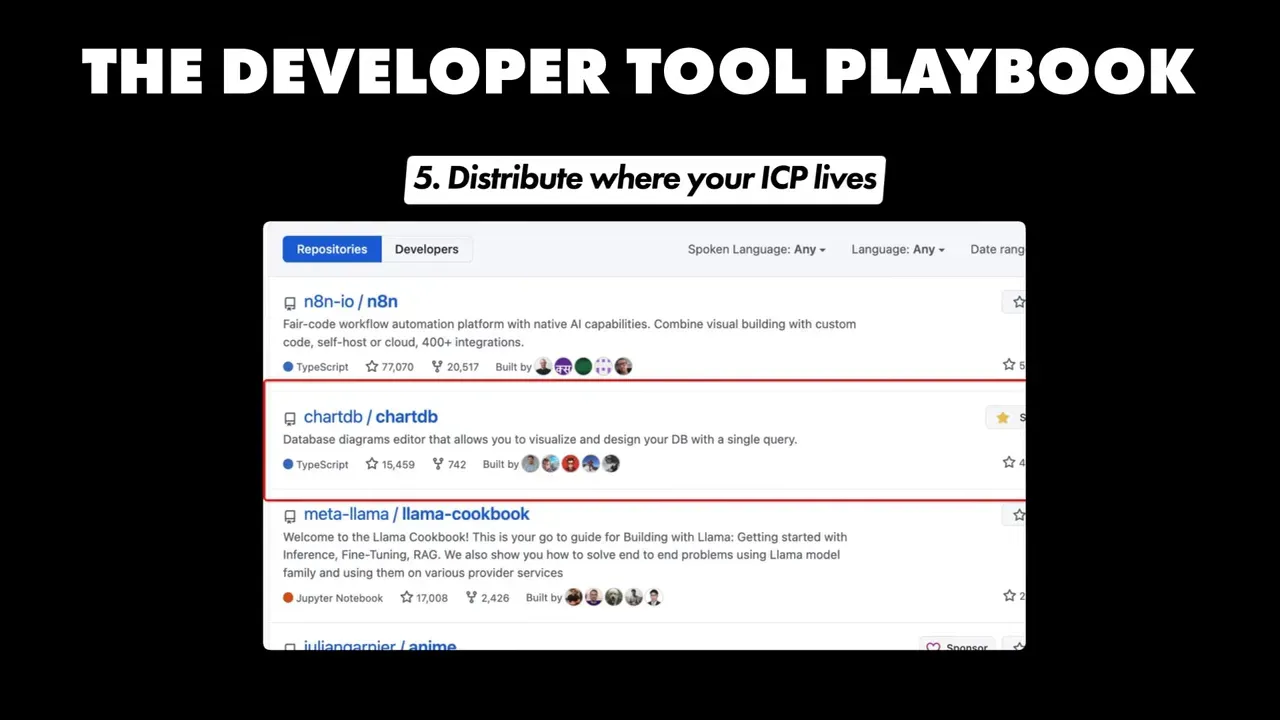
- Market where your ICP lives. Distribute on GitHub, Reddit subreddits for self-hosting, Hacker News, and developer Slack communities. Don’t invent channels; use existing ones.
That playbook is refreshingly unsexy, but it’s practical. Monetization is reactive, not speculative. Build the product people adopt organically, then see what they ask for and charge for that.
How did ChartDB figure out what to charge for?
They didn’t guess. They watched behavior. The self-hosted free tier solved the solo developer use case. Once teams started wanting to use ChartDB together, the team saw demand for collaboration and real-time features. That natural evolution revealed the right place to insert a paid tier: team sync and collaboration features that are costly to support and valuable enough to pay for.
🛠️ How ChartDB actually works
At its simplest ChartDB converts database schema information into an interactive chart. The typical flow is:
- Run a single "smart" query in your database client that returns metadata about tables and relations.
- Copy the returned JSON.
- Paste the JSON into ChartDB’s import flow and instantly get an interactive ERD.
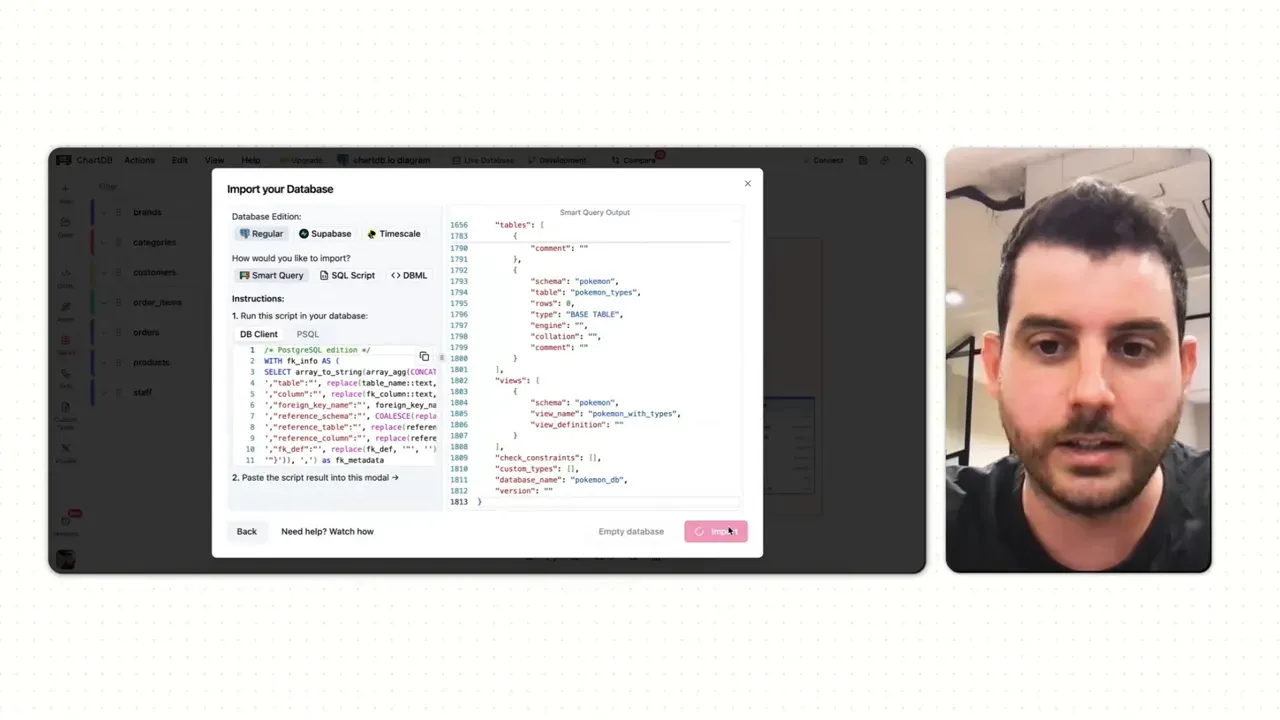
The import flow is deliberately straightforward. That’s by design: getting a developer to a "wow" moment within minutes eliminates the need for long onboarding, tutorials, or sales conversations.
What tech stack powers ChartDB and what are the operating costs?
ChartDB is a primarily open source stack with familiar choices for front-end developers:
- React and React Query on the front end
- Node.js on the backend
- Tailwind for styling
- React Flow for the canvas and visual graph interactions
- AWS for hosting
- Stripe for billing
- Third-party services like Postmark for transactional email, ChatGPT APIs for an assistant feature, and Plausible or a similar analytics tool
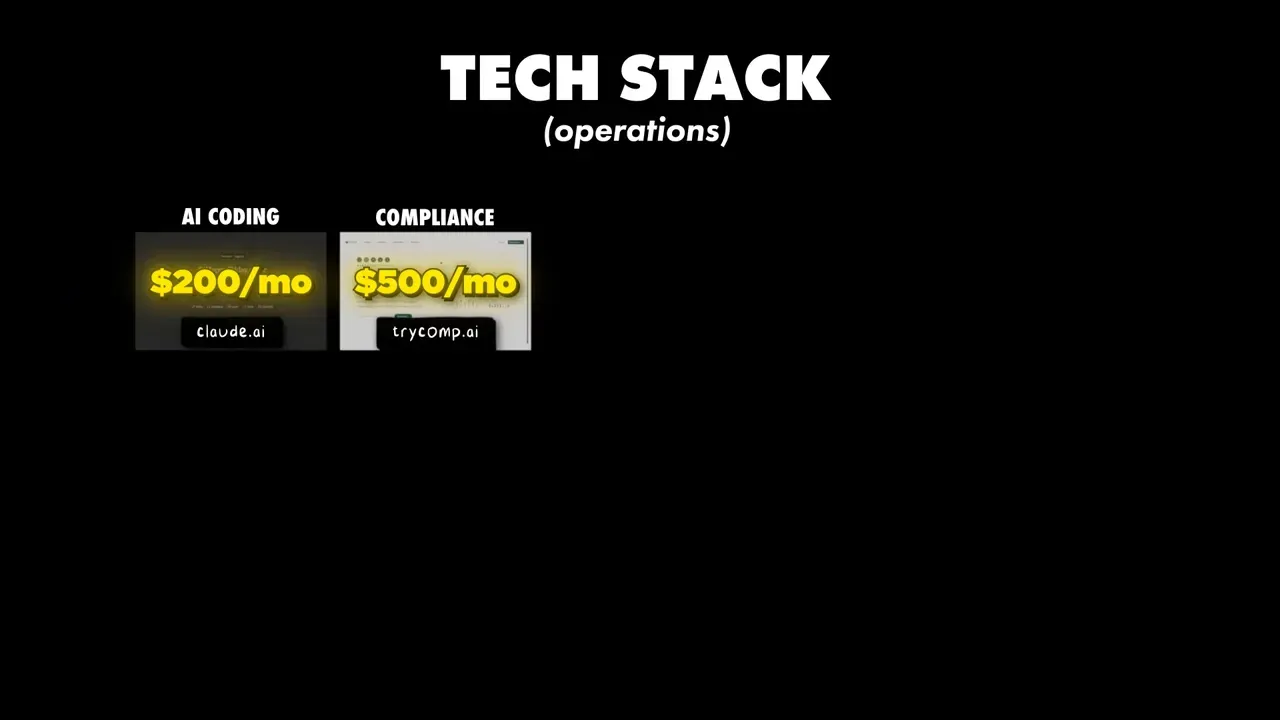
Approximate recurring costs Jonathan mentioned:
- AWS hosting: about $600 per month
- Compliance tooling (for SOC 2 requirements): $500 per month when needed
- AI assistant API credits and subscription: a few dozen to low-hundreds per month depending on usage
- Marketing website and SEO tools: low tens per month
Those are not zero, but they are moderate line items for a founder-run product that scales with revenue.
What would Jonathan tell his past self — or another dev thinking about their first product?
His advice is simple and sharp: pick one core value and defend it aggressively. Focus on the one feature that creates immediate, obvious value and ruthlessly ignore distractions until that core motion is working. That’s the moment investments in distribution and product expansion make sense.
"Pick one core value and defend it aggressively."
🔧 A tactical checklist for builders
If someone wanted to copy ChartDB’s playbook and launch a lean developer tool this week, here’s a practical checklist they can follow tonight.
- Pick a narrow persona. Example: backend devs who manage relational schemas in Postgres.
- Identify one core job-to-be-done. Visualize schema relationships quickly without touching production credentials.
- Prototype a wedge. Build a small page that accepts a JSON export and renders a minimal ERD using a graph library.
- Open source the repo. Make installation instructions one-liners for local usage and Docker so anyone can run it instantly.
- Write a Show HN and GitHub README that sells the one-sentence idea. Include screenshots and a minimal demo JSON to paste in like: "Import that JSON and see your schema in 30 seconds."
- Listen to usage for monetization cues. When teams ask for sharing or live collaboration, add a hosted tier for that feature set.
- Market where the people are. Publish to GitHub, post in relevant Reddit subreddits, and prepare a Show HN launch on a weekday morning.
Which small mistakes to avoid?
There are obvious traps that slow traction:
- Adding signup walls before users can reach the core value moment. That ruins conversion for developer audiences.
- Trying to monetize features no one asked for. Monetize after you see clear patterns.
- Building the entire product vision before proving the wedge. That wastes time and attention.
📈 Real talk: did it work and would the team do it again?
Yes. ChartDB’s approach produced:
- Large organic adoption via GitHub and Hacker News
- Low initial friction thanks to the self-hosted, open source model
- Monetization that emerged naturally from team collaboration needs
- Sustainable MRR that covers running costs and validates product-market fit
Would the team do it the same way again? Jonathan’s answer is effectively yes: start small, make the core value obvious, and scale distribution in channels developers already use. That’s a repeatable pattern that does not require viral marketing or complex funnels.
🔥 Final takeaways for the solo builder
This is the pragmatic version of the startup playbook:
- Solve a real, painful, repeatable problem for a narrow audience. Niche does not mean small market; it means precise fit.
- Make the value instant. The faster someone reaches a “wow” moment, the more likely they are to share and adopt.
- Let usage inform pricing. Only charge for things users clearly need and are willing to pay for.
- Launch where the audience already hangs out. GitHub, Hacker News, and relevant subreddits are not glamorous but they work.
If the reader is building an AI-powered launch system for creators or a solo dev tool, the lesson is the same: keep the initial system lean, prioritize immediate value, and let behavior point to the right monetization path.
❓FAQ
How does ChartDB convert a database into an interactive chart?
ChartDB consumes a single metadata query result, typically a structured JSON describing tables and relations. Users paste that JSON into the import flow and ChartDB renders an interactive ERD. The flow is optimized to minimize setup friction and does not require providing credentials to production databases.
Why open source instead of closed-source from day one?
Open source reduces trust friction for developers. It lets them test locally, inspect the code, and adopt the project without handing over credentials. For ChartDB this choice accelerated adoption and helped the project reach a critical mass on GitHub and Hacker News.
When should I add a paid tier?
Add paid tiers in response to observed behaviors, not guesses. If many users are asking for team features, sharing, or real-time collaboration that increase your hosting or support costs, those are sensible places to introduce a hosted paid plan.
Is Hacker News still worth launching on?
Yes, if your product targets developers. A well-crafted Show HN post that surfaces a unique solution and removes friction can still drive thousands of visits and meaningful adoption in a short time.
What are the typical monthly costs to run a small developer SaaS like ChartDB?
Expect cloud hosting in the low hundreds of dollars, transactional email and analytics in the low tens, plus incremental costs for AI APIs or compliance as customers require them. ChartDB’s founder noted AWS hosting around $600 per month and optional compliance tooling around $500 per month when needed.
This article was inspired by this amazing video I Built a Niche App to $9K MRR. Check out more from their awesome channel.