
I Left College to Build This Niche App (Now It Makes $20K/Month): Breakdown of Ethan’s CutCoach
CutCoach serves one small audience with one urgent problem: making weight. Here's how Ethan built it with AI tools and grew it with small creators and ads.

Most “app advice” assumes you are building for everyone. That is how you end up with a generic app, generic marketing, and a generic number of downloads that politely refuses to become revenue.
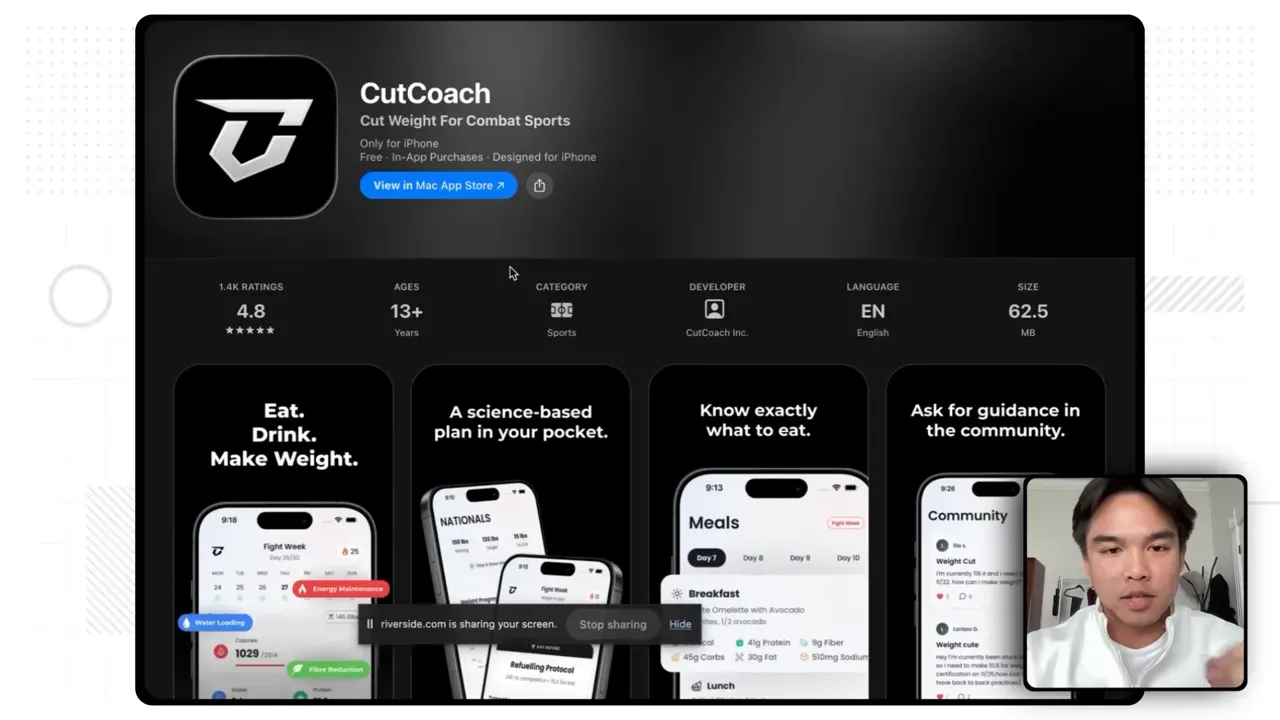
Ethan built CutCoach, a mobile app for combat sport athletes who need to cut weight for competition. The app is narrow. The audience is smaller. The problem is sharper. And that combination is what turned into his first real revenue engine: over $60,000 total revenue and about 38,000 downloads within about six months of launching, with revenue climbing during wrestling season and hitting $20,000 in a single month.
This is an AI-powered launch system for creators disguised as a niche-app case study. The takeaway is not “build an app.” The takeaway is “build the right kind of app, fast, then market like your life depends on it.” Because, you know, it often does.
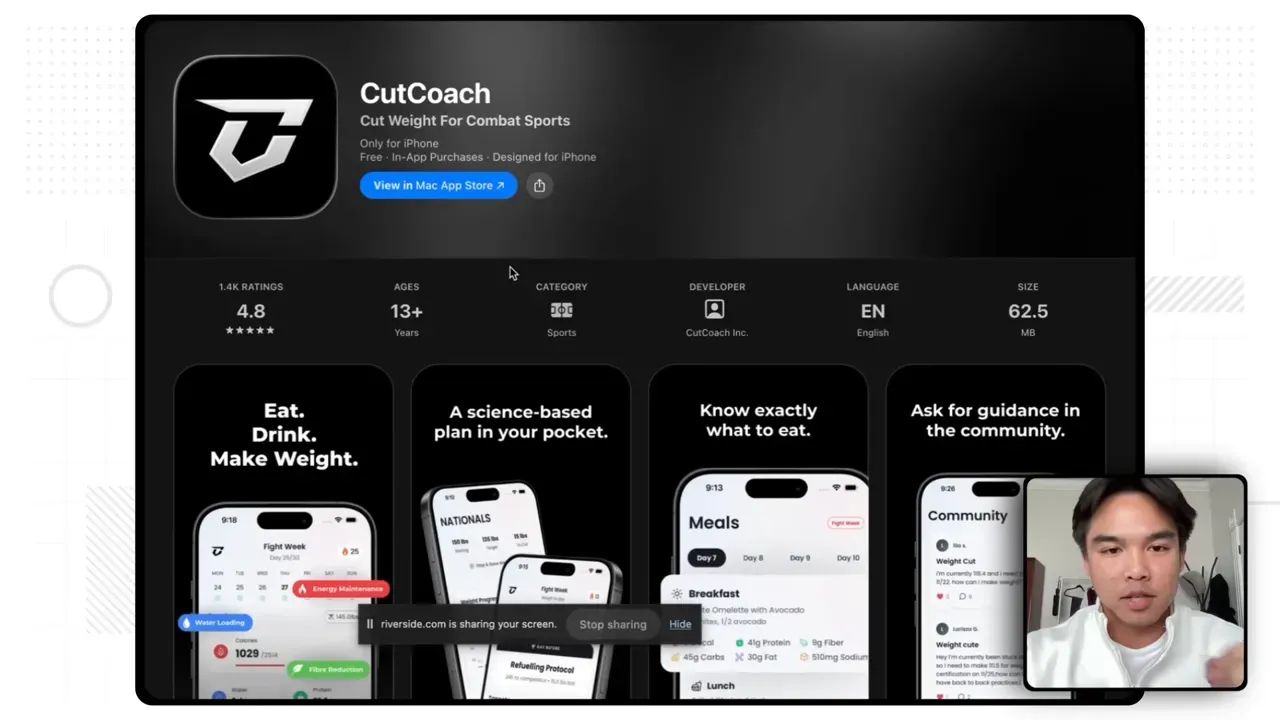
Table of Contents
- What CutCoach Actually Does (and Why It Converts) 🥊
- Ethan’s Origin Story: College to Niche Problem to Income 💡
- Finding a Niche App Idea Like a Builder (Not a Dreamer) 🧠
- How Ethan Built CutCoach Using AI Tools (and Iterated) ⚙️
- Marketing a Niche App Without Needing Viral Luck 📣
- CutCoach Demo: the Product Experience That Keeps It Simple 🧾
- Would Ethan Do Anything Differently? (The Real Talk) 🧯
- How to Turn This Into Your Own Launch System (Your Remix Plan) 🧩
- Optional Add-On: the One Trend to Be Skeptical About 🧊
- Build This Stack 🧰
- FAQ
- Go Build Your Own Launch System (Seriously) 🏁
What CutCoach Actually Does (and Why It Converts) 🥊
CutCoach is designed to help combat sport athletes cut weight for their next fight or competition. The core mechanism is a science-based protocol that generates weight-cut plans.
Instead of trying to be a fitness app for everyone, it solves one specific situation that comes up repeatedly for a specific group: athletes scrambling to make weight on a tight timeline.
Why the “not for everyone” approach matters
Ethan’s key belief is that a niche app should not aim at everyone. It should target a community with an urgent pain point. In that environment, conversion rates can be unusually strong even when views are not massive.
He emphasizes that the app performs during wrestling season because demand spikes. The product is aligned with real-world cycles, not vibes.
Ethan’s Origin Story: College to Niche Problem to Income 💡
Ethan started building apps in the summer of 2024, right before going to university for computer engineering. His first app automated parts of his mom’s workflow. He then built another app using only AI tools, which changed his perspective quickly.
He noticed how fast AI was shifting software development. That observation became the pivot point: he decided to leave university and learn development on his own.
In early 2025, he built several apps but did not market them. That was a mistake. The feedback loop was incomplete. Learning coding is not the same as learning distribution.
During that period, he discovered Cursor, which made building apps much faster. So instead of only focusing on development, he shifted attention toward sales and marketing to make the apps real businesses.
Where the idea came from
Ethan is not just an app builder with a “random niche.” He competes in combat sports at a high level. He described himself as a provincial judo champion and a national wrestling champion.
Weight cutting was always part of competing. He didn’t know how to do it properly until one coach gave him a proper combat sport weight cutting plan. Later, after a short time at college, he was in his room thinking about an app idea that connected his wrestling passion with his hobby of building apps.
That is how CutCoach was born.
Finding a Niche App Idea Like a Builder (Not a Dreamer) 🧠
Plenty of people “have ideas.” They just never turn them into shipped products. Ethan’s process is practical and repeatable, and it can be done by a solo builder without romanticizing the work.
Step 1: Solve a problem inside your hobby
Ethan’s first rule is simple: look for a problem inside your hobby or competitive activity. If you already understand the domain and you are motivated, you will naturally notice pain points other people miss.
Step 2: Use AI to brainstorm niche app ideas
He used ChatGPT to ask for app ideas that fit a chosen niche. The point is not to “outsmart” your ideas. The point is to pull up options you did not think of yet.
Step 3: Design fast, using existing app patterns
After he settles on an idea, he opens Figma and starts designing immediately.
Then he looks at a popular app in the same niche and studies layout and user flow. He does not copy it 1:1, but he borrows the parts that already work. The logic is: why reinvent the wheel when you are building a narrow version of a known pattern?
As he put it, you stand on the shoulders of giants, and you still add your twist later.
How Ethan Built CutCoach Using AI Tools (and Iterated) ⚙️
Ethan started building CutCoach in June of the previous year using Cursor and ChatGPT.
His first MVP took about one month. That is not “a prototype someday.” It was concrete enough to test.
Step-by-step build approach
- Build the MVP quickly with Cursor and ChatGPT.
- Test with real users. He gave the first version to his wrestling club for beta testing.
- Fix the concept when adoption fails. The first version was designed around coaches giving weight-cut plans to athletes, but friction was high and his wrestling club did not use it.
- Reframe the product. During July and August, he changed it so the athletes received the weight cut plans directly.
- Test weight cuts personally, then redesign, and release in September.
This is where most builders get it wrong: they assume the first idea must be correct because they already built it. Ethan treated the concept as flexible, not sacred.
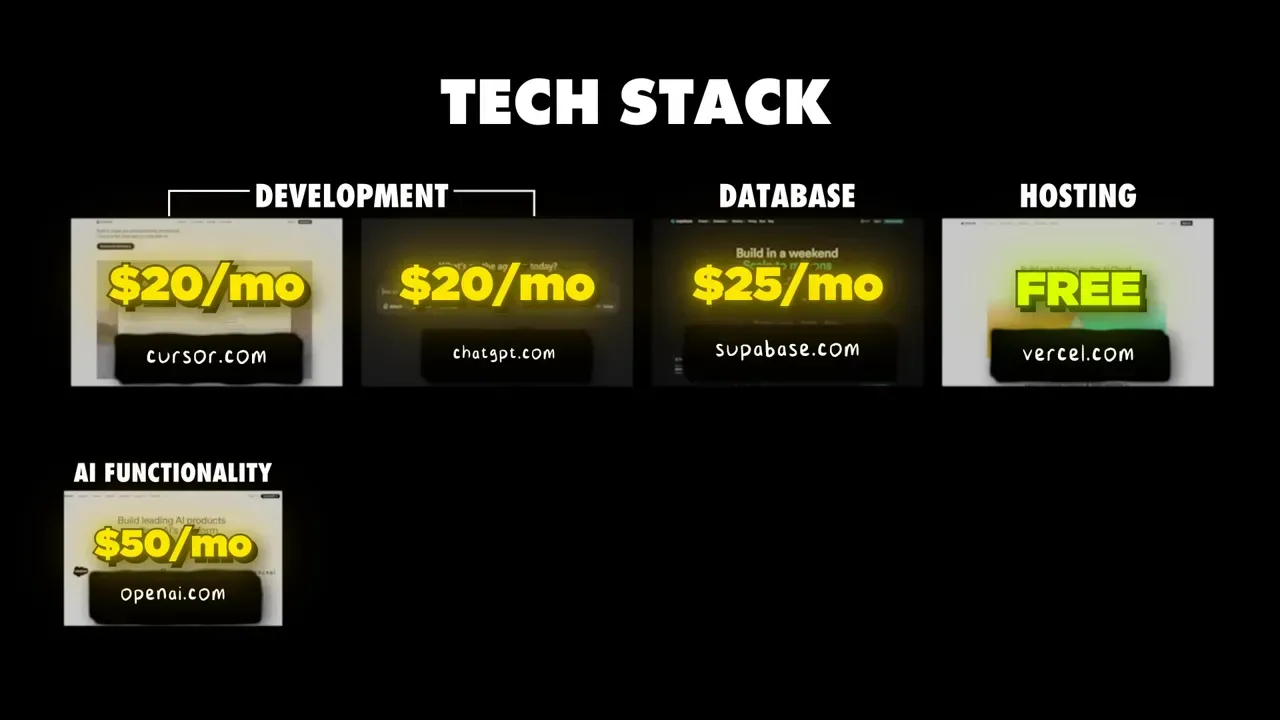
Tech stack: what he used
He did not list everything like a fan page. He listed what mattered:
- Cursor for development
- ChatGPT for development assistance
- Supabase for the database
- Vercel to host the landing page and JavaScript files
- OpenAI API for the AI functionality
- RevenueCat for paywalls and subscriptions
- Mixpanel for analytics
- Superwall for additional paywall tooling and analytics
- Cron job for scheduled automations (if needed)
Marketing a Niche App Without Needing Viral Luck 📣
Building is only half the battle. Ethan learned this the hard way by creating apps that never got marketed.
Step 1: Start with organic posts
For CutCoach, Ethan started by posting organic content based on ideas from social media pages in the same niche. He adapted those posts into app-relevant clips.
One example he shared: showing what a UFC fighter looks like on a weight cut and what they look like after the weight cut, then adding a call to action at the end encouraging downloads.
The raw views were not huge. But he noticed something more important: the viewers were high intent.
He tracked results like this: posts getting roughly 200 to 500 views sometimes drove 10 to 15 downloads per day.
Here is the skeptic part: views are not the goal
His argument is that niche apps do not need millions of views. If your content converts at 5 to 10% of views, you can generate meaningful installs without “going viral.”
And importantly: installs are not the finish line either. The real finish line is paid users and retention. But high-intent traffic gets you closer faster.
Step 2: Move to influencer marketing (use small creators)
Once organic posts worked, he switched strategies: influencer marketing.
Because CutCoach was niche, there were not many large influencers to partner with. So he targeted smaller creators.
His discovery method was manual and effective: scroll through the For You page on TikTok and Reels on Instagram, then DM creators asking for partnerships.
He started with creators getting about 1,000 to 10,000 views per video. Later, he moved to influencers doing 20,000+ views.
He believes influencer marketing worked because two things lined up:
- High intent audience (they cared already)
- Unique product (it solved a pain no other app solved)
Step 3: Turn influencer videos into paid ads
After influencer content started performing, he tested it as paid ads. That added revenue and made scaling faster and more efficient.
If you are building alone, the “manual” nature of this is the point. You do not need fancy funnel tooling to start. You need repeatable traffic that can be measured.
CutCoach Demo: the Product Experience That Keeps It Simple 🧾
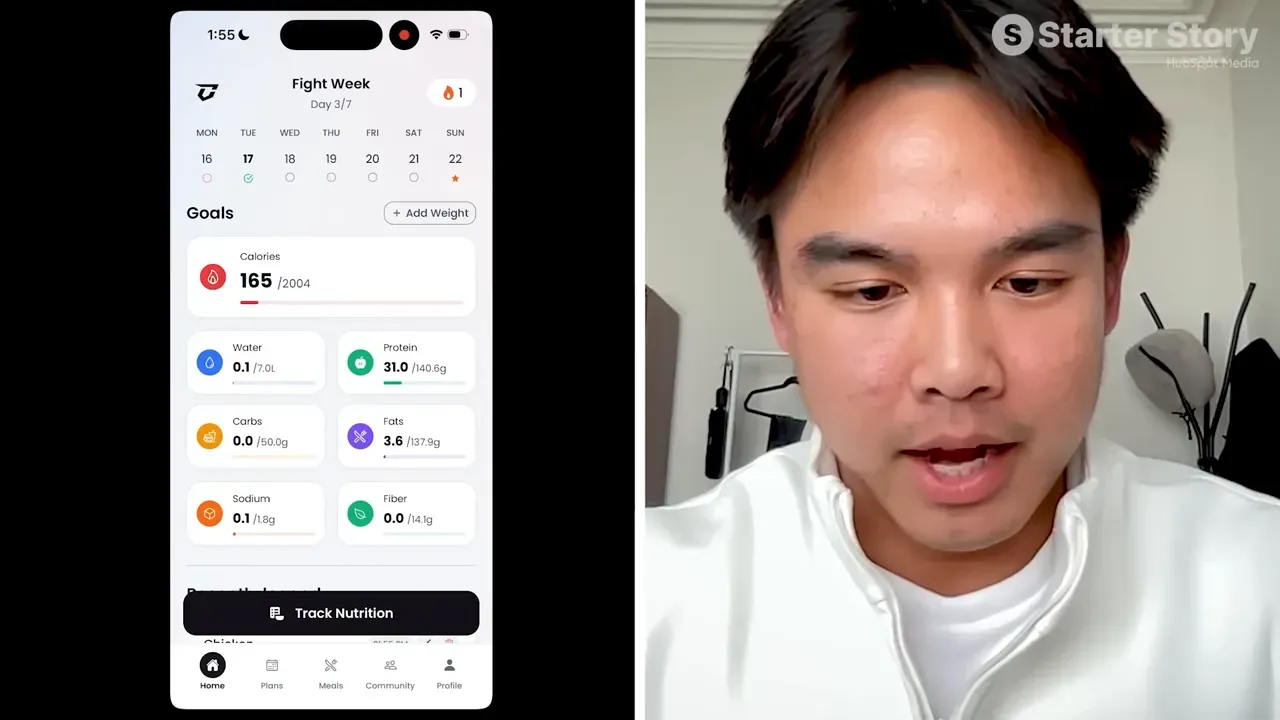
Ethan described the app experience in a way that reveals his design philosophy: make the athlete’s job straightforward.
When you open the app, it shows nutrition values you need to stay within. Each day you log meals, and the app extracts nutritional values and applies them to your daily nutrition goal.
Then you track your weight over time so you can see your progress and make adjustments.
There is also a recommended meals screen for each day. The goal is to help athletes stay inside limits so they do not miss weight on competition day.
That last part matters because it is the outcome the niche audience actually cares about. Not “healthy eating” broadly. Making weight. Competition readiness. Not letting the athlete down.
Would Ethan Do Anything Differently? (The Real Talk) 🧯
Ethan’s main admission is not “I should have coded better.” It is that he previously made apps without marketing.
That means the builder lesson for solo creators is brutally practical:
- If your app solves a real niche pain, your job is to get it in front of that pain fast.
- Stop treating marketing as something you do after you feel “ready.”
- Ship. Test. Iterate. Then compound what converts.
He also learned to use AI tools (Cursor and ChatGPT) to reduce build time, but he did not confuse speed with strategy. The strategy was always distribution and feedback.
One advice he would give his younger self
Ethan said he would follow his own advice. When he was younger, he made decisions based on other people’s opinions even when he already knew the right decision. That led him to live the lives other people wanted rather than his own.
He still seeks advice, but he adapts it to his life instead of letting it control him.
That is not motivational fluff. It is how builders avoid getting paralyzed by “maybe this is not the best idea.” If you already understand the problem domain, your next move should be shipping and learning, not debating.
How to Turn This Into Your Own Launch System (Your Remix Plan) 🧩
This is the part where you stop admiring the story and start stealing the system.
Here is a launch system based on Ethan’s workflow. This is meant to be tested tonight, not studied for six months.
1) Pick your niche pain
- Choose a hobby or competitive area you care about.
- Write down one painful moment people face repeatedly.
- Make it measurable or at least clearly outcome-based (example: “don’t miss weight,” “hit deadline,” “avoid mistakes”).
2) Use AI to brainstorm app ideas
- Ask ChatGPT for app ideas inside your niche.
- Shortlist one idea that feels obviously useful to someone like you.
3) Build the MVP with launch velocity
- Design in Figma first.
- Use a Cursor-like workflow to generate front end quickly, then back end.
- Ship something testable in around a month, not a year.
4) Iterate based on friction
- Test with real users early.
- If adoption fails due to friction, change the concept, not the target audience.
- Test the outcome yourself if possible.
5) Market like conversion is the KPI
- Start organic with niche-relevant content.
- Add a clear call to action.
- Track downloads, not vanity views.
6) Scale with small influencers, then paid ads
- DM small creators in your category.
- Use their content as the base for paid ads once it proves intent.
If you want the shortest version: build fast, test concept quickly, then spend your attention on distribution and conversion. That is the part most “no-code startup tools” advice skips.
Optional Add-On: the One Trend to Be Skeptical About 🧊
There is always a shiny tool everyone wants you to use. The trap is thinking the tool creates traction. It does not.
Ethan’s results are tied to:
- Niche pain with urgency
- Fast build using AI tools
- Early iteration with real users
- Organic and influencer distribution targeting high intent audiences
- Turning what works into paid ads
Tools help. Strategy compounds.
🧰 Build This Stack
Want to build something similar? Here's a lean stack, one tool per job:
- Cursor + ChatGPT for building the MVP fast — Ethan's own build tools
- Supabase + the OpenAI API for the database and AI features — what CutCoach runs on
- RevenueCat + Superwall for subscriptions and paywalls — both in Ethan's stack
- Framer for your app landing page — a solid alternative if you'd rather not build and host the landing page yourself (Ethan hosts his on Vercel)
- Lovable as an AI app builder — a solid alternative for non-coders who want a working prototype before touching Cursor
Some tools above may be affiliate links — we only list tools that fit the build.
FAQ
How did Ethan validate that CutCoach was worth building?
He built an MVP and beta tested it with his wrestling club. The first concept was designed around coaches giving plans to athletes, but it created friction and the club did not use it. He then changed the product to deliver plans to athletes directly, tested it further, redesigned, and released it.
What made his niche app marketing work without huge views?
He focused on high-intent audiences. Organic posts with relatively small view counts still drove meaningful downloads because the product solved a specific pain point that other apps did not.
What is the key takeaway for solo builders from this case study?
Ship something narrow and useful, test it quickly, and market it early. Ethan’s earlier apps did not make money mainly because he did not market them, even if he built them.
Which AI tools did Ethan mention using?
He used Cursor and ChatGPT for development, plus the OpenAI API for AI functionality inside the app.
What does the “funnel” look like in practice here?
In this case, the “funnel” was content that produced high-intent views (organic posts), plus partnerships with small influencers, then repackaging what worked into paid ads. The mechanics are simpler than the hype.
What tools do you need to build a niche fitness app like CutCoach?
Ethan built CutCoach with Cursor and ChatGPT, used Supabase for the database, the OpenAI API for the AI features, RevenueCat and Superwall for paywalls, Mixpanel for analytics and Vercel to host the landing page. If you don't code, start with a prototype and a simple landing page from the stack above, then market it before you polish it.
Go Build Your Own Launch System (Seriously) 🏁
If someone is overworked and tired of tools and half-finished projects, the answer is not “learn more software.” The answer is to create a launch system that compresses time:
- Pick a niche pain you actually understand
- Design quickly in Figma
- Build with Cursor and AI assistance
- Beta test and remove friction fast
- Market early with organic posts, then small influencers, then paid ads
Ethan’s story is proof that niche can be a feature, not a weakness. Wrestlers might be a small community, but when weight cutting is on the line, people pay for solutions. That is how a “tiny problem” becomes a real business.
Reality check: this is not guaranteed income. But it is a repeatable operator workflow, and it is the kind that solo builders can test without burning cash on expensive abstractions.
This article was inspired by this amazing video I Left College to Build This Niche App (Now I Make $20K/Month). Check out more from their awesome channel.