
Breakdown: Umberto Mezzadra, Builder of the Floga Yoga App That Made $120K in 24 Hours
Umberto Mezzadra pre-sold his yoga app Floga with a capped lifetime deal and made $120K in 24 hours. Here's the validation and launch system you can copy.

Solo builders keep asking the same question in different outfits: “How do I validate my idea without burning months and a bunch of cash?” There is an unsexy answer that keeps showing up in the best launches: an AI-powered launch system for creators that forces commitment early, pulls forward real demand, and gives you feedback while your product is still imperfect.
Umberto Mezzadra built Floga, a mobile app for yoga teachers and practitioners. He pre-launched with a lifetime deal and generated over $120,000 in just 24 hours (about $117,000 by the end of day one). And the interesting part is not the number. It is the mechanics: what he sold, when he sold it, what he hid, what he showed, and how he stopped guessing.
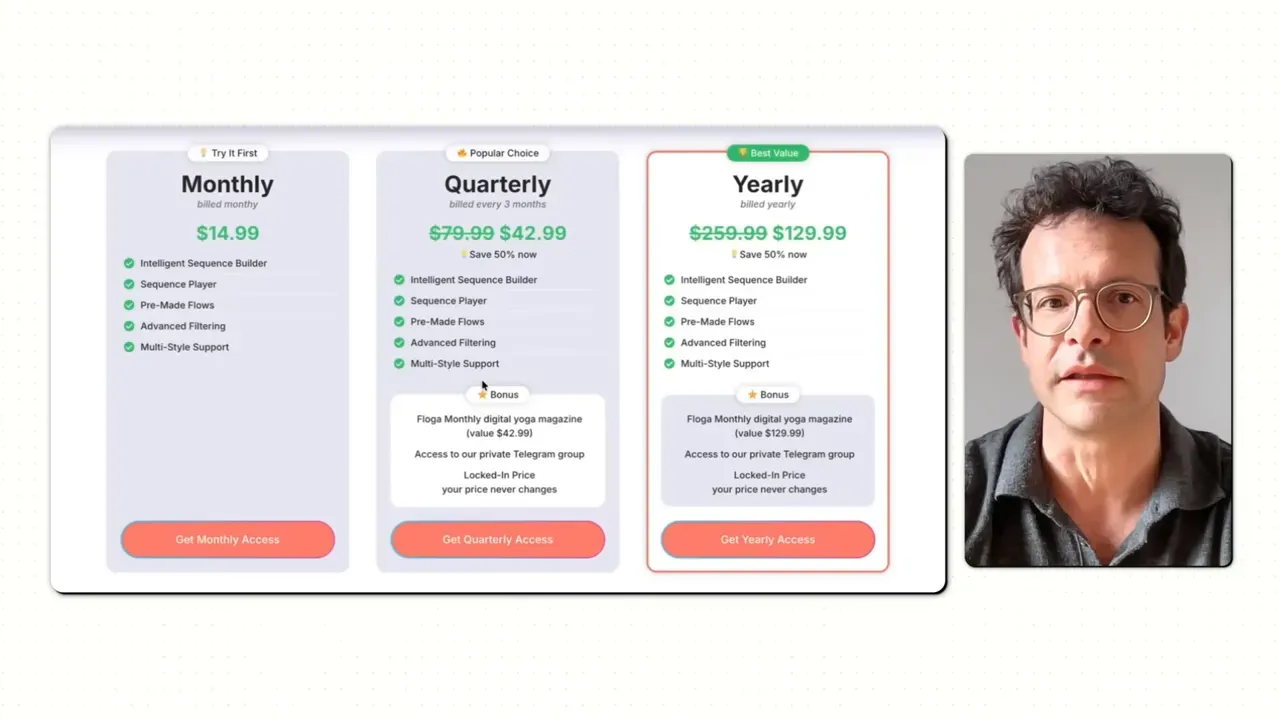
Table of Contents
- Why this matters (and why “launch in silence” is a trap) 🧨
- How did Umberto end up building an app in the first place? 🧘
- What exactly did Umberto build with Floga? 📱
- The fastest validation trick: sell commitment, not “maybe” 🧠
- Umberto’s lifetime deal strategy (and why it gets a bad rap) 💰
- How the email launch sequence was structured 📨
- Umberto’s “great launch” playbook (structured so you can steal it) 🧩
- What tech stack did he use? (for the no-excuses builders) 🛠️
- The real talk: did it work, and would he do it again? ✅
- Optional add-on: build your own “lifetime deal” launch sequence tonight ⏱️
- Build This Stack 🧰
- FAQ 🙋
- Roger Mendoza-style real talk: what to do with this ✅
Why this matters (and why “launch in silence” is a trap) 🧨
Most app founders ship and then… hope. They treat launch like a moment, not a system. Hope is cute until you are paying rent with spreadsheets.
Umberto’s approach is basically the opposite. He built a real product roadmap and then used a short pre-launch to warm up demand, followed by a time-limited lifetime offer to convert uncertainty into cash fast.
That is the fastest way to learn whether your idea is good enough to pay for. If people commit early, you stop arguing with your assumptions.
How did Umberto end up building an app in the first place? 🧘
What is Umberto’s background, and how did it shape his product?
Umberto is not a “mobile app guy.” He studied economics, had a corporate stint, started a startup that failed, and then stepped away from tech for a while. He worked as a ski instructor and as a fashion photographer, and tried a bunch of other non-linear things.
The relevant part is this: he later returned to the startup world as an advertiser and growth strategist. That is where he learned how to launch and position products.
Then in 2020 during COVID, he and his girlfriend built a yoga-focused brand called PlayPauseBe. They launched on Kickstarter and hit over $200,000 in the first month. The brand centered on mindful, screen-free practice.
About a year and a half before the Floga launch, he realized the physical product and the mindful core could evolve into something bigger with technology. He sketched the app concept one evening, found a developer a few months later, and started building.
Takeaway: his product wasn’t invented from thin air. It is a transformation of something that already had demand and a clear audience.
What exactly did Umberto build with Floga? 📱
What problem does Floga solve for yoga teachers and practitioners?
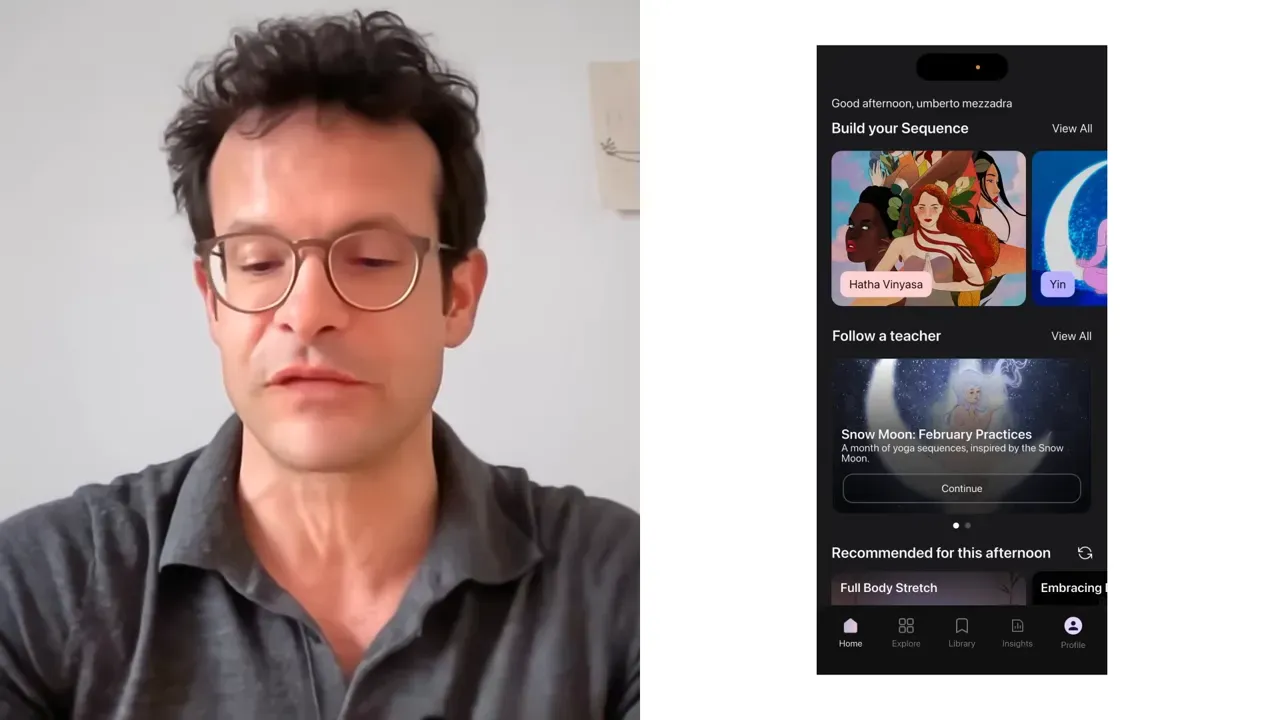
Floga is designed to help teachers and practitioners build yoga sequences and then practice mindfully with guidance.
One of the first features is called Sequence Builder. The flow is straightforward:
- You select a yoga style.
- You browse poses for that style.
- You can filter by things like category, chakras, and benefits.
- There is an intelligent suggestion feature that recommends poses that make sense after your selection.
- Tap a pose to get detailed videos and instructions.
- Then you personalize: reorder poses, adjust timers per pose, and start your guided practice.
Takeaway: the app is simple to understand because it mirrors how humans actually think about practice: choose, sequence, then guide.
The fastest validation trick: sell commitment, not “maybe” 🧠
How did Umberto make over $100,000 in 24 hours?
He didn’t validate with a survey. He validated with a lifetime deal launch.
A lifetime deal, in his case, meant: the user pays for lifetime access to the app.
His playbook had three big parts:
- Decide when monetizing is “ready enough.” He focused on a minimum set of features that would convince early adopters to buy into the vision.
- Build the launch machine before you rush promotions. That includes email, landing page, videos, and ad creative. He treated the launch like a system you assemble, not a vibe you hope for.
- Use a warm-up period to reduce procrastination. He warmed up his audience for a few weeks by showing the app and explaining what would be built next.
He also recorded a YouTube video walking through the app’s current features, then positioned the lifetime deal as a way to get access now while the rest of the roadmap continued to develop.
And a critical mechanic: no refunds. If users want to try without committing, they can wait for the subscription model later.
He ended up with roughly 500 to 600 early customers during the launch window. Those customers weren’t just revenue. They were a feedback engine. Multiple features added in later months were based on user feedback from this initial committed group.
Takeaway: early adopters are not “users.” They are data, signal, and sometimes marketing.
Umberto’s lifetime deal strategy (and why it gets a bad rap) 💰
Why do lifetime deals work for early stage apps?
People criticize lifetime deals for a reason they can explain in one sentence: “You are giving up future revenue.” Fair. Also, early stage founders do not have the data to estimate LTV or churn anyway.
Umberto’s response was blunt: when you are early, you have assumptions. Lifetime deals convert assumptions into real money quickly so you can stop guessing.
There is also an incentive argument that’s easy to miss:
- Monthly subscribers have optionality. If something breaks or you disappoint them, they can churn quietly, maybe leave a bad review, and disappear. Also, they do not always feel ownership.
- Lifetime buyers have commitment. They are more motivated to help the product succeed. They report bugs. They send detailed feedback.
- In his case, he even created a Telegram group with early adopters, turning purchase into ongoing collaboration.
Finally, some people simply do not like subscriptions. Among people like that, willingness to pay for lifetime access is often 3 to 5 times more than the yearly plan. So the “lifetime deal” is not just a pricing shortcut. It can be a market fit discovery tool.
Did he regret doing it?
No. The strategy gave him cash upfront, feedback loops, and the ability to build a roadmap that matched what real customers actually wanted.
His view is consistent with a practical solo-builder mindset: if your business is early enough that churn and retention are unknown, the goal is not perfection. The goal is signal.
How the email launch sequence was structured 📨
What did Umberto’s pre-launch emails actually do?
His pre-launch lasted about a month and a week. The emails served a specific purpose: generate interest without revealing everything too early.
His sequence used three patterns:
- Storytelling first. He created interest without revealing the product yet. It set expectations for what would come later.
- Curiosity via controlled confusion. One email placed the physical product in the “back,” then suggested something else in the “front.” That made the existing list curious, because they could not neatly categorize what they were about to see.
- Reveal and link to proof. Eventually, he unveiled the app and used a short explanation plus a link to a video where he presented the app at that moment.
What were the “non-negotiables” in the sequence?
These are the details solo builders usually skip, then wonder why conversions disappoint.
- He did not show price before launch day. His reasoning: if you show price early, people decide based on price instead of features and long-term vision. Once a number enters someone’s head, it becomes the comparison point you cannot remove.
- He used limited time and limited spots. Lifetime deals were limited by both time and quantity. That reduces procrastination. People do not stall when the window closes.
He also explained how lifetime deals work at the end of the pre-launch (timing and limitations), because those two levers create urgency without sounding like frantic sales.
Umberto’s “great launch” playbook (structured so you can steal it) 🧩
If you had to start over, what would you do first?
He gave a step-by-step approach that builds a launch system from the simplest possible inputs: customer truth, minimum product, content machine, pricing structure, then launch mechanics.
Step 1: Validate before you build
He recommended talking to 5 to 10 people in the target market about the problem you intend to solve, but without telling them why you are asking. This reduces biased feedback.
He referenced The Mom Test as a guide for how to do this properly.
Step 2: Define your minimum launchable product
Validation is not enough. You need a clear answer to:
- What stage of the product is “valuable enough” for early adopters to pay?
- How long will it take to build that minimum?
This timeline becomes the backbone for everything else.
Step 3: Build your content machine before promoting
Before lead gen, he wanted content ready: email assets, graphics, videos, landing pages, everything.
His other point is surprisingly important: put yourself in the user’s shoes. Not what is obvious to you as a builder, but what is obvious to a stranger.
Step 4: Pricing is not a number, it is psychology
He argued against underpricing out of fear. Instead, he structured three tiers:
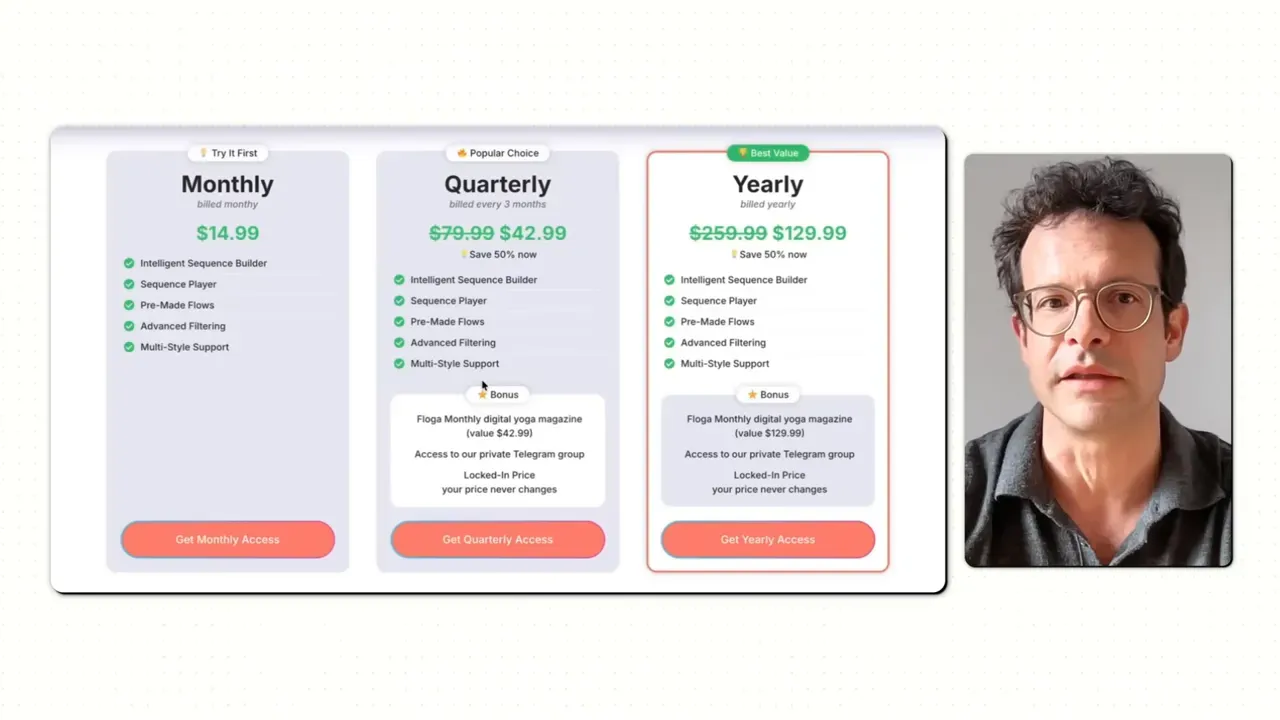
- Tier 1: lifetime access to a limited feature set, about $109
- Tier 2: more features, about $199
- Tier 3: full vision, about $349
The psychology is simple: lower tiers create a reference point that helps people choose the higher tier. Also, skeptics get something to say “yes” to without fully committing to the whole roadmap.
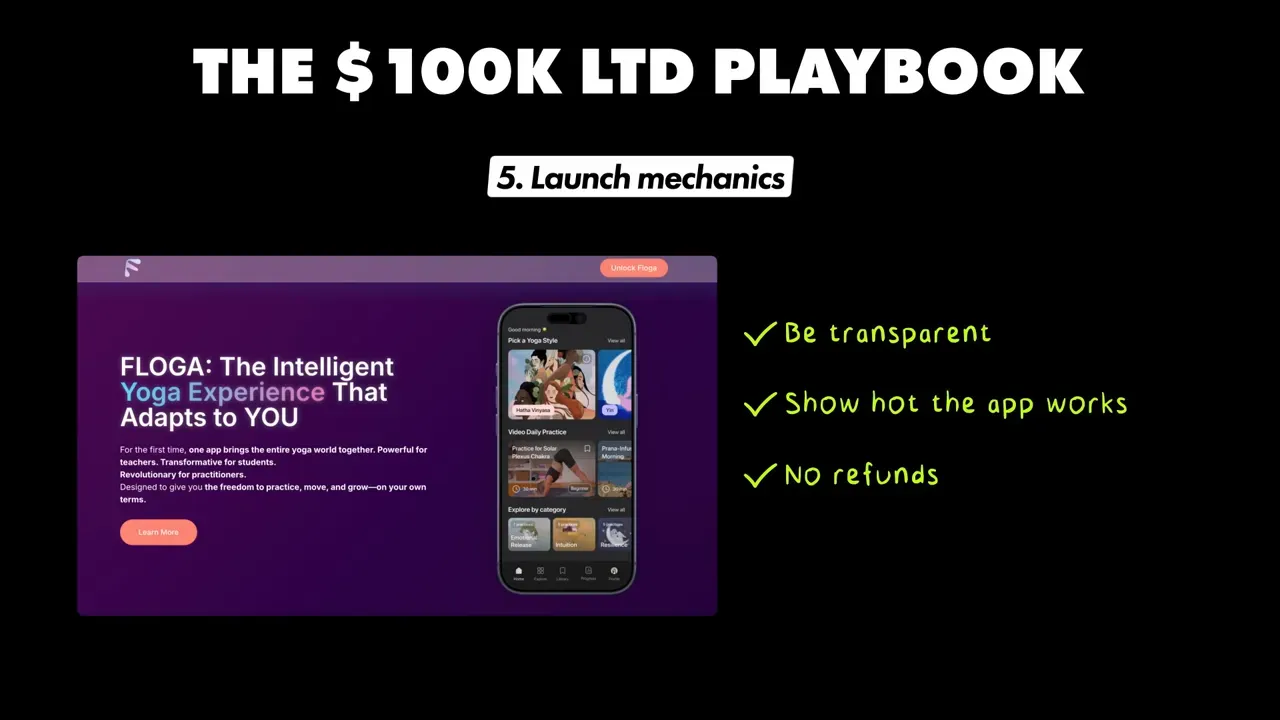
Step 5: Launch mechanics must be transparent
Transparent means:
- show how it works
- be clear about current limitations
- be clear about how you will improve it
Also: set a clean line like no refunds. If you blur the rules, lifetime offers can feel like a risk you are trying to dodge.
Finally, timebox the offer. He suggested 5 to 7 days maximum to force decisions instead of procrastination.
What tech stack did he use? (for the no-excuses builders) 🛠️
Was this built with some magical secret stack?
No. It was practical.
- Flutter for development
- Firebase (about $25 per month)
- RevenueCat for subscription and revenue handling
- Vimeo hosting for videos (he already had Vimeo for the other business)
- OneSignal for push notifications
Takeaway: the “speed” came from the offer, the content, the sequence, and the decision mechanics, not from inventing a new platform.
The real talk: did it work, and would he do it again? ✅
What should a solo builder copy from this case study?
One core insight: stop waiting for perfect output. The breakthrough happens when you put something unfinished in front of real people.
He said it directly: the moment you ship, you get feedback. Feedback can be uncomfortable, but it is also the fastest way to reduce uncertainty.
So the “system” is basically:
- validate with real conversations
- build minimum launchable product
- prepare content and assets
- use a launch offer that converts uncertainty into commitment quickly
- timebox and cap spots to prevent procrastination
- use early buyers as feedback data, not just revenue
In plain human language: automate your execution, not your judgment. You still need the strategy, but you do not need weeks of tool wrangling.
Optional add-on: build your own “lifetime deal” launch sequence tonight ⏱️
This is the part where you do something instead of saving bookmarks like it is a career.
Create a 5-email pre-launch skeleton (template you can fill)
- Email 1: Story + problem framingNo product yet. Just interest. Show the pain and set a suspense-based expectation that “more is coming.”
- Email 2: Curiosity with controlled ambiguityUse a partial reveal. Suggest something related, but not enough to eliminate curiosity.
- Email 3: Reveal the app or offerShort explanation. Link to a demo or walkthrough. Keep it clean and focused.
- Email 4: Explain why nowIntroduce lifetime deal mechanics: limited time, limited spots, and the reason for “commit now” logic.
- Email 5: Launch day urgency (without showing price early) On launch day, show price. Restate what is included, what is not yet built, and the refund policy or trial alternative.
Skip if you hate email. But if you are building an app, email is still the highest leverage channel for long-form persuasion. Unsubscribe is a feature, not a moral failure.
Optional AI shortcut: if you use an AI writing assistant, feed it your product features, your target persona, and your roadmap. Ask it to draft (a) a story angle, (b) a curiosity teaser, and (c) a launch-day email that explains tradeoffs clearly. Then you edit like a human who has to live with the results.
🧰 Build This Stack
Want to build something similar? Here's a lean stack, one tool per job:
- Flutter + Firebase for the app itself — Umberto's actual build stack (Firebase ran about $25/month)
- RevenueCat for subscriptions and paywalls — what Floga uses for its subscription layer
- Framer for your app landing page — a solid alternative for the pre-launch page (Umberto's landing page tool wasn't named)
- Funnelish as a checkout funnel for tiered launch offers — a solid alternative if you want to sell lifetime-deal tiers like Floga's
- beehiiv for a founder newsletter — a solid alternative for running a warm-up email sequence like the one above
Some tools above may be affiliate links — we only list tools that fit the build.
FAQ 🙋
Is this launch system basically just about using AI tools?
No. AI tooling is optional. The system is more about a repeatable launch logic: validation, minimum product, pre-launch content, and offer mechanics that convert uncertainty into commitment.
Do lifetime deals actually hurt long-term revenue?
They can, in theory. But early stage founders typically do not know LTV or churn. Umberto’s argument is that lifetime deals trade future unknowns for immediate cash and real feedback, which improves your product and your ability to price later.
How do you reduce procrastination without sounding manipulative?
Timebox and cap spots. Umberto limited the offer by timeframe and quantity. Also, be transparent about what is available now and what is planned next.
Should you show pricing before launch day?
Umberto recommends not showing price before launch day. He believed price shifts the decision from “do I believe in the features and roadmap?” to “is this cheap enough?”
What is the minimum launchable product?
It is the smallest version of your app or digital product that can deliver enough value for early adopters to pay. You define it before you build, then build to that stage.
What was the tech stack?
Flutter, Firebase, RevenueCat for subscriptions, Vimeo for video hosting, and OneSignal for push notifications.
What tools do you need to build a yoga app like Floga?
Umberto built Floga with Flutter and Firebase, used RevenueCat for subscriptions, Vimeo for video hosting and OneSignal for push notifications. For the launch itself you also need a pre-launch page, an email list for the warm-up sequence, and a checkout that can sell tiered lifetime offers — the stack above covers each of those jobs.
Roger Mendoza-style real talk: what to do with this ✅
This is not a “lifetime deal magic trick.” It is a discipline trick.
Umberto built an offer that got commitment fast. Then he used those committed buyers as feedback data to make the product better. That is why it worked: the launch was not just sales. It was research with money attached.
If you are building a no-code MVP or leaning on AI tools for speed, copy the logic, not the yoga theme. Validate. Define minimum product. Build your content machine. Timebox your offer. Ship earlier than you want to.
Because perfect is just fear with a project plan.
This article was inspired by this amazing video My App Made $120K in 24 Hours. Check out more from their awesome channel.