
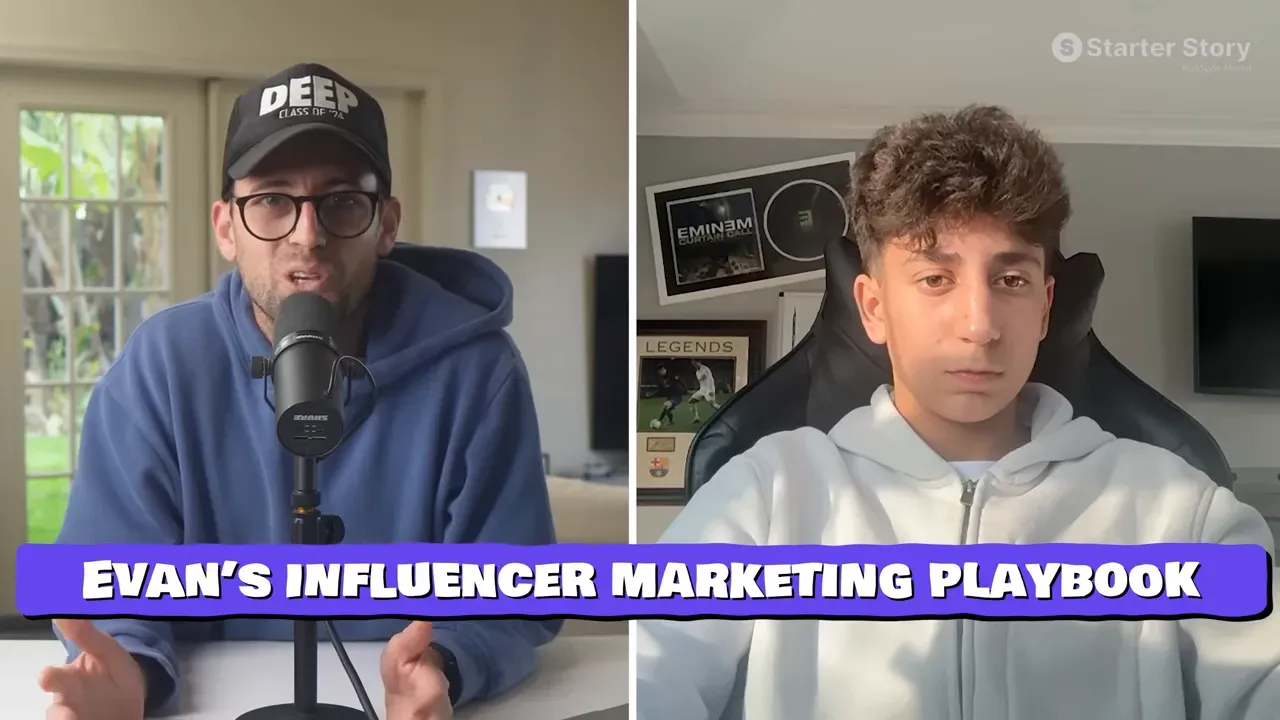
Breakdown: Evan Yadegari, how he built a $14K/month mobile app using one influencer growth channel
Evan Yadegari grew Locked to about $14K/month with one repeatable channel: influencer deals priced so CPM stays below RPM. Here's his playbook, step by step.

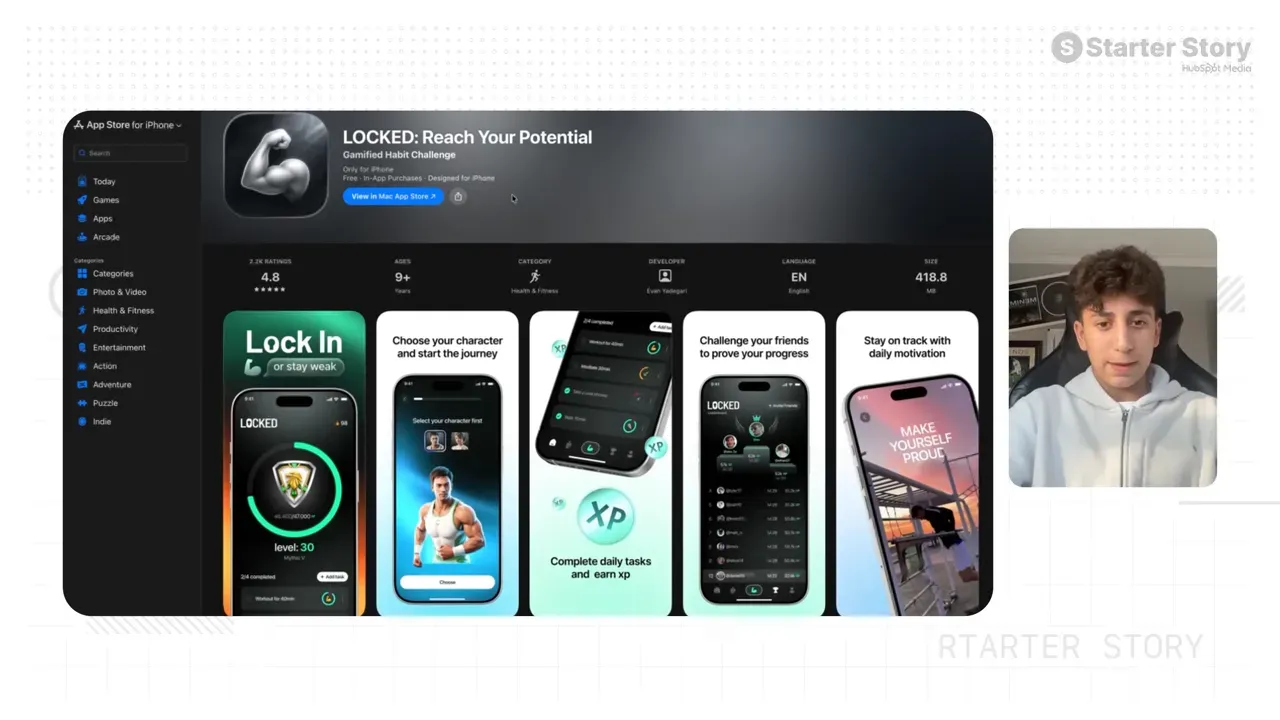
Evan scaled a gamified health and fitness app called Locked to roughly $14,000 per month in only a few months, and the story stays unusually consistent: he did not start with a huge audience, he did not lean on paid ads, and he used one repeatable distribution channel to get users and revenue.
The result is not magic. It is an AI-powered launch system for creators in the most practical sense: find the right people, structure the deal so it stays profitable, and require content that proves the product in the first seconds. No vibes. No “just post more.” It is mostly math plus execution.
Table of Contents
- 🧭 Why this matters for solo builders
- 🧩 The setup: what Evan built (Locked)
- 👤 Founder background: where the obsession came from
- ⏱️ Build timeline: how fast Locked shipped
- 🚀 The one growth channel: influencer partnerships as the engine
- 📱 The influencer example: the “first 15 seconds” rule
- 🧱 Evan’s influencer playbook (step-by-step)
- 🧠 What to copy if you are building your own app in 2026
- 🧰 Optional tool stack context (without getting lost in it)
- 🧨 The real talk: would it work again?
- 🧰 Build This Stack
- ❓ FAQ
- 🧷 Conclusion: the takeaway for solo builders
🧭 Why this matters for solo builders
Most solo builders stall at the same points:
- They build and then panic about distribution.
- They buy ads before validating whether the offer even converts.
- They try influencers but pay too much, with no performance structure.
Evan’s playbook is useful because it treats distribution like engineering. If the economics do not work (CPM vs RPM), you do not “hope.” You re-structure.
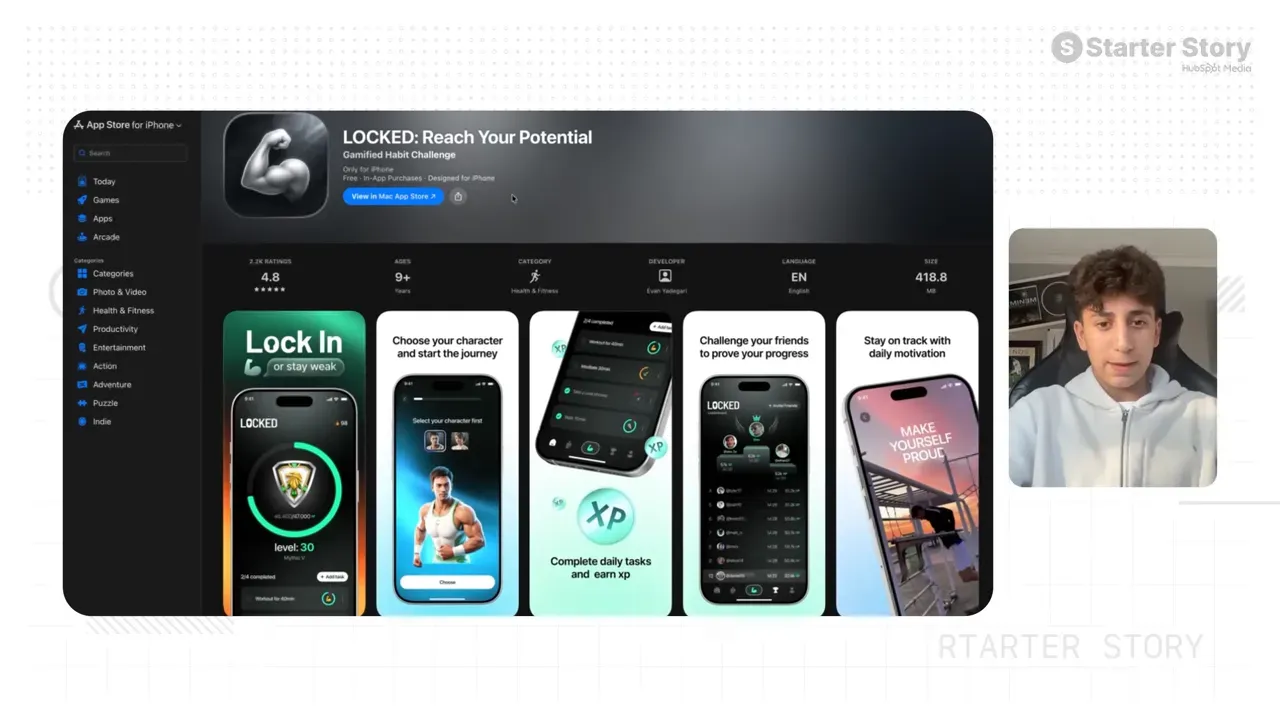
Also, the app itself is simple: choose a character on onboarding, earn XP, level up, and use leaderboards and badges to stay on task. That clarity is what makes creator content perform.
🧩 The setup: what Evan built (Locked)
Locked is a gamified health and fitness app. The core idea is to help users stay on task while making the experience feel like a game.
Key product features:
- Character-based onboarding (pick a character to start)
- XP, levels, badges to keep progress visible
- Leaderboards and motivational elements
- Tasks including basic starter tasks (example: check one off, earn 100 XP)
Pricing / paywall structure:
- $40/year or $7/week
- Yearly includes a three-day free trial
- If someone escapes or exits the paywall, they go to a transaction abandoned offer: $20/year discounted
📌 The important part: monetization matches the distribution
Evan’s content strategy depends on this being a subscription product that can convert from short-form attention. The paywall and fallback offer give creators a reason to send people through a straightforward funnel.
👤 Founder background: where the obsession came from
Evan’s entrepreneurship started early. At nine, friends played Roblox, and he decided to develop games instead. He did not make money from the games, but it started the habit of building.
From there he tried a bunch of business models (drop shipping, reselling, clipping, vending machines). A lot of that failed. Eventually his brother suggested apps were the lane, and Evan built a few before Locked:
- Problem Pal: peaked around $2,000/month, later sold
- Clear AI: built quickly, but did not go anywhere
- Locked: inspired by someone struggling with staying on task and motivated
The pattern here is not “young kid wins.” It is “kept building until distribution economics clicked.” That is the part most people ignore.
⏱️ Build timeline: how fast Locked shipped
Design took about two weeks in Figma. Development followed by transferring into Xcode.
How he built:
- Used YouTube tutorials and his own knowledge
- Used Claude Code to help development
- From idea to App Store: about a month and a half
Fast shipping matters because distribution can only be tested once the product exists. Delays turn a learning loop into a fantasy.
🚀 The one growth channel: influencer partnerships as the engine
Evan’s growth strategy was straightforward: partner with influencers to promote the app.
But the “simple” part is where most people mess up, because they copy the activity (influencers) without copying the constraint (economics).
💰 The math that decides whether influencers are viable
Evan analyzed his unit economics and found:
- RPM (revenue per thousand views) was around $2 to $3
- So he needed influencer deals with CPM lower than RPM
- Typical creator costs were often $1 to $1.50 (which could fit)
That single comparison kept him from wasting money on deals that might feel good but cannot scale.
🎯 Why influencer content worked better than ads
Evan’s reasoning was practical:
- Influencers already have trust with their audience
- Recommendations feel more authentic than traditional ads
- When integration is seamless, conversion increases
📱 The influencer example: the “first 15 seconds” rule
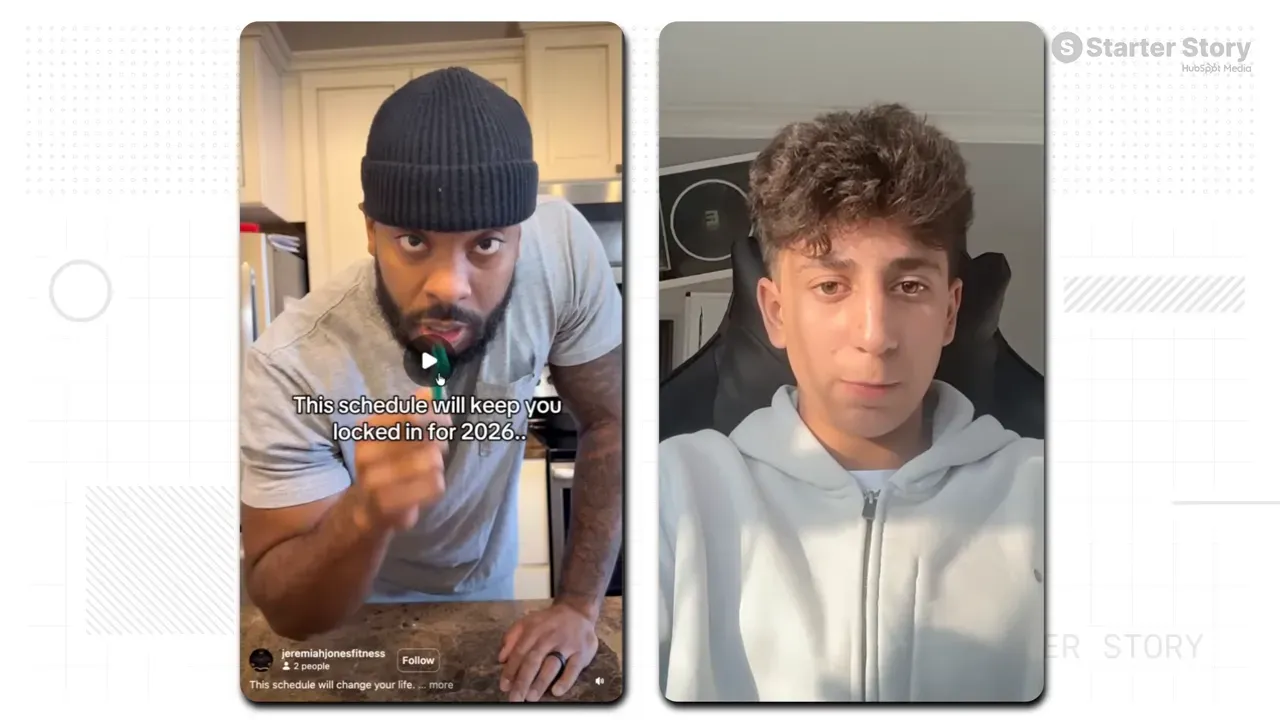
Evan shared an example with a creator (Jeremiah Jones). The content was basically explaining how to stay locked in and on task, aligned perfectly with Locked’s premise.
Three things Evan required to make the partnership work:
- Show the app within the first 15 seconds
- Match the niche and intent (stay locked in, on task)
- Seamless integration (it fits naturally in the creator’s story, not like a forced ad)
📈 What happened after the post
In Evan’s numbers:
- After the creator posted around February 6, Locked saw a huge revenue spike
- Revenue jumped from about $300/day to ranges like $728, $600, $700, and even close to $1,000
- Across the video, Evan estimates around $3,000 revenue and ~1,800 downloads
- Approximate views: ~1 million across platforms
Evan paid the creator about $800 with a 600,000 minimum view clause. If the creator hit the minimum, payment was done. If not, the creator could post additional videos until the clause threshold was met.
This is what makes influencer deals behave like software: predictable inputs, bounded outcomes.
🧱 Evan’s influencer playbook (step-by-step)
If someone started over with a brand-new app in 2026, Evan’s workflow is basically an operating system for influencer distribution.
Step 1: Find creators in your niche
Look up something related to the niche on Instagram or TikTok. Scroll videos, open accounts, and build a creator list.
Step 2: Send the same message every time (but start with the right framing)
Evan’s message pattern:
- Send each creator the same message (consistency helps)
- Start with “paid promo” in the message
This reduces back-and-forth. Creators can ignore you faster, which is good. Less wasted time.
Step 3: Get them on a call
Calls are for fit and deal structure, not storytelling. Evan is explicit: once you get them on a call, you need to close on a profitable deal.
Step 4: Close them on a profitable CPM vs RPM deal
The principle is simple:
- Close deals where CPM stays lower than RPM
Step 5: Structure the deal (choose one of four)
Evan uses one of four formats. The goal is to keep your distribution cost inside what your app can afford.
- 1) Flat rate
- Example: $500 for one reel or $1,200 for four reels
- Use only if the creator consistently gets high views and you do not need a minimum view clause
- 2) CPM deal
- Example: $1 per thousand views or $2 per thousand views
- Always include a cap (example: 10 million views but cap at $500)
- 3) Minimum view clause deal (Evan’s “almost always”)
- Example: $500 with a 500,000 minimum view clause
- Helps keep CPM under RPM
- 4) Bonus deal
- Example: $500 for a video
- If it hits 1 million views, pay an additional $500
Step 6: Launch the partnership with clear requirements
Evan’s launch checklist:
- Send video requirements (including product proof early)
- Send a contract
- Give a one-week deadline for the first video
- If performance generates revenue, continue the partnership
This is a huge difference between “collab” and “distribution.” Collabs are emotional. Distribution is operational.
🧠 What to copy if you are building your own app in 2026
Most founders fail by copying the surface level. Evan’s playbook has three deep properties worth stealing.
1) Fit beats scale
Influencer trust matters, but niche intent matters more. Evan’s example aligns content focus with the app’s purpose. If the creator’s audience already cares about staying on task, your product story becomes easy to believe.
2) Economics protect speed
RPM and CPM are the guardrails. If your numbers do not work, you do not “wait for better creatives.” You renegotiate the structure.
3) Require proof early
The “show the app within the first 15 seconds” rule is underrated. Attention decays fast. If you do not prove the product early, the audience never forms an accurate mental model.
🧰 Optional tool stack context (without getting lost in it)
Evan mentioned a few tools used to build and optimize Locked:
- Figma for design
- Claude Code for development help (he referenced a $200/month subscription)
- Superwall for A/B testing paywalls (takes 1% of earnings)
- Supabase for database
Keep this part simple. The lesson is not “use these tools.” The lesson is: use tools to tighten the loop between distribution, conversion, and optimization.
🧨 The real talk: would it work again?
Evan’s strategy is not universal, but the approach is portable.
- Would influencer partnerships work for every app? Not automatically. Your product has to be understandable in short-form and your offer has to convert.
- Does the deal structure matter? Yes. If you do not control CPM relative to RPM, you can spend a lot and learn nothing.
- Does it require a big audience? No. It requires the right audience relationship. That relationship is sometimes smaller, but it is more eager.
As a solo builder, it is tempting to hunt for “the one channel.” Evan’s case shows a better mindset: hunt for the one distribution channel that can be structured profitably and repeated.
🧰 Build This Stack
Want to build something similar? Here's a lean stack, one tool per job:
- Figma + Claude Code for design and build — Evan's own setup (he shipped Locked from idea to App Store in about six weeks)
- Supabase for the database — what Locked runs on
- Superwall for paywall A/B tests — Evan used it to A/B test Locked's paywall
- Framer for your app landing page — a solid alternative if you want a simple page to point creators and their audiences to
- Make.com to automate the busywork — a solid alternative for logging each creator's posts, views and revenue into one sheet
Some tools above may be affiliate links — we only list tools that fit the build.
❓ FAQ
What was Locked’s pricing model?
Locked charged $40/year or $7/week. The yearly plan included a three-day free trial, and if users exited the paywall they were taken to a transaction abandoned offer: $20/year.
What was the single growth channel Evan used?
He used influencer partnerships as the primary distribution channel, structured to keep influencer CPM below app RPM.
How did he ensure influencers were profitable?
Evan compared RPM (about $2 to $3) to CPM. He only closed deals where the effective CPM stayed below RPM, using deal structures like caps and minimum view clauses.
What did he require in influencer videos?
He required creators to show the app within the first 15 seconds, and to create content that aligns tightly with the app’s promise.
What kind of results did one influencer video generate?
For one example, Evan estimated around $3,000 in revenue, about 1,800 downloads, and approximately 1 million views across platforms. Payment was tied to a 600,000 minimum view clause.
What if I am starting a brand-new app tomorrow?
Follow Evan’s workflow: find niche creators on Instagram or TikTok, message them with “paid promo” framing, get on calls, structure deals where CPM stays under RPM, require early app proof, and launch within a tight deadline.
What tools do you need to build a gamified fitness app like Locked?
Evan designed Locked in Figma, built it in Xcode with help from Claude Code, used Supabase for the database and Superwall to A/B test the paywall. The only extras worth adding early are a simple landing page and a lightweight way to track creator deals against revenue, which the stack above covers.
🧷 Conclusion: the takeaway for solo builders
Evan’s case is a clean example of a launch system in the real-world sense: you use tools to build and optimize, but distribution is the main lever. The system is part operational, part mathematical, and mostly about not wasting money on deals that do not fit your unit economics.
If someone wants to remix this tonight, the smallest high-impact test is:
- Pick one niche.
- List 30 creators whose content matches your app’s promise.
- Offer a deal with a minimum view clause or a cap.
- Require product proof in the first 15 seconds.
- Track revenue and downloads by creator.
That is how you turn “launch” from a hope into a loop you can improve.
This article was inspired by this amazing video I Built A $14K/Month App In 4 Months. Check out more from their awesome channel.